
Lawn
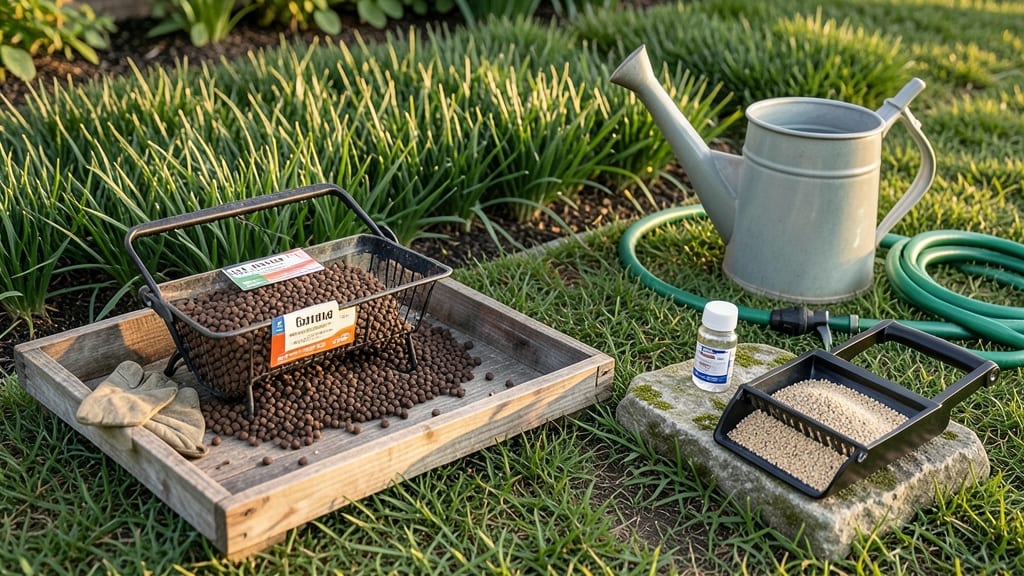
Fertilizing a new lawn at the right time is the difference between a thick, vibrant carpet of grass and a patchy, struggling mess.
New lawns need careful timing when it comes to fertilization—apply too early, and you risk burning delicate grass roots; wait too long, and you stunt growth. The 4-week rule is your secret weapon for establishing a thick, resilient lawn from day one.
Most homeowners make one of two mistakes: either they fertilize right after seeding, which can overwhelm tender roots, or they skip it entirely, leaving their grass starving for nutrients. Neither approach sets your lawn up for success.
In this guide, I’ll walk you through the exact 4-week fertilization schedule for new lawns, including when to use starter fertilizer, how to adjust for your climate, and what to watch for to avoid common pitfalls.

The 4-Week fertilization timeline for new lawn establishment
Establishing a new lawn requires precision when it comes to fertilization—timing is everything. A starter fertilizer applied too soon can burn tender grass seeds, while waiting too long delays critical root development.
The 4-week rule provides a science-backed schedule to balance growth and nutrient needs, tailored to your grass type and climate.
For cool-season grasses like Kentucky bluegrass or fescue, the ideal planting window is early fall (September-October), while warm-season grasses such as Bermuda or Zoysia thrive when seeded in late spring (April-May).
Both types follow the same fertilization timeline, but adjustments are needed for regional frost dates and rainfall patterns.
Your first step is applying a high-phosphorus starter fertilizer (look for a 5-10-10 NPK ratio) at seeding time or within 2 weeks after sod installation.
This kickstarts root growth, but avoid overdoing it—0.5 lbs per 100 sq ft is plenty for new grass. Water immediately after application to activate nutrients.
Here’s your 4-week fertilization roadmap, broken down by stage and climate considerations:
At the 4-week mark, your grass should have 1–2 inches of root growth. This is the perfect time for a light top-dressing with a low-nitrogen fertilizer (e.g., 20-0-5 NPK) to encourage denser foliage without overstimulating growth.
For cool-season grasses, this aligns with early fall’s natural growth surge, while warm-season types benefit from late-summer feedings to harden off before winter.
By 8 weeks, your lawn should be 50–70% established.
Switch to a balanced fertilizer like 24-4-8 NPK to support both roots and blades. Warm-season grasses in southern climates may need an extra feeding in late summer (August-September) to combat heat stress, while cool-season varieties in northern regions should focus on fall fertilization to store nutrients for spring.
At 12 weeks, your lawn is 80%+ established and ready for maintenance.
For cool-season grasses, apply a slow-release fall fertilizer (e.g., 30-0-4 NPK) 6–8 weeks before the first frost to promote deep root growth. Warm-season grasses should receive their final feeding in early fall to prepare for winter dormancy, using a low-nitrogen blend (e.g., 15-0-15 NPK) to avoid late-season growth.
Skip fertilization entirely during drought conditions or when soil temperatures drop below 50°F. Over-fertilizing at this stage stresses young roots and invites fungal diseases. Instead, focus on deep watering (1 inch per week) and mowing high (3–4 inches) to shade soil and retain moisture.
Pro tip: Use a soil test kit before your first feeding to check pH and nutrient levels. Adjust your fertilizer’s NPK ratio based on results—low phosphorus (P)? Boost root growth with a bone meal supplement. High potassium (K)? Your lawn is already stress-resistant!
With this 4-week timeline, you’ll avoid the two biggest mistakes new lawn owners make: over-fertilizing early (which burns seeds) and under-fertilizing late (which stunts density). Stick to the schedule, and you’ll have a thick, lush lawn by next spring—no guesswork required. 🌱
Signs your new lawn needs fertilizer (and when to skip it)
Your new lawn might be sending clear visual signals about its nutrient needs—but knowing whether it's thirsty for fertilizer or simply struggling with stress can be tricky. Yellowing patches or slow growth often point to nutrient deficiencies, but they could also mean overwatering or poor drainage.
The key is understanding the difference between nutrient hunger and environmental stress before reaching for the fertilizer bag.
Before applying any fertilizer, check for three common deficiency signs: pale green blades, thin grass coverage, or stunted growth despite regular watering. These often indicate your lawn needs nitrogen or phosphorus to fuel root development.
However, if you spot brown patches or crispy leaf tips, your lawn might be suffering from over-fertilization or drought stress—not a lack of nutrients.
I always recommend testing soil pH first (ideal range: 6.0-7.0 for most grasses).
If your soil is too acidic or alkaline, nutrient uptake suffers, making fertilization ineffective. Soil tests are especially critical for new lawns, as they reveal whether your grass needs micronutrients like iron or zinc before you invest in a full fertilizer blend.
When to Fertilize Your New Lawn
✅ Do Fertilize If...
- 4+ weeks old (roots established)
- Pale green blades or slow growth
- Soil test confirms low nitrogen/phosphorus
- No drought stress (soil is moist)
- No recent seeding (wait 6-8 weeks)
❌ Skip Fertilizer If...
- Drought conditions (soil is dry/cracked)
- Recent seeding (within last 6 weeks)
- Brown patches or leaf burn present
- Soil test pending (avoid guesswork)
- Frost risk (within 4-6 weeks of first frost)
Pro Tip: For new lawns, use a starter fertilizer (high in phosphorus) at 4 weeks to boost root growth, then switch to a balanced NPK (e.g., 24-4-8) at 8-12 weeks.
One of the biggest mistakes I see is fertilizing right after seeding. New grass seeds need direct soil contact and consistent moisture—not a fertilizer layer that can burn tender roots.
Wait until your lawn is 4-6 weeks old and has developed a 2-3 inch root system before applying any fertilizer. This 4-week rule gives your grass enough time to establish itself without chemical stress.
If your lawn shows uneven growth or bare spots, consider whether the issue is nutrient-related or environmental. For example, shady areas may need shade-tolerant grass types rather than extra fertilizer.
Always water deeply (1 inch per week) before fertilizing—hydrated roots absorb nutrients far more efficiently than dry ones.
Remember, less is often more with new lawns. Over-fertilizing can lead to thatch buildup, fungal diseases, or even water pollution if runoff occurs.
When in doubt, skip the fertilizer and focus on proper watering, mowing height (never cut more than 1/3 of blade height), and regular aeration to keep nutrients flowing naturally.