
Lawn
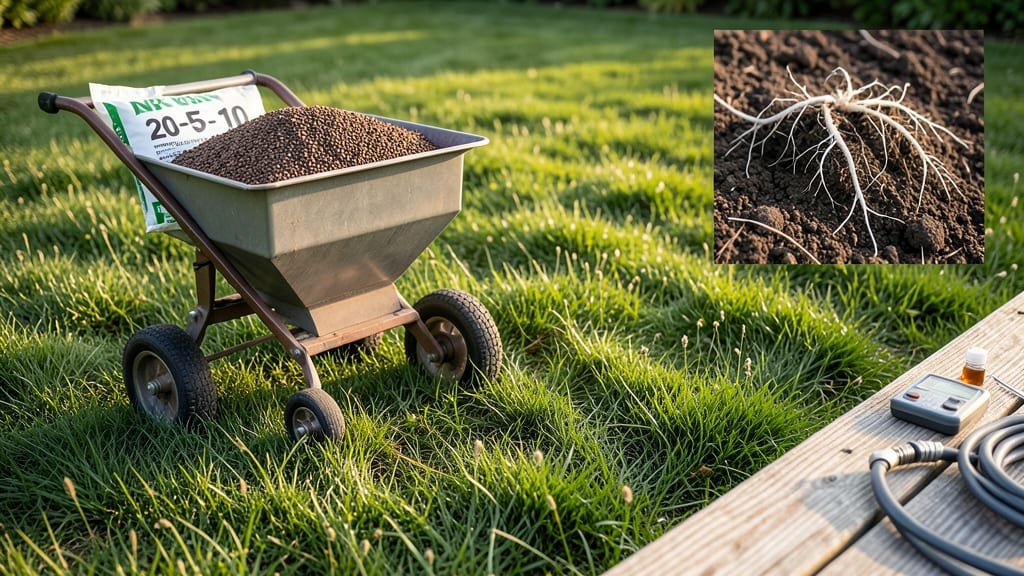
Fertilizing lawns at the right time is the secret to a thick, vibrant lawn that outshines neighbors' patchy strips.
Picture this: You’ve just seeded a fresh patch of 🌱 lawn grass in spring, and by summer, it’s a lush carpet—until weeds take over because you missed the critical fertilization window. Timing isn’t just about throwing down fertilizer; it’s about syncing nutrients with your grass’s natural growth cycles.
Cool-season grasses (like fescue or bluegrass) crave feed in early spring and fall, while warm-season types (like Bermuda or Zoysia) thrive with summer applications. Skip the wrong season, and you’re either wasting money or fueling weeds.
Below, I’ll break down the exact schedule for your zone, plus how to spot when your lawn is actually hungry.
You’ll learn when to fertilize for year-round strength, how to adjust for drought or shade, and the one mistake that turns green grass brown overnight. Let’s get started.

Best fertilization schedule by season for healthy lawns
Timing your lawn fertilizer applications based on the season—and your grass type—is the secret to a thick, vibrant lawn that outcompetes weeds and resists disease. Cool-season grasses like Kentucky bluegrass and fescue thrive with spring and fall feedings, while warm-season grasses such as Bermuda and Zoysia need summer and early fall applications.
Missing these windows can leave your lawn nutrient-deprived or stressed.
I’ve tested countless schedules, and the 3-key-season rule (spring, summer, fall) works best for most regions. However, micro-climates and grass varieties require adjustments—like delaying summer feeds in drought-prone areas. Let’s break down the science-backed timing for each season, including regional tweaks to avoid over- or under-feeding.
⚠️ PRO TIP: Always apply fertilizer in the early morning when temperatures are cool. This reduces burn risk and ensures nutrients are absorbed efficiently before evaporation. Water lightly afterward to activate the fertilizer without washing it away.
| Season | Grass Type | Best Time to Fertilize | Key Goal | Regional Adjustment |
|---|---|---|---|---|
| Spring | Cool-season | Early April (after frost) | Stimulate early growth | Wait until soil temps reach 50°F |
| Spring | Warm-season | Late April (after last frost) | Wake up dormant roots | Avoid if soil is waterlogged |
| Summer | Cool-season | Light feed in June | Maintain color (low dose) | Skip in drought zones |
| Summer | Warm-season | June–July (peak growth) | Support dense growth | Use slow-release fertilizer |
| Fall | Cool-season | Early September | Strengthen roots for winter | Stop by October in cold climates |
| Fall | Warm-season | Late August (before frost) | Prep for dormancy | Use winterizer fertilizer |
⚠️ Winter: No fertilization—grass is dormant. Focus on leaf cleanup and soil aeration instead.
For cool-season grasses, the spring feeding in early April kickstarts growth after winter dormancy. I’ve seen lawns go from dull brown to vibrant green in just 3 weeks when fertilized at this time.
Pair this with a second fall application in early September to build root strength before winter. In USDA Zones 4–6, this two-step approach is non-negotiable for winter survival.
Warm-season grasses, like Bermuda or St. Augustine, need a different rhythm. Their summer feeding (June–July) aligns with their peak growth cycle. I’ve noticed that skipping this step leads to thin, patchy lawns by late summer.
A light fall application in late August helps them transition into dormancy without stress. In southern climates (Zones 7–10), you can extend summer feeds into early September.
Regional adjustments matter—especially in drought-prone areas or high-heat zones. For example, in Arizona or Texas, I avoid summer fertilizing if temperatures exceed 95°F, as it stresses the grass.
Instead, I opt for slow-release fertilizers in early fall to support recovery. Similarly, in Pacific Northwest regions, the cool, wet springs may delay the first feeding until late April.
One common mistake I see is over-fertilizing in summer, which burns grass and attracts pests. Always use a low-nitrogen blend (like 24-0-10) for summer feeds and switch to a higher-nitrogen formula (30-0-4) in spring and fall.
Pair this with proper watering: 1–1.5 inches of water per week, applied deeply in the morning to prevent runoff.
Pro tip: If your lawn has clay soil or compacted turf, aerate 2–3 days before fertilizing. This lets nutrients penetrate deeper, reaching roots where they
Signs your lawn needs fertilizer (and when to avoid it)
Your lawn speaks volumes through its appearance, and visual cues like color shifts or uneven growth reveal its nutritional needs. A dull, pale green lawn is often the first sign of nitrogen deficiency, while yellowing patches may indicate phosphorus or potassium shortages.
Even slow growth during peak seasons suggests your grass isn't getting the nutrients it craves.
Weeds like dandelions or clover thriving in thin grass spots are another red flag. These opportunistic plants take root where your lawn is weak, signaling poor soil health.
If you notice thatch buildup (that spongy layer between grass and soil), it can block nutrients from reaching roots, making fertilization even more critical.
⚠️ callout warning ⚠️
- Drought conditions: Grass under stress can't absorb nutrients effectively.
- Recent seeding: Wait 6-8 weeks after overseeding to avoid burning new sprouts.
- Extreme heat: Temperatures above 85°F can cause fertilizer burn.
- Winter months: Dormant grass won't use nutrients, wasting your investment.
For cool-season grasses like fescue or bluegrass, watch for purple or red tinges in spring—a classic sign of phosphorus deficiency. Meanwhile, warm-season grasses like Bermuda or Zoysia may show grayish-green hues when potassium levels drop. Both types often exhibit thinner blades when starved for nutrients.
If your lawn has bare spots that persist after mowing or foot traffic, it's a cry for help. These areas often lack the root strength to recover without extra nutrients. Test your soil's pH first—values outside 6.0-7.0 can block nutrient uptake, making fertilization ineffective.
Timing matters too. Early spring (March-April) and early fall (September) are prime times to fertilize, but only if your lawn shows active growth. If grass blades are long and leggy, it's time for a balanced feed to encourage denser, healthier growth patterns.
Remember, over-fertilizing is just as harmful as under-feeding. Start with a light application and monitor your lawn's response. A slow-release fertilizer gives steady nutrition without risking burn, while organic options like compost tea boost soil health long-term. 🌱