
Lawn
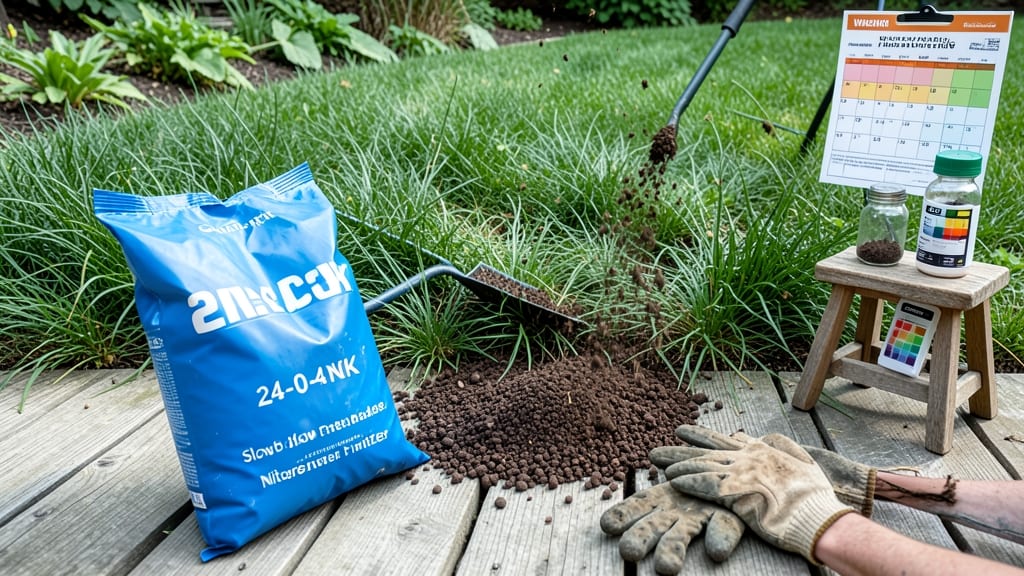
Fertilizing your lawn in Wisconsin at the right time—typically in early spring and late summer—is the secret to a thick, green carpet that outlasts weeds and drought.
Wisconsin’s cool-season grasses need a feeding schedule that matches the growing season, not the calendar. Skip this window, and you’ll end up with patchy, weak grass that struggles to recover.
The good news? With the right timing and a few simple adjustments, you can turn your lawn into the envy of the neighborhood.
Most Wisconsin lawns thrive with three key feedings: an early spring boost to kickstart growth, a light summer touch to maintain color, and a late-summer prep for winter hardiness.
But northern Wisconsin’s shorter growing season means you’ll need to adjust—think of it as tuning your lawn’s schedule to your local frost dates.
In this guide, I’ll break down the exact months to fertilize, the best products for Wisconsin’s soil, and how to spot when your grass is begging for a nutrient boost—so you never waste money or effort on the wrong timing.

Best fertilization schedule for Wisconsin’s cool-season lawns
Wisconsin’s cool-season grasses like Kentucky bluegrass and fine fescue thrive with precise fertilization timing. The key is aligning feeds with growth spurts and avoiding late-season applications that delay dormancy.
Northern Wisconsin’s shorter growing season (USDA zones 4b-5a) requires earlier spring starts, while southern regions (zone 5b) can extend feeding into late September.
Start with a soil test to identify deficiencies—most Wisconsin lawns need high nitrogen (N) but may lack iron or potassium. Pre-emergent herbicides should be applied in early spring (before crabgrass germinates) and late summer (for fall weeds).
Never fertilize when grass is dormant or frozen, as nutrients won’t absorb.
⚠️ CRITICAL: Over-fertilizing in fall weakens grass before winter, making it vulnerable to snow mold and disease. Stick to a light micronutrient boost in September for root hardening.
| Season | Task | Timing (Northern WI) | Timing (Southern WI) | Fertilizer Type |
|---|---|---|---|---|
| Early Spring | Pre-emergent + Nitrogen Kickstart | Mid-April (after frost) | Late April | 24-0-5 (slow-release) |
| Late Spring | High-Nitrogen Feed | May 15–June 1 | May 1–June 15 | 25-0-5 or liquid 30-0-4 |
| Summer | Light Maintenance | July (if needed) | June–July | 10-0-10 (micronutrients) |
| Late Summer | Pre-emergent + Fall Prep | August 15–September 1 | August 1–September 15 | 24-0-5 + iron supplement |
| Fall | Root Hardening | September 15 (northern) | September 30 (southern) | 5-10-10 (low N, high K) |
For northern Wisconsin, prioritize earlier spring feeds (by May 15) to compensate for shorter seasons. Southern regions can extend fertilization into late September, but avoid anything past October 1 to prevent winterkill.
Always water deeply after fertilizing to activate nutrients—aim for 1 inch of water within 24 hours.
Pro Tip: Use a slow-release fertilizer in spring to avoid nitrogen burn from sudden growth spurts. Pair applications with mowing at 3–4 inches to encourage deeper roots. If your lawn has clay soil (common in WI), add gypsum or compost before fertilizing to improve absorption.
Watch for yellowing grass after feeding—this signals over-fertilization. Reduce nitrogen by half next time and increase potassium (K) for drought resistance. Weed pressure in spring? Apply a crabgrass preventer with your first fertilizer in April.
In summer’s heat, skip heavy feeds unless you see pale green patches. Instead, focus on watering deeply (1–1.5 inches per week) and aerating compacted soil. Late summer’s second fertilization should include iron supplements if your lawn looks washed-out.
Fall’s final feed (September) should be low in nitrogen but rich in potassium and phosphorus to strengthen roots before winter. Stop fertilizing by October 15 in northern WI or November 1 in southern areas to allow grass to harden off naturally.
Remember
Signs your Wisconsin lawn needs fertilizer (and when to act)
Your Wisconsin lawn speaks volumes through its color, texture, and resilience. If you notice pale yellow patches instead of vibrant green, or thin, patchy areas that won’t fill in, these are clear cries for nutrients.
Cool-season grasses like Kentucky bluegrass and fescue (common in Wisconsin) thrive on consistent feeding, but they’ll show signs of stress when deprived. Don’t wait until your lawn looks like a drought-stricken desert—act early to restore its health.
Weeds are another red flag. When your lawn struggles, crabgrass and dandelions seize the opportunity, crowding out your grass. A nutrient-deficient lawn can’t compete, leaving these invaders to dominate. Even slow growth during peak season (spring and fall) signals your grass isn’t getting the nitrogen it needs to grow vigorously.
Ignoring these signs leads to weaker roots, making your lawn more susceptible to disease and winter damage.
🌱
⚠️ Don’t Wait for Bare Spots!
Wisconsin’s cool-season grasses need nutrients before they show visible decline. By the time you see thin patches or yellowing blades, the damage is already done. Test your soil in early spring (April) or late summer (August) to catch deficiencies early. A pH imbalance (below 6.0 or above 7.5) or low organic matter can block nutrient uptake, even if you fertilize.
Diagnosing the exact issue is key to choosing the right fertilizer. A nitrogen deficiency (most common) causes pale green or yellow grass, while a potassium shortage leads to weak stems that brown at the tips. Phosphorus issues (rare in established lawns) show as dark green but stunted growth.
For nitrogen, use a 24-0-5 or 25-0-5 slow-release fertilizer in early spring or late summer. Potassium deficiencies? Opt for a 5-10-15 blend to strengthen roots and cold tolerance.
Timing matters just as much as the type. Apply nitrogen-heavy fertilizers in April or early May to kickstart growth after winter dormancy. A second dose in late August (before frost) helps grass recover and store nutrients for winter.
Avoid fertilizing in fall (September-October), as new growth won’t harden off before cold weather, leading to winterkill. Instead, focus on light applications in late summer to prep for dormancy.
If your lawn has clay soil (common in Wisconsin), iron supplements can help with yellowing grass caused by poor nutrient availability. Mix chelated iron into your fertilizer routine in early spring for a quick green-up.
For organic options, compost tea or fish emulsion provides a gentle nutrient boost without the risk of fertilizer burn. Always water deeply after applying to help nutrients penetrate the soil.
Don’t overlook weed control as part of your lawn’s health. Pre-emergent herbicides (applied in early spring) prevent weeds, but they’re less effective if your grass is already weak. Combine fertilization with proper mowing height (3–4 inches for cool-season grasses) to encourage deep root growth and crowd out weeds naturally.
With the right approach, your Wisconsin lawn can go from struggling to show-stopping in just one growing season.
🌿