
Fertilization
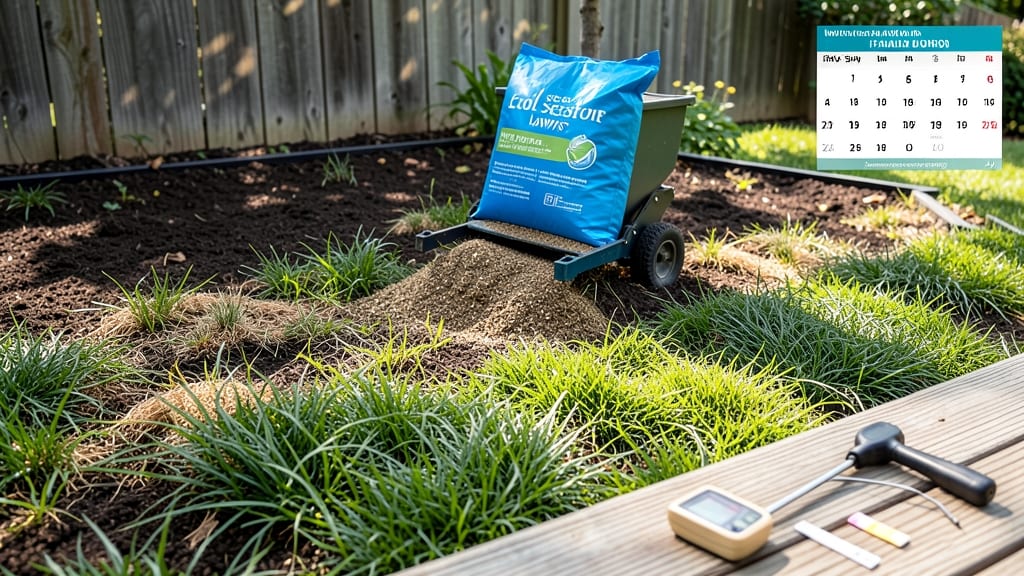
To fertilize lawns in Michigan, time applications for early spring when soil hits 45°F (7°C) (usually March to April), then again in late summer (August) before frost. Cool-season grasses like Kentucky bluegrass thrive with this schedule, while warm-season types may need adjustments.
Michigan's climate makes timing everything—cool-season grasses wake up early, while warm-season varieties need late-summer feeding. 🌱 I've seen firsthand how a missed window can leave lawns struggling through summer heat.
The key is monitoring soil temps with a simple probe (they're cheap and game-changing) and testing pH levels annually—most Michigan soils lean acidic, which affects nutrient uptake. For organic gardeners, compost tea or grass clippings make excellent slow-release alternatives to synthetic blends.
Pro tip: Water deeply after fertilizing to activate nutrients and prevent runoff. In wet springs (like we saw in 2023), hold off until the ground dries slightly to avoid leaching.
The Evergreen Seeds team recommends splitting summer applications into two light doses rather than one heavy one—this keeps roots growing steadily without burning.
💡 In This Article
- Soil Temperature and Michigan Grass Types
- Michigan Fertilizer Schedule by Season
Soil temperature and Michigan grass types
Michigan's cool-season grasses—like Kentucky bluegrass and tall fescue—begin their active growth cycle when soil temperatures consistently reach 45°F (7°C), typically in late March or April.
This temperature triggers root activity and stimulates top growth, which is why early spring fertilization aligns perfectly with nature's schedule. 🌱 The Upper Peninsula often experiences cooler soils by 1-2 weeks compared to the Lower Peninsula due to its northern latitude, so gardeners there should wait until mid-April to apply fertilizer.
Warm-season grasses like Bermuda or Zoysia, less common in Michigan but growing in popularity, won't respond until soil hits 65°F (18°C), usually June.
Here's what's happening below ground: Cool-season grasses have deep root systems that absorb nutrients most efficiently when soil temps are between 50-65°F (10-18°C). At 45°F (7°C), roots begin producing new growth hormones, making them primed to utilize fertilizer.
Pre-emergent herbicides should also be applied at this stage to prevent crabgrass and other weeds from germinating—just be sure to wait 4-6 weeks before seeding new grass to avoid chemical conflicts.
The Evergreen Seeds team has found that applying fertilizer when soil temps are 50°F (10°C) or warmer gives the best nutrient uptake without burning tender new shoots.
Regional climate variations matter too. Southern Michigan's warmer microclimates may see soil reach 45°F (7°C) by early March, while northern areas might wait until May. A simple soil thermometer (around $15) lets you track these changes accurately—stick it 4 inches deep and check daily.
What most people don't realize is that Michigan's acidic soils (pH 5.0-6.5) can lock out nutrients even when fertilizer is present. Testing pH annually with a $20 kit and adjusting with lime if needed makes all the difference in how well your lawn absorbs nitrogen, phosphorus, and potassium.
For cool-season grasses, the ideal fertilizer blend contains 30-0-5 (nitrogen-phosphorus-potassium ratio) in early spring, followed by a 25-0-5 mix in late summer. Warm-season grasses need a higher phosphorus kick (5-10-10) when soil temps hit 65°F (18°C) to encourage root development.
The key difference is timing: Cool-season grasses get two feedings (spring and summer), while warm-season types focus on late summer when they're actively growing. This seasonal shift explains why many Michigan lawns look stressed in early summer—they're not getting the right nutrients at the right time.
Consider these regional adjustments:
- Northern Michigan: Delay spring fertilization until soil reaches 45°F (7°C) (often late April) due to cooler soils
- Southern Michigan: Can start as early as March 15 in protected microclimates
- Organic option: Use compost tea (10-20 gallons per 1,000 sq ft) instead of synthetic blends
- Weed control: Apply pre-emergent when soil temps hit 55°F (13°C) for best weed suppression
The science behind this timing involves understanding how grass roots metabolize nutrients. At 45°F (7°C), microbial activity in the soil ramps up, breaking down organic matter and making nutrients available to roots.
This biological process is why waiting for the right temperature gives you a head start on the growing season—your lawn essentially gets a jump on photosynthesis and growth. 🌿