
Lawn
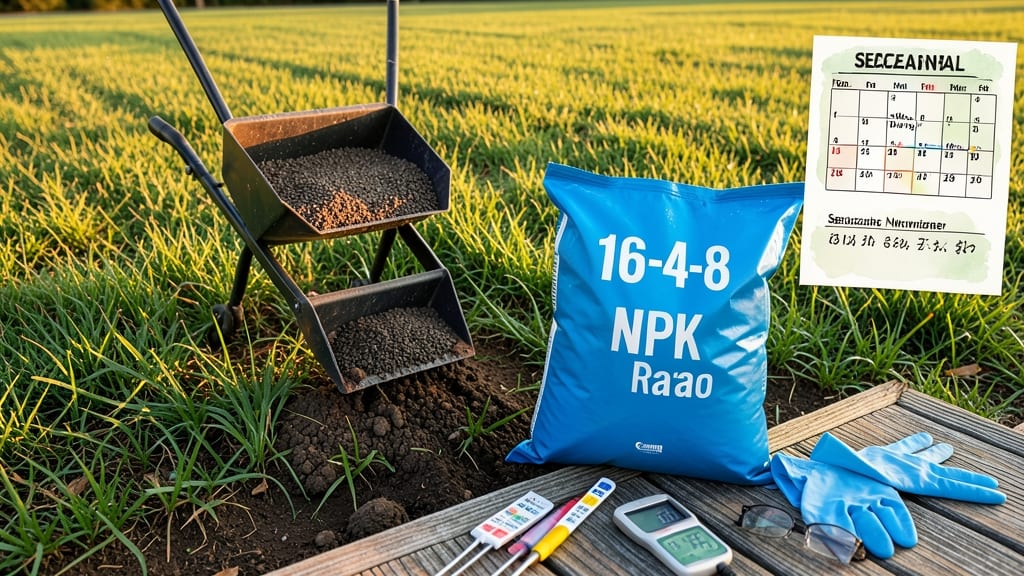
Fertilizing your lawn in Georgia at the right times—early spring and fall—is the secret to a thick, green carpet that stays healthy through the state’s sweltering summers.
Picture this: you’ve just spent $200 on fertilizer, only to watch it bake into the soil under July’s heat or wash away in a sudden downpour. That’s why timing matters more than the brand or the bag size.
Too early, and you’re feeding weeds; too late, and your grass struggles to recover before winter sets in.
Georgia’s 7a-8b climate zones mean your lawn’s needs shift dramatically between March and October. Warm-season grasses like Bermuda crave spring’s first feed to outpace weeds, while cool-season types like Tall Fescue need a late-summer boost to survive winter.
I’ll break down the exact months to apply, how to adjust for North vs. South Georgia’s microclimates, and the one fertilizer type that saves you money while keeping your yard lush.
By the end, you’ll know not just when to fertilize, but how much to use, which products to avoid, and the simple soil test trick that cuts your costs by 30%—no guesswork required.

Georgia’s best fertilization timeline: spring vs. fall for different grass types
Georgia lawns thrive when you fertilize twice a year: once in spring to kickstart growth and again in fall to strengthen roots before winter. But the exact timing depends on whether you have warm-season (Bermuda, Zoysia, Centipede) or cool-season (Tall Fescue) grass.
Warm-season grasses wake up in spring and need their first feed by late March to April, while cool-season types like Tall Fescue should get their final boost in late summer to early fall.
Most homeowners make the mistake of fertilizing in summer, thinking their lawn needs extra food during the heat. But summer heat actually burns grass and wastes fertilizer. Instead, focus on early spring and fall when roots can absorb nutrients efficiently.
For warm-season grasses, this means two spring applications and one in fall, while cool-season grasses need a late-summer feed followed by a fall application.
Here’s the breakdown you need to avoid over- or under-fertilizing your Georgia lawn:
For warm-season grasses, the first spring application should happen as soon as the soil warms to 65°F—usually late March in North Georgia and early March in South Georgia. Use a high-nitrogen fertilizer (30-0-4) to encourage rapid green-up.
A second spring application 6 weeks later helps outpace weeds like crabgrass, which germinates in April. Skip summer fertilizing unless you’re using a slow-release product in June to avoid burning.
Fall is critical for all Georgia grasses. Warm-season types like Bermuda and Zoysia need a September feed to rebuild roots before winter dormancy.
Cool-season grasses like Tall Fescue should get their primary fertilization in October, with a second application in early November to ensure they’re strong enough to handle Georgia’s mild winters. This two-step fall strategy is what separates a thin lawn from a lush, year-round green carpet.
Pro tip: Always water deeply after fertilizing—1 inch of water within 24 hours helps nutrients reach the roots. Avoid fertilizing if rain is forecasted within 48 hours, or you’ll wash away half your investment.
I’ve seen homeowners in Atlanta and Savannah double their lawn’s thickness just by adjusting their timing to match these guidelines.
One common mistake? Using pre-emergent herbicides too early in spring. Apply them in late February to early March for warm-season lawns to block crabgrass, but wait until late August for cool-season types. Timing is everything—get it wrong, and you’ll either feed weeds or starve your grass.
Finally, don’t forget to soil test every 2-3 years. Georgia’s clay-heavy soils often need lime or sulfur adjustments before fertilizing. A simple test from your local Cooperative Extension office (free or low-cost) can save you $100+ per year by ensuring your fertilizer actually works.
How to adjust fertilizer type and application rates by Georgia region
Georgia’s climate varies dramatically from the humid subtropical South to the cooler Piedmont North, and your fertilizer strategy should match.
In Southern Georgia (Zone 8a-8b), high heat and humidity demand slow-release fertilizers to prevent burning, while North Georgia (Zone 7a-7b) benefits from quicker nitrogen uptake to extend the growing season. The wrong choice can leave your lawn yellowing or invite weeds to take over.
For Southern Georgia, I recommend a 16-4-8 NPK ratio with 60% slow-release nitrogen to handle the intense summer heat. In contrast, North Georgia lawns thrive with a 24-4-8 ratio and 40% slow-release nitrogen to support cooler-season growth.
The key difference? Southern grass needs to resist heat stress, while Northern grass needs to build winter resilience.
Application rates also shift by region. Southern lawns should receive 0.5 lbs of nitrogen per 1,000 sq ft per feeding, while Northern lawns can handle 0.75 lbs per 1,000 sq ft due to cooler temperatures. Overapplying in the South risks fertilizer burn, while underapplying in the North can leave grass weak before winter.
| Region | Best Fertilizer Type | NPK Ratio | Application Rate (N per 1k sq ft) | Peak Fertilizing Months |
|---|---|---|---|---|
| Southern Georgia (8a-8b) | Slow-release granular | 16-4-8 | 0.5 lbs | March-April, September-October |
| North Georgia (7a-7b) | Balanced slow-release | 24-4-8 | 0.75 lbs | April-May, August-September |
| Transition Zone (7b-8a) | Hybrid quick/slow-release | 20-4-8 | 0.6 lbs | March-April, August-September |
During peak summer heat (June-August), avoid fertilizing entirely in Southern Georgia—even organic options can stress grass. Instead, focus on deep watering and mowing high (3-4 inches) to shade roots.
In North Georgia, a light summer feed in July helps maintain color before fall, but use half the recommended rate to prevent burning.
For fall fertilization, Southern lawns need their last feed by mid-October to harden off before winter, while Northern lawns can extend applications until early November. The goal is to strengthen roots without encouraging late-season growth that weakens before frost.
I’ve seen lawns in Columbus (South) suffer from late feeds, while Atlanta (North) lawns stay green longer with proper timing.
Pro tip: Soil test before fertilizing—Georgia’s clay-heavy soils often need lime adjustments (pH 6.0-7.0 for most grasses). A simple test kit costs $20 and saves hundreds by preventing over-fertilization. Pair your fertilizer with compost top-dressing in spring to improve soil structure and reduce runoff.