
Lawn
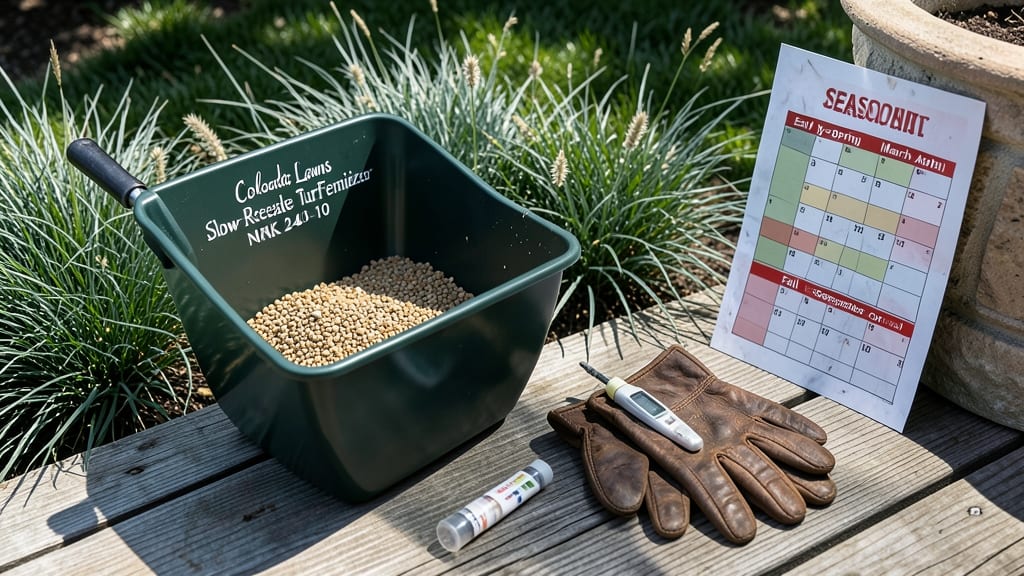
Optimal fertilization timeline for Colorado grass types (cool-season vs warm-season)
Colorado’s diverse climate—from the Front Range’s high-altitude chill to the Western Slope’s arid heat—means your lawn’s fertilization needs vary dramatically. Cool-season grasses like Kentucky Bluegrass and Fescue thrive in spring and fall, while warm-season Buffalo Grass and Bermuda peak in summer.
Timing is everything to avoid burning your grass or wasting fertilizer.
Most Colorado homeowners fertilize too late in spring or overdo it in summer heat, both of which stress grass. The key is aligning fertilization with active growth phases—early spring for cool-season grasses and late spring for warm-season varieties.
Let’s break down the month-by-month schedule tailored to Colorado’s three major regions.
Front Range (Denver, Boulder, Fort Collins): Expect last frost mid-April and first frost mid-October. Cool-season grasses dominate here, but Bermuda is gaining popularity in urban areas.
Western Slope (Grand Junction, Aspen): Warmer days and cooler nights favor Buffalo Grass and Bermuda. Fertilize earlier in spring (March) to capitalize on the longer growing season.
Eastern Plains (Colorado Springs, Pueblo): Semi-arid conditions demand water-efficient fertilization. Focus on slow-release fertilizers to prevent runoff and over-fertilization.
| Grass Type | Front Range (Denver/Boulder) | Western Slope (Grand Junction) | Eastern Plains (Colorado Springs) | ||||||
|---|---|---|---|---|---|---|---|---|---|
| Cool-Season Peak Growth |
Warm-Season Peak Growth |
Fertilization Schedule |
Cool-Season Peak Growth |
Warm-Season Peak Growth |
Fertilization Schedule |
Cool-Season Peak Growth |
Warm-Season Peak Growth |
Fertilization Schedule |
|
| Kentucky Bluegrass | Mar-Apr Sep-Oct |
Jun-Jul |
Mar 15 Apr 15 May 15 Jun 15 Sep 15 |
Mar-Apr Sep-Oct |
Jun-Jul |
Mar 1 Apr 15 May 15 Jun 1 Sep 1 |
Mar-Apr Sep-Oct |
Jun-Jul |
Mar 15 Apr 30 Jun 1 Sep 15 |
| Fescue | Mar-Apr Sep-Oct |
Jun-Jul |
Mar 15 Apr 15 May 15 Sep 15 |
Mar-Apr Sep-Oct |
Jun-Jul |
Mar 1 Apr 15 May 15 Sep 1 |
Mar-Apr Sep-Oct |
Jun-Jul |
Mar 15 Apr 30 Sep 15 |
| Buffalo Grass | Jun-Jul | May-Jul |
May 1 Jun 15 Jul 15 |
Jun-Jul | Apr-Jun |
Apr 1 May 15 Jun 1 |
Jun-Jul | May-Jul |
May 1 Jun 15 |
| Bermuda | Jun-Jul | May-Aug |
May 15 Jun 15 Jul 15 |
Jun-Jul | Apr-Jul |
Apr 15 May 15 Jun 15 |
Jun-Jul | May-Jul |
May 1 Jun 15 5 Critical mistakes Colorado homeowners make when fertilizing (and how to avoid them)Fertilizing your Colorado lawn can feel like a guessing game—especially when you’re dealing with alkaline soils and unpredictable weather. Many homeowners make costly mistakes that waste money or even damage their grass. I’ve seen over-fertilizing in summer heat burn lawns, while others skip soil tests and end up with nutrient imbalances. Let’s break down the top errors and how to fix them before your next application. One of the biggest blunders is ignoring soil pH levels. Colorado’s soils often test alkaline (pH 7.5+), which locks out essential nutrients like iron and manganese. Without adjusting the pH, even the best fertilizer won’t work effectively. I always recommend testing your soil in early spring—it’s the first step to avoiding wasted fertilizer dollars. Over-fertilizing during summer is another common trap. When temperatures soar above 85°F, grass growth slows down, but many homeowners keep applying high-nitrogen fertilizers anyway. This leads to fertilizer burn and wasted nutrients. Instead, switch to a slow-release formula or skip fertilization entirely until fall. ⚠️ callout-warning ⚠️ 🚨 Warning: Summer Fertilizer ShockApplying nitrogen-heavy fertilizers when temps exceed 85°F can scorch grass roots. Colorado’s dry heat accelerates this damage—always check the weather forecast before fertilizing. Rule of thumb: If it’s hotter than a July afternoon in Denver, wait until fall. ✅ Do: Use low-nitrogen (10-0-10) fertilizers in summer or switch to organic options like compost tea. ❌ Don’t: Apply quick-release fertilizers during drought or peak heat—it’s a recipe for brown patches. Many homeowners also skip mowing adjustments before fertilizing. If you’ve been mowing too short, your grass won’t absorb nutrients efficiently. For cool-season grasses like Kentucky Bluegrass, set your mower to 3-4 inches before applying fertilizer. This helps shade the soil, retain moisture, and encourages deeper root growth—critical for Colorado’s drought-prone summers. Another mistake is using the wrong N-P-K ratio for Colorado’s climate. A 20-5-10 blend works well for most lawns, but if your soil is already rich in phosphorus, you might need something like 16-4-8 to avoid overloading. Always match the ratio to your soil test results and your grass type—warm-season grasses (like Bermuda) need more potassium in summer, while cool-season grasses thrive on nitrogen in spring and fall. Finally, watering improperly after fertilizing can undo all your hard work. Many people water lightly or infrequently, which causes fertilizer to bake into the soil instead of dissolving. For best results, water deeply and slowly—about 1 inch over 24 hours—to help nutrients penetrate the root zone. I recommend watering in the early morning to reduce evaporation and fungal risks. To avoid these mistakes, start with a soil test kit (available at local garden centers) and adjust your approach based on the results. Then, follow this pre-fertilization checklist: ☑️ Test soil pH (aim for 6.0-7.0) ☑️ Adjust mower height to 3-4 inches ☑️ Choose the right N-P-K ratio for your grass type ☑️ Apply fertilizer in cool mornings (avoid midday heat) ☑️ Water deeply after application ☑️ Monitor for fertilizer burn in the first 48 hours 🌱 |