
Fertilization
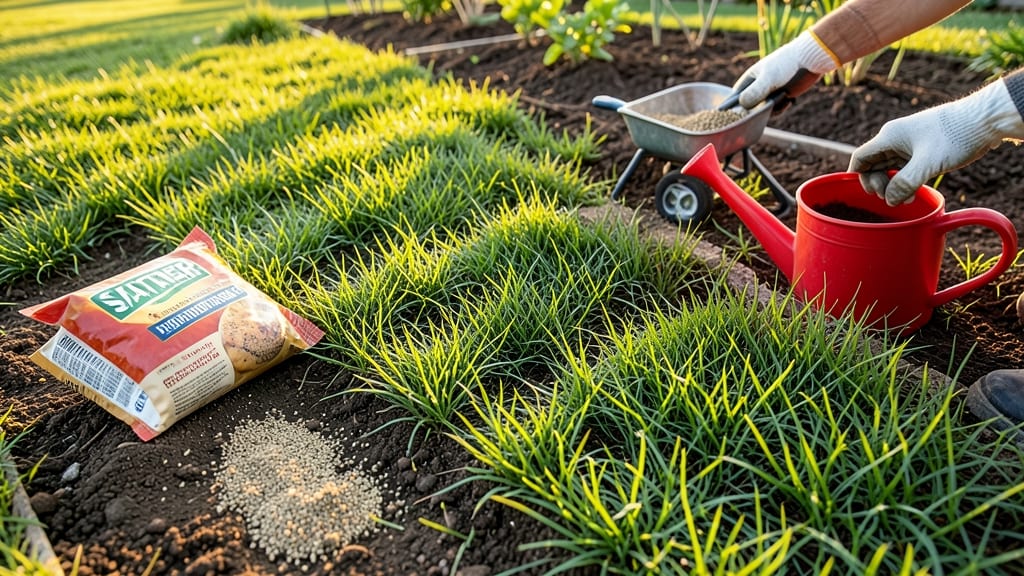
Fertilizing lawn after seeding at 6 to 8 weeks is the key to strong roots and lush growth—rushing it can burn delicate seedlings before they even take hold.
Picture this: you’ve just seeded your lawn, carefully choosing the right grass and preparing the soil. But if you fertilize too soon, the concentrated nutrients can overwhelm tender sprouts, stunting their growth or worse, killing them before they establish.
That’s why patience pays off—waiting ensures your grass develops the resilience it needs to thrive.
Beyond just weeks, your lawn’s readiness depends on factors like soil moisture, grass height, and even weather patterns. A uniform green color and dense growth are clear signs it’s time, but skipping these cues can lead to over-fertilizing—a common mistake that weakens rather than strengthens your lawn.
In this guide, I’ll walk you through the science behind the wait, how to spot when your lawn is truly ready, and the best fertilizers to use for a smooth transition from seeding to full, vibrant growth.

Why waiting 6 to 8 weeks after seeding is critical for lawn fertilization
When you pour seeds into freshly tilled soil, the real work begins—waiting for those tiny sprouts to emerge and grow into a lush lawn. But here’s the catch: fertilizing too soon can actually kill your new grass before it gets a chance to thrive.
The 6 to 8 week waiting period isn’t arbitrary; it’s rooted in the delicate biology of young seedlings and how they interact with nutrients in the soil.
New grass seeds are like newborns—extremely vulnerable. Their roots are still shallow, and their systems are focused on establishing a strong foundation rather than absorbing heavy doses of nutrients. During the first few weeks, seedlings prioritize root development and photosynthesis, not rapid growth.
Fertilizer, especially those high in nitrogen, can overwhelm these tender systems, leading to burned blades or even death.
Let’s break down why this wait is non-negotiable. First, consider the root-to-shoot ratio. In the early stages, grass plants allocate most of their energy to growing roots—up to 70% of their resources—to anchor themselves and access water and nutrients from deeper soil layers.
Premature fertilization disrupts this balance, forcing the plant to divert energy toward leaf growth instead of root strengthening.
The nitrogen sensitivity of young grass is another critical factor. Nitrogen is the primary nutrient in most lawn fertilizers, and while it promotes leafy growth, it can be toxic to seedlings in high concentrations.
The microbes in the soil also play a role; they need time to establish a healthy ecosystem that can properly break down and deliver nutrients to the grass. Rushing fertilization can disrupt this microbial balance, leading to nutrient imbalances and potential disease.
Think of it like building a house. You wouldn’t start decorating the living room before the foundation is poured, would you? The same logic applies to your lawn. The first 2 to 4 weeks are all about germination and early root growth.
By weeks 4 to 6, the seedlings have developed a more robust root system and can begin tolerating small amounts of fertilizer. But even then, it’s best to use a low-nitrogen, high-phosphorus fertilizer to support root development without overwhelming the plant.
Here’s a visual guide to help you understand the critical stages of lawn development and when to introduce fertilizer:
Now that you understand the science behind the wait, let’s talk about what happens if you skip this critical period. Premature fertilization can lead to fertilizer burn, where the salt concentration in the soil draws moisture out of the grass blades, causing them to turn brown and crispy.
In extreme cases, it can kill the seedlings entirely, leaving you with bare patches that are even harder to repair than starting over.
Another risk is uneven growth. When you fertilize too early, some seeds may germinate faster than others, leading to a patchy lawn where stronger seedlings outcompete weaker ones. This creates thin spots that weeds can easily invade, turning your dream lawn into a battleground for dandelions and clover.
Patience pays off—waiting ensures your entire lawn grows at a consistent rate.
So, how do you know when your lawn is truly ready for that first dose of fertilizer?
Look for these signs: the grass should be at least 2-3 inches tall, the blades should be deep green and uniform, and you should be able to pull up a small section of sod and see roots at least 2-3 inches deep.
If you’re unsure, err on the side of caution—waiting an extra week or two won’t hurt, but rushing can set your lawn back months.
Remember, the goal isn’t just a green lawn; it’s a healthy, resilient lawn that can withstand foot traffic, drought, and pests.
By giving your new grass the time it needs to develop strong roots before introducing fertilizer, you’re setting the stage for a lawn that will thrive for years to come. 🌱
Signs your new lawn is ready for fertilizer (beyond just weeks)
Waiting 6 to 8 weeks after seeding is just the starting point—your lawn must show specific signs of readiness before you apply fertilizer. Rushing this step can lead to nutrient burn or stunted growth, especially when young roots aren’t deep enough to handle concentrated nutrients.
Instead of guessing, look for these key indicators that your grass is prepared for fertilization.
First, check the grass height. If your new lawn has reached about 2 to 3 inches tall with a thick, even carpet of blades, it’s a strong signal. This height means the roots have grown long enough to absorb nutrients without stress.
Another clue is the color consistency—vibrant, uniform green blades indicate healthy photosynthesis and root development.
Soil moisture also plays a critical role. Before fertilizing, ensure the top 2 to 3 inches of soil are moist but not soggy. Press your finger into the ground; if it feels damp but not waterlogged, your lawn is ready. Overly dry soil can cause fertilizer to clump and burn tender roots, while waterlogged soil prevents proper nutrient uptake.
✅ Your Lawn is Ready for Fertilizer When:
- 🌱 Grass height reaches 2-3 inches with no bare spots.
- 💧 Soil is moist but not waterlogged (test with your finger).
- 💚 Blades are uniformly green with no yellowing or patchiness.
- 🌿 Weeds are minimal or nonexistent, showing strong grass competition.
- 👟 Grass resists light foot traffic without flattening easily.
Pro Tip: Avoid fertilizing if your lawn shows yellowing tips or thin patches—these are signs it still needs time to recover.
Don’t overlook the root depth, which is harder to see but crucial. Gently pull up a small section of grass—if the roots extend 1 to 2 inches deep, your lawn is ready. Shallow roots mean the grass isn’t anchored enough to handle fertilizer stress.
Additionally, watch for weed suppression. If weeds are sparse or nonexistent, your grass is strong enough to compete and absorb nutrients efficiently.
Finally, consider the weather forecast. Fertilize on a cool, overcast day or in the early morning to prevent rapid nutrient evaporation. If rain is in the forecast within 24 to 48 hours, hold off—this gives the fertilizer time to soak into the soil without washing away.
Timing isn’t just about weeks; it’s about conditions.
When you see these signs, your lawn is primed for fertilization. Use a slow-release, low-nitrogen fertilizer to avoid overwhelming the roots, and always water thoroughly after application. Patience now means a thicker, greener lawn for years to come. 🌿