
How To
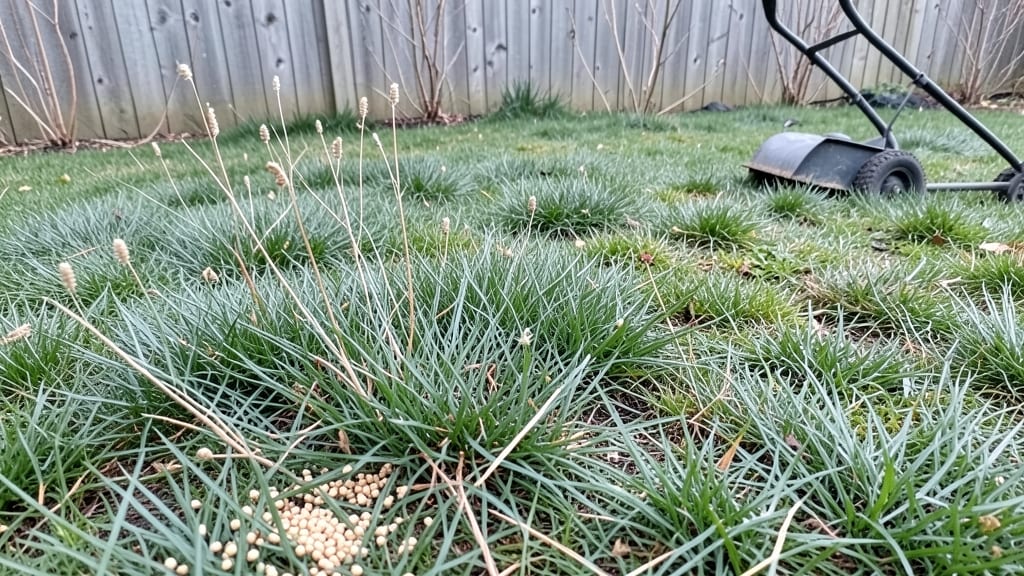
Fertilizing cool season grass occurs in early fall, late winter, and early spring to support root growth and vibrant growth cycles. Apply fertilizer when grass is actively growing but before extreme heat or cold sets in, typically between 60°F and 75°F soil temperatures.
Timing your lawn care isn’t just about seasons—it’s about matching the grass’s natural rhythm. Cool season varieties like fescue and ryegrass thrive when soil temperatures hover between 60°F and 75°F, signaling them to push new roots and blades.
In colder climates, this window opens in late winter (think February-March) as frost lifts, while Southern regions might extend it into early spring or even early fall (September-October) before heat stress sets in.
I’ve seen firsthand how missing this window can leave grass struggling—it’s like feeding a runner before their big race. 🔥
Pro tip: Use a soil thermometer to check depth (4-6 inches down) before applying fertilizer. If temps dip below 50°F or climb above 80°F, nutrients get locked out or burned up, wasting your investment.
Pairing fertilization with a light watering afterward helps the grass absorb what it needs without stressing the roots. Think of it as giving your lawn a power drink at the perfect moment. ✨
💡 In This Article
- Optimal Soil Temperatures for Cool Season Grass Fertilization
- Seasonal Fertilizer Application Schedule for Lawn Care
Optimal soil temperatures for cool season grass fertilization
Cool season grasses like Kentucky bluegrass and tall fescue grow best when soil temperatures fall between 60°F and 75°F. This range isn't random—it's the sweet spot where microbial activity in the soil peaks, breaking down organic matter and releasing nutrients like nitrogen, phosphorus, and potassium that grasses crave.
Below 60°F, microbial activity slows dramatically, while above 75°F, heat stress causes roots to retreat deeper into cooler soil layers, locking out surface-applied nutrients. 🌱
The science gets even more interesting when you consider how temperature affects nutrient uptake. At 60°F, grass roots begin active growth, absorbing up to 30% more nitrogen than in cooler conditions.
By 75°F, photosynthesis ramps up, but only if the grass has stored enough energy from earlier growth phases. This is why fall fertilization (when days are warm but nights cool) often yields better results than spring alone—it gives roots a head start for winter survival.
In Southern climates, this window might extend into November, while Northern regions should aim for September before frost.
Testing soil temperature is simpler than you'd think. Use a soil thermometer inserted 4-6 inches deep (where most grass roots live) between 10 AM and 2 PM on a sunny day for the most accurate reading.
Morning dew or recent rain can skew results, so wait until the soil is dry. Pro tip: If your lawn feels spongy underfoot, that's a sign roots are shallow—ideal for nutrient absorption.
Conversely, hard, dry soil means roots have retreated deeper, and you'll need to water before fertilizing to wake them up. 💧
Regional variations create unique challenges. In the Deep South, where winters are mild, cool season grasses may stay active year-round, but fertilization should still pause during summer's 90°F+ heat waves.
Meanwhile, in Zone 5 or colder, the growing window shrinks to just 6-8 weeks between snowmelt and first frost. Here, a slow-release fertilizer applied in early fall becomes your best friend—it feeds roots gradually through winter's dormancy, ensuring a head start in spring.
What most people overlook is how soil temperature interacts with moisture. Fertilizer burns occur when dry soil concentrates nutrients on the surface, creating a salt buildup that damages root tips. Always water 1 inch before and after applying fertilizer to dilute salts and encourage downward movement.
This is especially critical in sandy soils, where nutrients leach away quickly, versus clay soils, which hold moisture (and salts) longer. A simple soil test can reveal your lawn's pH and nutrient needs—aim for a 6.0-7.0 pH range to maximize nutrient availability. 🧪
Timing isn't just about temperature—it's about aligning with the grass's natural growth phases. Early fall fertilization (when grass is still photosynthesizing but before dormancy) builds root reserves for winter. Late winter applications (as soil warms to 50°F) kickstart spring growth, while early spring tops off the cycle.
Think of it as a three-act play: fall (root growth), winter (rest), and spring (blade growth). Miss any act, and your lawn's performance suffers. ✨