
Lawn
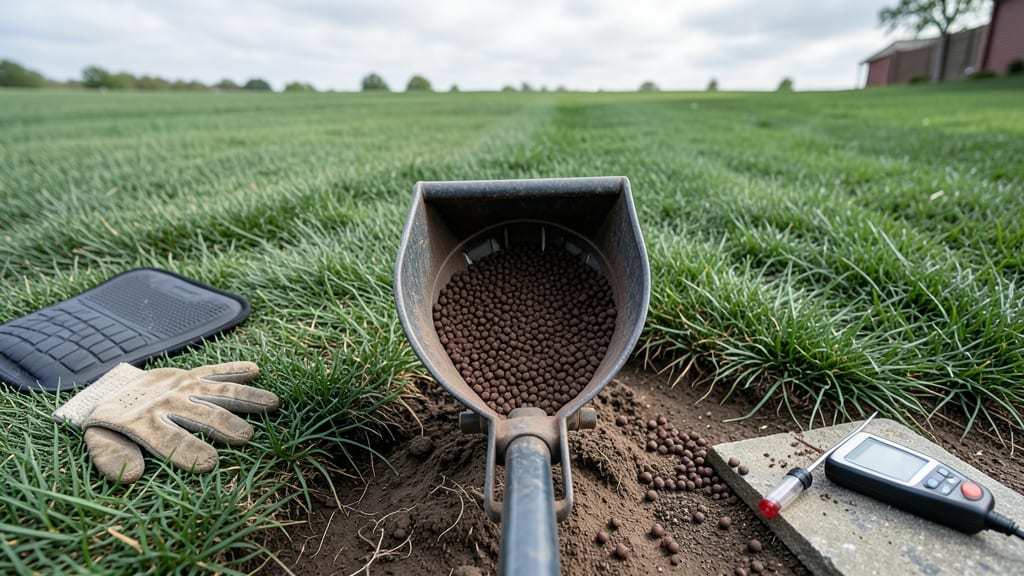
The best times to fertilize your lawn are during early spring (late March to early May) and fall (late August to early October), when soil temperatures reach 55–65°F. This timing ensures maximum nutrient absorption and promotes strong root growth before extreme heat or dormancy sets in. Winter and peak summer applications should be avoided.
Timing your lawn fertilization around soil temperature is more important than you might think.
When soil is between 55–65°F, your grass roots become most active, allowing them to absorb nutrients efficiently. 🌱 This is why spring and fall are ideal—these seasons provide the perfect balance of warmth and moisture for both root development and microbial activity in the soil.
In colder months, roots become dormant, while summer's intense heat can stress your lawn, making fertilization less effective.
What's interesting is how regional climate zones affect these timelines. For example, lawns in USDA zones 3–5 may need to adjust their spring schedule slightly later than those in warmer zones, while drought-prone areas might require additional soil moisture preparation before applying fertilizer.
Always check your local climate patterns to fine-tune the schedule for optimal results.
💡 In This Article
- Soil Temperature and Root Growth Dynamics
- Seasonal Fertilizing Schedule by Climate Zone
Soil temperature and root growth dynamics
Grass roots become most active when soil temperatures consistently stay between 55–65°F, which is why this range triggers peak nutrient uptake. At these temperatures, root cells increase their metabolic activity by up to 40% compared to cooler conditions, allowing them to absorb nitrogen, phosphorus, and potassium more efficiently.
Below 50°F, root growth slows dramatically as cells enter a semi-dormant state, while above 70°F, the heat can stress roots and cause nutrient burn.
The science behind this involves microbial activity in the soil. Beneficial soil bacteria and fungi, which help break down organic matter into plant-available nutrients, thrive in this temperature range. For example, mycorrhizal fungi—critical for phosphorus uptake—become 2-3 times more active when soil temps are ideal.
This microbial boost creates a "fertility cycle" where roots and soil organisms work together to maximize nutrient availability. 🌱
Seasonal shifts also affect root depth. In spring, roots grow downward at a rate of about 1/2 inch per week when conditions are optimal, while summer heat can cause roots to retreat closer to the surface in search of moisture.
This is why fall fertilization—when roots are still active but topsoil isn't scorching—often yields better results than summer applications, which can lead to nutrient runoff before roots can absorb them.
Cold weather presents another challenge: when soil temps drop below 45°F, roots produce less auxin—a hormone that stimulates cell elongation—causing growth to stall. This dormancy period explains why winter fertilization is ineffective; any nutrients applied won't be absorbed until spring, risking leaching or waste.
The same principle applies in summer, where extreme heat can cause fertilizer salts to concentrate near the soil surface, potentially burning tender root tips.
What most homeowners don't realize is how soil moisture interacts with temperature. Even at ideal temps, dry soil can create a barrier that prevents roots from accessing nutrients. That's why a light watering 24 hours before fertilizing helps—it primes the soil for better absorption.
Think of it like preparing a sponge: damp soil holds nutrients longer than dry soil, which repels water and fertilizer alike. ✨
For visual learners, imagine your lawn roots as tiny straws. When soil is warm and moist, these straws are wide open, eagerly sipping up nutrients. But when it's too cold or too hot, the straws shrink or clog, making fertilization a waste of time and money.
This is why professional lawn care experts always check soil temps before recommending fertilizer schedules.