
Lawn
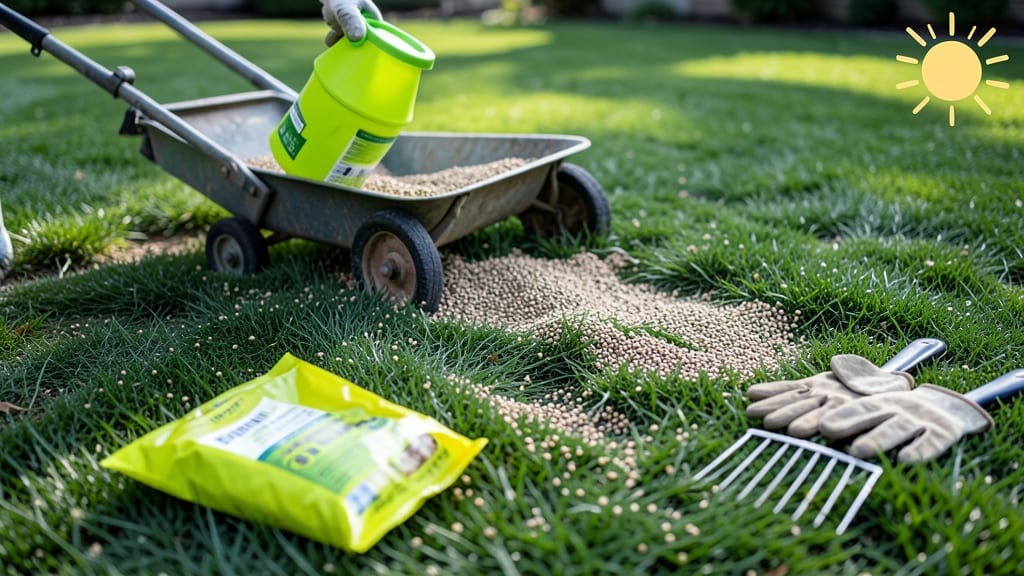
To fertilize your lawn at the best times, schedule applications based on grass type and climate: cool-season grasses benefit from feeding in early spring, late spring, and fall, while warm-season grasses respond best to early spring and late summer applications when soil temperatures hit 60-65°F. Always conduct a soil test first to determine pH and nutrient needs.
Timing your lawn fertilizer applications isn't just about seasons—it's about matching your grass's natural growth cycles.
Cool-season grasses like Kentucky bluegrass and fescue wake up in early spring and stay active until fall, while warm-season varieties like Bermuda and Zoysia need that 60-65°F soil temperature trigger to kickstart their growth. 🌱 I've seen dramatic differences in lawn health when people skip this step—fertilizing too early can waste nutrients, while waiting too long lets weeds take over.
The key is understanding your grass type and local climate patterns.
For example, in northern regions, fall fertilization helps cool-season grasses store nutrients for winter, while southern lawns might need that late summer boost to prepare for dormancy.
Always check your soil's pH first—most grasses prefer a range of 6.0 to 7.0, and adjusting this before fertilizing makes a huge difference in how well your lawn absorbs nutrients.
💡 In This Article
- How Soil Temperature Determines Fertilizer Timing
- Seasonal Lawn Fertilization Schedule by Grass Type
How soil temperature determines fertilizer timing
Soil temperature acts as the biological trigger for grass growth, dictating when roots become metabolically active enough to absorb nutrients. For warm-season grasses like Bermuda or Zoysia, the 60-65°F threshold signals their roots to wake from dormancy and begin rapid cell division.
This is why late spring applications (when soil hits this range) produce such dramatic results—roots that were previously sluggish suddenly start processing nitrogen, phosphorus, and potassium at peak efficiency. 🌡️ Cool-season grasses, however, have a different rhythm: their roots stay active even at 50°F, which is why they can utilize early spring fertilizers before warm-season competitors even stir.
The science behind this involves chlorophyll production. When soil temperatures rise above 60°F, warm-season grasses ramp up photosynthesis at a rate that can double their growth in just 2-3 weeks. This explains why missing that late-summer window means your lawn might never fully recover from summer stress.
The nutrient absorption window is narrow—typically just 4-6 weeks—because once temperatures climb above 85°F, grass roots start shutting down again to prevent heat stress. This is why professional lawn care often uses soil thermometers to pinpoint the exact moment to apply fertilizer.
What most people don't realize is how this temperature trigger affects fertilizer breakdown. Granular fertilizers release nutrients slowly, but their effectiveness depends entirely on root activity.
If you apply fertilizer when roots are dormant (like winter for warm-season grasses), you're essentially throwing money away—those nutrients just sit in the soil until conditions improve. The same principle applies to liquid fertilizers, though they're slightly more forgiving because they can be watered in immediately.
The key is matching your application timing to when your grass's metabolic engine is running at full throttle.
Regional climate plays a massive role in these temperature triggers. In the Deep South, the 60-65°F window might occur as early as March, while northern lawns may not see it until May. This is why blanket recommendations fail—what works in Georgia won't work in Minnesota.
Even within the same state, microclimates can shift these timelines by 2-3 weeks. For example, lawns in urban heat islands might hit that trigger a week earlier than rural areas due to pavement and building heat retention.
Always check local weather patterns and consider using a soil thermometer for 3-5 days to confirm the right moment.
Here's what happens when you get the timing wrong: Fertilizing too early (when roots are still dormant) leads to nutrient runoff, wasting resources and potentially polluting waterways. Applying too late means your grass misses its growth window entirely.
The ideal scenario is when fertilizer coincides with the grass's natural growth surge—this is why late spring for cool-season grasses and late summer for warm-season grasses consistently produce the best results.
Think of it like planting a garden: you wouldn't sow seeds in winter, and you shouldn't fertilize when your lawn's growth engine is off.
Professional lawn care services often use this temperature trigger to their advantage by offering "spring green-up" and "fall color" packages timed precisely to these windows.
For homeowners, the simplest solution is to monitor soil temperature at a 4-inch depth (where most grass roots reside) and apply fertilizer when it consistently stays in that optimal range for 3-5 days.
This small investment in timing can mean the difference between a mediocre lawn and one that's the envy of the neighborhood. 🌱