
Mower
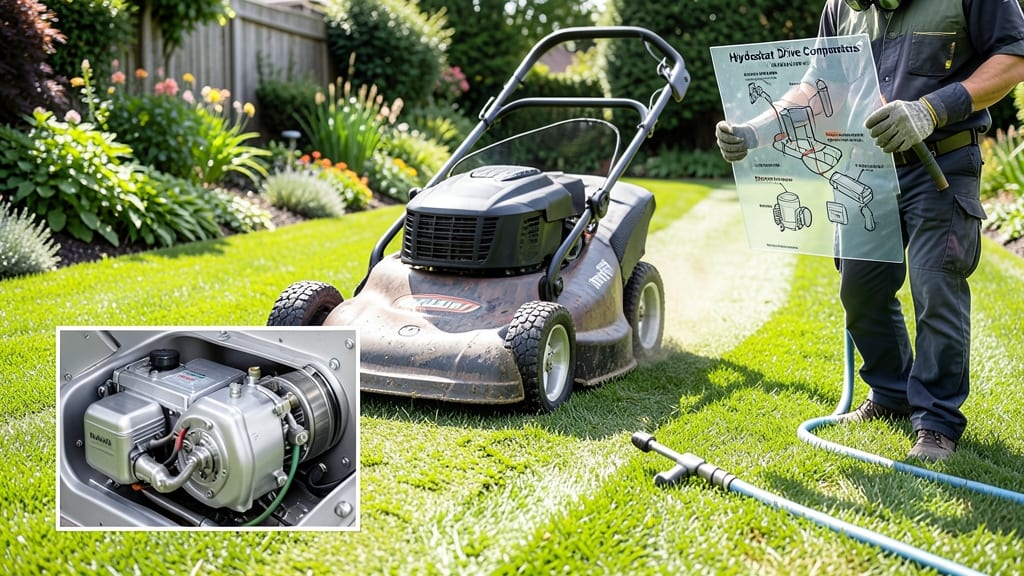
A hydrostatic lawn mower is a type of mower that uses fluid pressure to power the wheels directly, providing seamless speed adjustments without belts or gears. This design delivers instant torque and smooth operation across all terrain types.
A hydrostatic lawn mower doesn't rely on traditional mechanical transmissions like CVT systems.
Instead, it uses hydraulic fluid to transfer power from the engine to the wheels, creating a continuous range of speeds. 🔥 This means you can smoothly shift from slow to fast without gear changes, making it ideal for navigating uneven terrain or thick grass.
The system also delivers consistent power to both wheels, improving traction and stability.
Many homeowners prefer hydrostatic mowers for their durability and ease of use. Unlike CVT mowers that require occasional belt adjustments, hydrostatic units typically need less maintenance. The fluid-based system is also more forgiving on hilly landscapes, as it maintains power regardless of slope.
💡 In This Article
- How Hydrostatic Drive Systems Work in Lawn Mowers
- Hydrostatic vs CVT Lawn Mowers: Key Performance Differences
How hydrostatic drive systems work in lawn mowers
At its core, a hydrostatic drive system replaces traditional mechanical transmissions with a closed-loop hydraulic circuit. When you press the throttle, pressurized fluid from a pump flows through hoses to a hydraulic motor connected to each wheel.
The greater the fluid pressure, the faster the motor spins—and since both wheels receive power independently, you get instant torque response without gear shifting. This creates that signature "buttery smooth" acceleration you notice when mowing over uneven terrain.
The system operates at pressures typically ranging from 1,500 to 3,000 psi, with fluid volumes measured in 0.1 to 0.5 gallons per minute depending on the mower's size.
Unlike CVT systems that rely on belts and pulleys (which can slip under load), hydrostatic drives maintain consistent power delivery even when climbing hills or cutting through thick grass. The fluid acts like a mechanical "shock absorber," absorbing vibrations that would otherwise transmit through the drive system to your hands.
What makes this design particularly clever is the elimination of mechanical linkages. Traditional mowers use belts that stretch over time, requiring periodic adjustments or replacements. Hydrostatic systems, however, have no belts to wear out.
The sealed fluid system also means fewer moving parts exposed to dirt and debris, which translates to longer service intervals. You'll find these systems in premium brands like Husqvarna and Scag, where reliability is prioritized over cost savings.
Consider how this plays out in real-world use: When mowing a steep hill, a hydrostatic mower maintains power to both wheels independently. The left wheel might spin faster on the uphill side while the right stays grounded, creating automatic traction adjustment.
This self-compensating behavior is impossible with fixed-ratio transmissions or even CVT systems, which rely on belt tension for speed changes. The result? A mower that feels almost "alive" as it responds to terrain changes in real time.
There's also the matter of heat dissipation. Hydrostatic systems generate some heat from fluid friction, but modern designs incorporate cooling fins and heat-resistant fluids to maintain operating temperatures.
Most systems can handle continuous operation without overheating, even in 90°F+ conditions—a limitation you might encounter with some belt-driven mowers during peak summer hours.
The fluid itself is typically a specialized hydraulic oil with anti-wear additives, designed to last the life of the mower with minimal maintenance. Some manufacturers even use biodegradable fluids in eco-conscious models, though these may require more frequent changes.
This sealed system also means no oil leaks or spills, making hydrostatic mowers cleaner to operate than their mechanical counterparts.