
Lawn
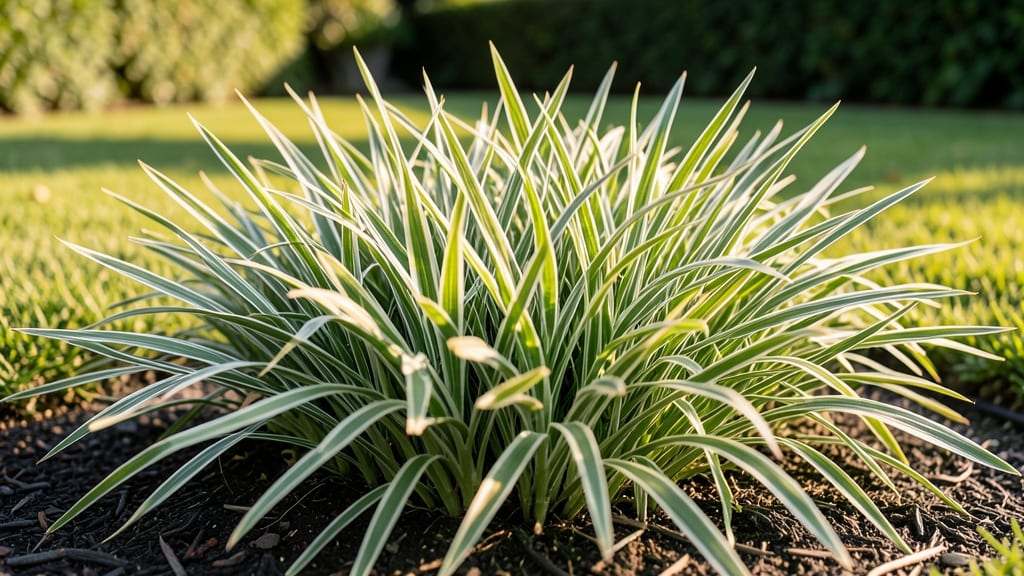
Variegated lawn grass turns ordinary yards into bold living art. 🌿 The striped patterns—like emerald ribbons woven through green—create a look that’s impossible to ignore, and it stays vibrant through all four seasons.
I’ve grown it for years, and the key is treating it like a high-maintenance ground cover rather than regular grass. Soil prep matters most: mix in compost for drainage, and avoid heavy clay. Watering needs to be consistent, but not drowning—think deep soaks twice a week rather than daily sprinkles.
The payoff? A lawn that looks like a designer garden, even in winter. Mow high (3-4 inches) to protect those delicate stripes, and avoid heavy foot traffic if you want the pattern to stay crisp. It’s not for high-traffic areas, but as a decorative feature or low-use yard, it’s unbeatable.
Fair warning: it’s pricier than standard grass, but the visual impact makes it worth it. Once established, it’s low-maintenance—just don’t let weeds take over, or those stripes will fade fast.
📚 In This Guide
- What you need
- Instructions
- Tips and common mistakes
- Wrapping up and next steps
What you need
- ● Variegated lawn grass seed, sod, or plugs: Seed: 10–20 lbs per 100 sq. ft. (check variety like Zoysia japonica 'Variegata' or St. Augustine 'Floratam Variegated')
- ● Sod: Pre-cut rolls (1 sq. ft. per sq. ft. of lawn)
- ● Plugs: 3–4 inch squares, spaced 6–12 inches apart
- ● Lawn preparation tools: Lawn mower (adjustable to 1.5–2.5 inches for variegated grass)
- ● Garden rake (for leveling soil)
- ● Soil aerator or core sampler (rental available)
- ○ Lawn roller (optional but helpful for seed/sod)
- ● Soil amendments: Compost or organic matter (2–3 inches, mixed into top 4 inches of soil)
- ● Slow-release fertilizer (10-10-10 or 16-4-8, 1 lb per 100 sq. ft.)
- ● Watering supplies: Garden hose with adjustable nozzle or sprinkler system
- ● Water timer (for consistent moisture)
- ● Weed control: Pre-emergent herbicide (apply after planting) or mulch fabric to suppress weeds.
- ● Edging tools: For clean borders if planting in stripes or patterns.
- ● Soil test kit: To check pH (ideal: 6.0–7.0 for variegated grass).
- ● Shade cloth: If planting in hot climates (30–50% shade for establishment).
Step-by-step guide to planting and maintaining variegated lawn grass
Transform your yard into a striking visual statement with this low-maintenance, drought-tolerant grass variety.
🌱 Step 1: Prepare the Soil for Optimal Growth
Test your soil's pH first—variegated lawn grass thrives in 6.0-7.0 range. If your soil is too acidic, mix in 1 pound of lime per 100 square feet and till it in 2-3 weeks before planting. This grass variety needs well-draining soil, so if your yard has heavy clay, amend with 2 inches of compost and 1 inch of coarse sand per square foot.
Rake the area smooth after amending—you want a level surface without clumps. Press down lightly with a garden roller to create good seed-to-soil contact. The goal is a fine, crumbly texture that won't crust over when watered. I like to work on a dry day; wet soil sticks to tools and makes amending messy.
☀️ Step 2: Plant at the Right Time for Best Establishment
Plant in early spring or late summer when temperatures are 65-75°F. This grass variety germinates best in consistent warmth—avoid planting when daytime highs exceed 85°F or drop below 50°F. Spread 1/4 pound of seed per 100 square feet evenly using a broadcast spreader set to medium.
Lightly rake the seeds into the soil with a stiff-bristled rake—just enough to cover them with 1/8 inch of topsoil. Press down gently again to ensure good seed contact. The striped pattern emerges as the grass matures, so don't worry if the new growth looks uniform at first. Water immediately after planting to settle the seeds.
💧 Step 3: Water Consistently for Strong Root Development
Keep the soil uniformly moist for the first 4-6 weeks—that means watering daily if rainfall doesn't occur. Use a sprinkler that delivers 1/4 inch of water per session and water in the early morning to prevent fungal issues. You'll know you're doing it right when the top 1/2 inch of soil stays damp but not soggy.
After the grass reaches 3 inches tall, reduce watering to 2-3 times per week unless experiencing extreme heat. Variegated grass develops deeper roots than regular lawn grass, so once established, it handles drought better. Watch for footprints staying visible after walking—this signals it's time to water again.
✂️ Step 4: Mow and Maintain for Vibrant Striped Appearance
Wait until the grass reaches 3-4 inches tall before the first mowing. Set your mower blade to 2.5-3 inches—never cut more than 1/3 of the blade height at once. The striped pattern becomes more pronounced as the grass matures, so resist the urge to mow too short. I find mowing in the late afternoon reduces stress on the plants.
Fertilize once in early spring with a slow-release, low-nitrogen formula (10-0-10 ratio). Apply 1/2 pound per 100 square feet and water immediately after. Avoid high-nitrogen fertilizers—they promote leaf growth at the expense of the striking variegation. Overseed bare spots in late summer using the same seed rate as initial planting.
🌿 Step 5: Protect and Preserve the Unique Pattern Year-Round
The striped pattern fades slightly in full winter dormancy but returns fully in spring. Apply 2-3 inches of mulch around the lawn edges in fall to protect roots from freeze-thaw cycles. Avoid heavy foot traffic during winter—compacted snow can damage the delicate striped blades.
In early spring, remove any thatch buildup by raking with a spring-loaded dethatching rake. You'll know you've done enough when you can see 3/4 inch of soil through the grass. This grass variety handles light foot traffic better than most, but heavy use will eventually dull the variegation. For best results, limit play areas to designated sections of the lawn.
Tips & tricks for perfect variegated lawn grass
Here's what nobody tells you about getting that show-stopping striped lawn without the guesswork.
Soil Prep Secret: Don't skip the pH test—variegated grass is picky about its 6.0-7.5 range. If your soil tests acidic, that 1 pound of lime per 100 square feet needs to be tilled in at least 2-3 weeks before planting. I learned this the hard way when my first attempt grew patchy because the lime didn't have time to integrate properly. For heavy clay soil, mix that 2 inches of compost and 1 inch of coarse sand thoroughly—don't just sprinkle it on top. The goal is breaking up those dense clumps so water and roots can move freely.
Planting Precision: Those 65-75°F temperatures in Step 2 are non-negotiable for germination. I check my local weather forecast for a 5-day stretch where daytime highs stay between 65-75°F without dipping below 50°F. Pro tip: If you're planting in late summer, aim for early August to avoid the heat spikes that can stress the seeds. When spreading that 1/4 pound of seed per 100 square feet, use a crosshatch pattern—first in one direction, then perpendicular—to ensure even coverage. The striped pattern won't appear until the grass reaches about 3 inches tall, so patience is key during those first few weeks.
Watering Wisdom: The 4-6 week daily watering window is your critical period. I set a timer for my sprinkler to deliver exactly 1/4 inch of water each session—any more and you risk washing away seeds, any less and you'll get uneven germination. Early morning watering prevents fungal growth, but if you must water in the evening, do it by 6 PM to give leaves time to dry. That 1/2 inch dampness check? Use a screwdriver—push it into the soil. If it comes out clean, you're golden. If it's dry at the bottom, water again.
Year-Round Care: That 2-3 inches of mulch in fall isn't just decoration—it's insulation. I use shredded hardwood mulch because it breaks down slowly and won't compact like straw. For winter protection, I also lay down a layer of frost cloth over the entire lawn when temperatures drop below 20°F. In spring, the dethatching step is crucial: when you can see 3/4 inch of soil through the grass, you've done enough. This prevents thatch buildup that can smother the delicate striped blades.
Pro Tips for Variegated Lawn Grass
- Here's what nobody tells you about getting that show-stopping striped lawn without the guesswork.
- Soil Prep Secret: Don't skip the pH test—variegated grass is picky about its 6.0-7.5 range.
- Planting Precision: Those 65-75°F temperatures in Step 2 are non-negotiable for germination.
Frequently asked questions
Got questions about keeping your variegated lawn grass looking its best? Here are some of the most common ones—and their answers!
What’s the best way to maintain variegated lawn grass to keep those stripes sharp?
Regular mowing (never cutting more than one-third of the blade at a time) and proper fertilization (use a slow-release, iron-rich blend) are key. Avoid heavy foot traffic on newly seeded areas, and water deeply but infrequently to encourage strong root growth. Pro tip: Mow in the same direction to prevent fraying those gorgeous stripes!
How long does it take for variegated grass to establish and show its striped pattern?
Patience is key! Newly seeded variegated grass typically takes 4–6 weeks to germinate and 3–6 months to fully establish. The bold stripes may not be fully visible until the grass reaches 3–4 inches tall. For faster results, consider sodding instead of seeding.
Is variegated lawn grass more expensive than regular grass?
Yes, it’s usually 20–50% pricier than standard turfgrass due to its unique breeding and slower growth rate. However, its year-round appeal and low-maintenance needs (like drought tolerance) can offset costs over time. Budget tip: Buy seeds in bulk or mix variegated grass with a hardy filler grass (like fine fescue) to save!
Can variegated grass handle cold winters or hot summers?
This grass thrives in USDA Zones 3–9, making it versatile for most climates. In winter, the stripes may fade slightly but return in spring. For extreme heat, water early in the morning to reduce evaporation. Heat hack: A light mulch layer (like straw) can protect seedlings from scorching.
What should I do if my variegated grass loses its stripes or turns patchy?
Fading stripes often signal nutrient deficiency (especially iron) or over-mowing. Try a chelated iron supplement and adjust your mowing height. Patchy areas may need reseeding—test soil pH (ideal: 6.0–7.0) and amend if needed. Quick fix: Overseed thin spots in early fall for best results.
Are there alternatives to variegated grass for striped lawns?
Yes! If variegated grass isn’t an option, consider:
- Striped clover mixes (adds pollinator benefits)
- Zebra grass (Miscanthus) (ornamental but not mowable)
- Dwarf Mondo grass (low-maintenance, striped varieties exist)
Wrapping up and next steps
Transforming your lawn into a striking variegated masterpiece is easier—and more rewarding—than you think! 🌿 With the right grass varieties, proper care, and a little creativity, you’ll enjoy a year-round showstopper that turns heads and boosts curb appeal.
Whether you’re planting Zoysia ‘Emerald Beauty’ or St. Augustine ‘Floratam’, the key is consistency in watering, mowing, and feeding.
Ready to take the next step? Start small—try a single strip or border—and watch your confidence (and lawn!) grow. Jump back to our planting tips or explore seasonal care to keep your variegated vision thriving. Your future lawn will thank you! 🌟