
Lawn
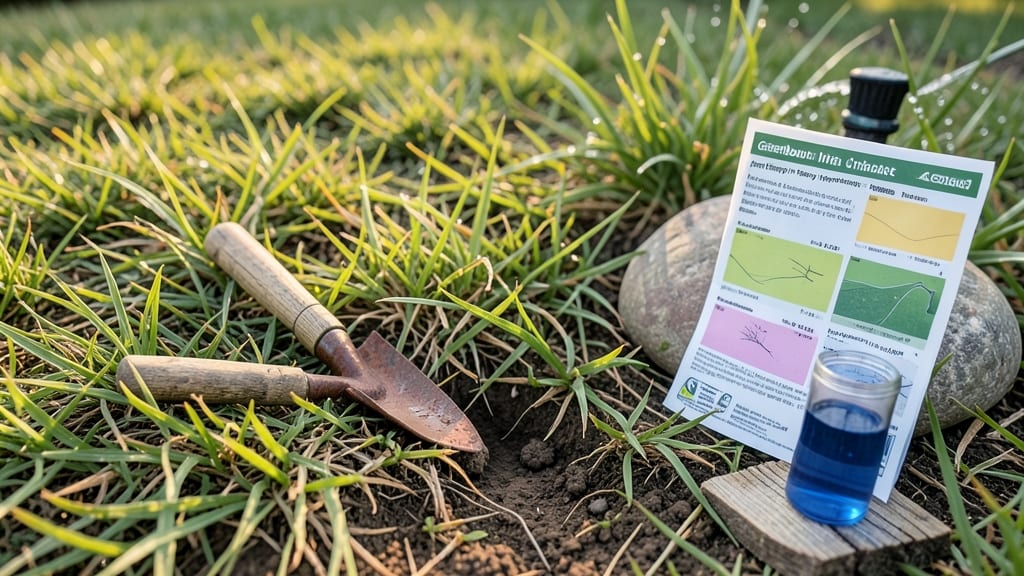
Too much iron in the lawn turns vibrant green into sickly yellow patches—like my Kentucky bluegrass last summer. 🌱 The problem sneaks in through over-fertilization or naturally acidic soil, locking out other nutrients while grass struggles to breathe. What starts as a few yellow spots can spread fast if ignored, leaving you staring at a lawn that looks more tired than thriving.
Most people assume iron deficiency causes yellowing, but too much iron actually does the same damage—especially in cool-season grasses like fescue or rye. The fix isn’t just skipping fertilizer; it’s balancing pH and nutrients.
A simple soil test (available for under $20) reveals whether your lawn needs lime to raise pH or organic matter to dilute excess iron. Without this step, you’re just throwing money at a symptom.
Within three weeks of adjusting pH and using chelated iron instead of straight iron sulfate, my lawn went from patchy to uniform green. The key is patience—grass recovers faster with proper watering (deep, infrequent soakings) and avoiding synthetic fertilizers until soil tests clear.
Warm-season grasses like Bermuda handle iron better, but even they need a balanced approach.
Prevention is easier than cleanup: test soil annually, fertilize based on results, and consider organic amendments like composted manure. For existing problems, lime (if soil’s too acidic) or sulfur (if too alkaline) brings nutrients back into balance. Your lawn won’t just survive—it’ll thrive without the guesswork.
Root Causes Of Iron Overload
Too much iron in your lawn isn’t just a random fluke—it’s often the result of specific soil and gardening practices. Understanding these causes helps you take corrective action before your grass turns into a rusty wasteland. Here’s why iron buildup happens and what triggers it:
Iron overload often starts with well-meaning but heavy-handed fertilization. Many lawn care products—especially those marketed for acid-loving plants (like azaleas, blueberries, or hydrangeas)—contain high concentrations of ferrous sulfate or chelated iron. While these are great for targeted plants, they can leach into surrounding soil and accumulate over time.
- The science: Iron is a micronutrient, meaning plants need it in small amounts.
But when applied in excess, it binds to soil particles (especially clay and organic matter) and becomes bioavailable—meaning it stays in the soil instead of being absorbed by plants. - Actionable fix: If you’re fertilizing for acid-loving plants, use granular products sparingly and water them in immediately to prevent runoff.
For lawns, opt for slow-release, balanced fertilizers (like 10-10-10) instead of iron-heavy formulas.
Iron doesn’t just sit in the soil—it moves with water. If your lawn has compacted or poorly draining soil, excess iron washes down into the root zone instead of flushing out. This is especially true in clay-heavy soils, which naturally hold onto iron like a magnet.
- The science: In anaerobic (low-oxygen) conditions, iron dissolves more easily and becomes highly reactive.
This creates a feedback loop: the more waterlogged the soil, the more iron leaches into plant roots, leading to oxidation stress (which turns leaves brown or purple). - Actionable fix: - Test your soil’s pH—if it’s below 6.0, iron becomes more soluble and toxic.
Aim for 6.0–7.0 for most lawns. - Improve drainage with gypsum (calcium sulfate) or organic matter (compost, peat moss) to loosen compacted soil. - Aerate annually to prevent waterlogging.
If your lawn has been in the same spot for decades, iron can accumulate naturally over time—especially if previous owners used iron supplements, old pesticides, or even rusty tools that corroded and left deposits.
- The science: Iron is not easily broken down by microbes.
Unlike organic matter (which decomposes), iron persists in the soil and can concentrate in the top 2–4 inches where roots grow. - Actionable fix: - Test your soil for iron levels (a simple soil test kit from a garden center will reveal excess). - Top-dress with sand or compost to dilute concentrated iron zones. - Avoid metal tools (like old shovels) that can introduce rust particles.
Even if you’re not adding iron directly, environmental factors can introduce it. Acid rain (common in industrial or polluted areas) dissolves iron from rocks and soil, making it more available to plants. Additionally, nearby construction sites, rusty fences, or even car exhaust can deposit iron particles onto your lawn.
- The science: Rainwater with a low pH (below 5.6) strips iron from minerals in the soil, increasing its mobility.
Over time, this washes iron deeper into the root zone, where it can disrupt nutrient uptake. - Actionable fix: - Apply lime (calcium carbonate) to neutralize acidity if your area has high acid rain. - Rinse lawns near industrial zones with clean water to reduce surface buildup. - Use mulch barriers around metal structures (like fences) to prevent rust runoff.
Believe it or not, soil microbes play a role in iron buildup. Beneficial bacteria and fungi regulate iron availability, but if their populations are disrupted (by pesticides, over-fertilization, or poor soil health), iron can become unchecked.
- The science: Certain microbes oxidize iron, forming iron plaques on roots.
While this can protect plants in some cases, too much oxidation leads to toxic buildup and nutrient lockout (preventing plants from absorbing phosphorus, zinc, or manganese). - Actionable fix: - Add compost or mycorrhizal fungi to restore microbial balance. - Reduce synthetic fertilizers and increase organic matter to feed beneficial microbes. - Avoid overwatering, which can starve soil of oxygen and encourage harmful bacteria.
Iron isn’t just a nutrient gone wrong—it can become downright harmful when levels exceed 500–1,000 ppm (parts per million) in the soil.
At this point, it can: - Block nutrient absorption (leading to yellowing or stunted growth). - Cause oxidative stress (visible as brown leaf tips or purple stems). - Alter soil pH over time, making it more acidic and less hospitable for grass.
Pro Tip: 💡 If your lawn has rust-colored stains or plants show signs of chlorosis (yellowing between veins), it’s a red flag—time to test and adjust before the problem worsens.
Fixing Your Iron-Overloaded Lawn
Too much iron in your lawn can turn your grass into a rusty mess and stifle acid-loving plants, but the good news is that fixing it is totally doable with the right approach.
Below, we’ve mapped out practical solutions based on the most common causes—whether it’s from over-fertilizing, acidic soil, or even water issues. Each fix is designed to be easy to follow, with prevention tips to keep your lawn healthy long-term.
If your lawn has been hit with too much iron-rich fertilizer (like chelated iron or sulfate-based feeds), the first step is to stop the source immediately.
⚡ How to Fix It
- Skip Iron-Based Fertilizers 🚫
- Switch to a low-iron or iron-free fertilizer for the next 3–6 months. Look for labels with low iron content or opt for organic options like compost or bone meal (which adds phosphorus instead).
- Flush the Soil 💦
- Deep watering (1–2 inches per week) helps leach excess iron from the root zone. Use a hose or irrigation system to saturate the soil thoroughly.
- Apply Lime to Neutralize 🧪 - Test your soil’s pH (aim for 6.0–7.0 for most grasses).
If it’s too acidic (below 6.0), spread pelletized lime (follow package rates) to raise the pH. This reduces iron availability naturally. - Pro Tip: 💡 Apply lime in fall or early spring for best results—avoid summer heat, which can stress the lawn.
- Use Iron-Chelating Inhibitors (Optional) 🧬
- For stubborn cases, iron-chelating agents (like those in some lawn care products) can bind excess iron, making it less available to plants. Follow product instructions carefully.
If your soil is naturally acidic (common in pine forests or clay-heavy areas), iron builds up because it doesn’t get flushed out.
⚡ How to Fix It
- Raise the pH Gradually 📈 - Conduct a soil test (DIY kits are affordable) to confirm acidity.
If pH is below 6.0, apply agricultural lime (calcium carbonate) at the rate recommended for your soil type. - Pro Tip: 🌡️ Split lime applications into two doses (e.g., half in fall, half in spring) to avoid shocking the lawn.
- Add Organic Matter 🍂
- Mix in compost or well-rotted manure (1–2 inches, worked into the top 4 inches of soil). Organic matter helps buffer pH and improves drainage, reducing iron buildup over time.
- Plant Iron-Tolerant Grasses 🌿
- If your lawn is already struggling, consider switching to iron-tolerant grasses like:
- Fine fescue (handles low pH well)
- Kentucky bluegrass (adapts to moderate acidity)
- Perennial ryegrass (fast-growing, resilient)
- If your lawn is already struggling, consider switching to iron-tolerant grasses like:
Poor drainage or hard water (high in minerals) can concentrate iron in the soil, turning your lawn into a rust-colored carpet.
⚡ How to Fix It
- Improve Drainage 🚿 - Aerate compacted soil in fall or spring using a core aerator.
This helps water and nutrients penetrate deeper, reducing surface iron buildup. - For clay-heavy soil, mix in sand or perlite (1 part amendment to 3 parts soil) to improve porosity.
- Use Rainwater or Filtered Water 🌧️
- If your tap water is hard (high in minerals), switch to rainwater or a water softener for irrigation. This prevents adding more iron to the soil.
- Install a French Drain (For Severe Cases) 🏗️
- If water pools in low spots, a French drain (gravel trench with a pipe) can redirect excess water, preventing iron from accumulating.
Once you’ve fixed the iron overload, keep these simple habits to prevent it from happening again:
- Test Soil Annually 📊 – Use a DIY soil test kit (like LaMotte or Luster Leaf) to monitor pH and iron levels.
- Fertilize Smartly 🎯 – Stick to balanced, slow-release fertilizers (e.g., 16-4-8 or 10-10-10) and avoid iron supplements unless absolutely necessary.
- Mow High ✂️ – Keep grass at 3–4 inches tall to shade the soil, reducing iron oxidation (rust spots).
- Dethatch Regularly 🌱 – Thatch traps moisture and nutrients; remove it in late spring or early summer with a rake or dethatching machine.
- Avoid Metal Tools 🔧 – Iron particles from old lawn tools can contaminate soil—use stainless steel or plastic tools instead.
For a fast reference, here’s how to tackle each cause:
| Cause | Immediate Fix | Long-Term Solution |
|---|---|---|
| Over-fertilizing | Flush with water + skip iron fertilizers | Use iron-free fertilizer + lime |
| Acidic soil | Apply lime + compost | Test pH biannually + organic matter |
| Poor drainage | Aerate + improve water flow | French drain + sand amendment |
| Hard water | Switch to rainwater | Install water softener |
With these steps, your lawn should recover within 3–6 months, and your acid-loving plants (like azaleas, blueberries, or hydrangeas) will thank you! 🌿💚 The key is patience and consistency—don’t rush the process, and your grass will bounce back healthier than ever.
Frequently asked questions
How do I know if my lawn has too much iron?
Look for yellowing grass between veins (chlorosis), rust-colored stains in the soil, or brown leaf tips. Test your soil with a DIY kit—iron levels above 500 ppm indicate excess. Cool-season grasses like fescue show symptoms first since they prefer neutral pH.
Can I use vinegar to fix iron overload?
No—vinegar (acetic acid) will lower pH further, making iron even more available to plants. Instead, use pelletized lime to raise pH gradually (aim for 6.0–7.0). For a quick fix, flush soil with deep watering to leach excess iron from roots.
Will compost help reduce iron buildup?
Yes! Compost buffers pH and improves drainage, which helps dilute concentrated iron. Mix 1–2 inches into the top 4 inches of soil in fall or spring. Pair it with annual soil tests to monitor iron levels—compost alone won’t remove excess iron but prevents future buildup.
Can I still fertilize my lawn if it has too much iron?
Only use iron-free fertilizers (like 16-4-8 or organic options) for 3–6 months while you correct the imbalance. Avoid chelated iron or sulfate-based products—they’ll worsen the problem. Focus on balanced nutrients (nitrogen, phosphorus, potassium) instead.
How long does it take to fix iron overload?
With proper adjustments (lime, flushing, pH testing), you’ll see improvement in 3–6 months. Warm-season grasses (like Bermuda) recover faster than cool-season types. Monitor progress with monthly soil tests—don’t rush by over-applying amendments, which can cause other nutrient imbalances.