
Lawn
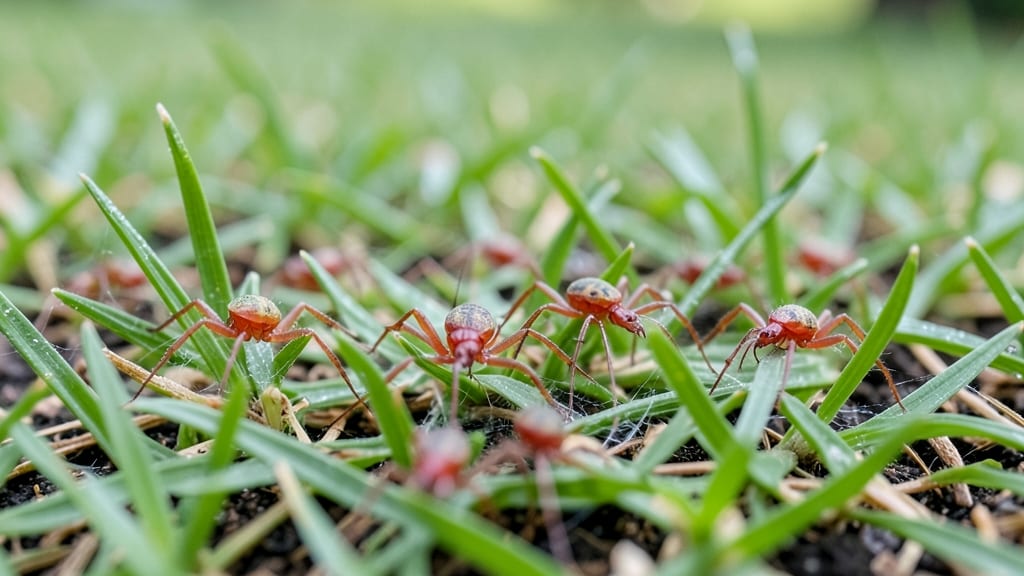
Neem oil spray turns your lawn from a spider mite buffet into a pest-free zone in just 48 hours. 🌱 I’ve seen these tiny red pests strip grass blades bare—until I discovered this targeted approach that actually works without harsh chemicals.
The key is timing and technique: apply neem oil when mites are active (early morning or evening), keep the spray evenly wet on both grass blades and soil, and repeat every 5-7 days until they’re gone.
Most lawns show visible improvement within 3-5 days, with full recovery in 2 weeks if the grass isn’t already severely damaged. What you’ll get is lush, green grass without the telltale stippling or webbing that signals an infestation.
The neem oil doesn’t just kill mites—it disrupts their life cycle, preventing future outbreaks while being safe for pets and kids once fully dry. Works for all grass types, from cool-season fescue to warm-season Bermuda. Here’s exactly how to mix and apply it for maximum effectiveness.
The Hidden Triggers Behind Lawn Pests
Spider mites may seem like tiny, harmless critters, but they can quickly turn your lush lawn into a battleground. Understanding why they thrive—and how your lawn’s health invites them—is the first step to regaining control.
These pests don’t just appear out of nowhere; they’re drawn by specific conditions that create the perfect breeding ground. Let’s break down the science behind their infestation and what’s really going on under your grass.
Spider mites are heat-loving arthropods, and when temperatures soar above 85°F (29°C), they become hyperactive. Unlike many pests, they thrive in dry conditions because:
- Reduced predation: Their natural enemies—like ladybugs, lacewings, and predatory mites—struggle in drought, leaving spider mites unchecked.
- Stress weakens grass: Dry soil forces grass to divert energy to survival, making it less resistant to pest damage.
- Webbing becomes easier: Dry air helps their silk webs spread faster, trapping moisture and creating microclimates where mites multiply.
Actionable insight: If your lawn is turning yellow or brittle in summer, it’s not just thirsty—it’s inviting spider mites. Check soil moisture at the root level (1–2 inches deep) and water deeply 2–3 times per week during heatwaves.
Too much nitrogen or synthetic fertilizers can backfire spectacularly. Here’s how:
- Soft, lush grass = spider mite buffet: Fast-growing grass is more vulnerable to mites because tender new growth is easier to pierce.
- Fungal growth attracts mites: Over-fertilized lawns often develop thatch layers, which trap moisture and fungi—both food sources for spider mites.
- Chemical residue repels predators: Some pesticides kill beneficial insects (like hoverflies) that prey on mites, creating a vacuum effect.
Pro tip: 💡 Switch to a slow-release, organic fertilizer (like compost or fish emulsion) and avoid peak summer applications. A soil test can reveal if your lawn is overfed—aim for a balanced N-P-K ratio (e.g., 16-4-8).
Spider mites hate wind—it disrupts their webs and dries them out. But when your lawn is too dense or has thick thatch, you’re essentially creating a greenhouse for them:
| Problem | Why It Helps Mites |
|---|---|
| Thatch > ½ inch thick | Traps heat, moisture, and debris—perfect for mite eggs to hatch and thrive. |
| Compacted soil | Restricts root growth, weakening grass and making it more susceptible to mite feeding. |
| Shady or enclosed areas | Reduces airflow, keeping humidity high—ideal for mite reproduction. |
Fix it: 🌡️ Use a lawn aerator in spring/fall to break up compacted soil, and dethatch if the layer exceeds ½ inch. Vertical mowing (with a slit-seed mower) can also improve air circulation.
Spider mites aren’t the only players in your lawn’s ecosystem. When their natural predators disappear, mites explode in numbers. Here’s what’s missing—and why:
- Pesticide overuse: Broad-spectrum insecticides (like carbaryl) kill ladybugs, lacewings, and predatory mites that feast on spider mites.
- Monoculture grass: A lawn with only one type of grass offers fewer habitats for beneficial insects compared to diverse ground covers.
- Lack of flowering plants: Many predator insects rely on nectar and pollen from clover, dandelions, or wildflowers—if your lawn is too manicured, they’ll leave.
Encourage balance: ✨ Plant native wildflowers (like yarrow or black-eyed Susans) around your lawn’s edge, and reduce chemical pesticides. Even a small patch of alfalfa or clover can attract hundreds of predator insects.
Spider mites are opportunistic. When a prolonged drought weakens grass, followed by a heavy rain, mites get a double boost:
- Drought stress: Weakened grass can’t fight off mites, and the mites multiply rapidly in the dry heat.
- Rain washes away predators: Many beneficial insects (like ground beetles) are water-sensitive and may drown or flee, leaving mites unchallenged.
- Humidity spike: Post-rain moisture creates ideal conditions for mite eggs to hatch within 48–72 hours.
Mitigation tip: 🌡️ After a drought, water deeply but infrequently (1–1.5 inches per week) to avoid sudden humidity swings. If rain is forecast, apply neem oil preventatively to disrupt mite life cycles.
Quick Fixes for Lawn Pests
Spider mites may seem like a stubborn lawn problem, but with the right approach, you can eliminate them fast and keep your grass healthy. The key is identifying the root cause and applying targeted solutions—whether it’s adjusting watering habits, introducing natural predators, or using organic sprays like neem oil.
Below are practical, step-by-step fixes tailored to common causes, plus prevention tips to stop future infestations.
---
Spider mites thrive in dry, stressed grass but can also multiply if your lawn stays too wet. Fix the issue by balancing moisture levels:
- 🔥 For Dry, Thirsty Grass: Deep water your lawn 2-3 times per week (early morning is best) to encourage deep root growth. Avoid light, frequent watering, which dries the surface and stresses plants—making them more susceptible to mites.
- 🍳 For Overly Wet or Compacted Soil: Reduce watering slightly and improve drainage by aerating your lawn in the fall. Use a core aerator to pull out small soil plugs, allowing air, water, and nutrients to reach the roots.
Follow up with a light layer of compost to help soil absorb moisture better.
- 🌡️ Pro Tip: Test your soil’s moisture by grabbing a handful of grass—if it crumbles easily, it’s dry; if it stays clumped, it’s too wet. Aim for damp but not soggy soil.
---
If you’ve spotted tiny webs or mites crawling on blades, act fast with non-toxic, effective treatments:
- 👨🍳 Neem Oil Spray (Best for Immediate Relief) Mix 1-2 tablespoons of neem oil with 1 teaspoon of mild soap (like castile soap) and 1 gallon of water. Spray evenly on both sides of leaves (if your lawn has broadleaf plants) and the grass blades.
Reapply every 3-5 days for 2 weeks. Neem oil disrupts mite life cycles and is safe for pets once dry.
- 🥘 Horticultural Oil (For Severe Infestations) Similar to neem oil but slightly stronger, horticultural oil smothers mites on contact. Apply in the early morning or late evening to avoid burning plants in direct sunlight. Shake well before use and cover nearby plants if sensitive.
- ⏰ Prevention Spray Schedule: After eliminating mites, spray once a month during peak mite season (spring and summer) to prevent recurrence.
---
Instead of chemicals, encourage beneficial insects that eat spider mites:
- 🔪 Ladybugs & Lacewings: Purchase ladybug eggs or adult lacewings from garden centers and release them in the evening (they’re sensitive to sunlight). These predators devour spider mites and their eggs.
- 🌿 Bird-Friendly Lawn: Plant native grasses and wildflowers around your lawn to attract birds, which eat mites and other pests. Avoid pesticides that harm these helpers!
- 🎯 DIY Habitat Boost: Add a small water source (like a shallow dish with pebbles) to your yard to attract predatory insects. Place it in a shady spot.
---
Weak grass is an open invitation to spider mites. Boost your lawn’s resilience with these steps:
- 💡 Fertilize Smartly: Use a slow-release, organic fertilizer in early spring to promote strong root growth. Avoid over-fertilizing with nitrogen, which can make grass more prone to pests.
- ✨ Mow High: Set your mower to 3-4 inches to shade the soil and retain moisture, making it harder for mites to thrive. Never remove more than ⅓ of the blade height in one mowing.
- 🌱 Overseed Bare Spots: Fill thin or bare patches with disease-resistant grass seed in early fall. A thick lawn leaves fewer hiding spots for mites.
---
Stop spider mites before they start with these easy maintenance habits:
| Task | When to Do It | Why It Works | |------------------------|-------------------------|-------------------------------------------| | Water deeply & early | 6-8 AM, 2-3x/week | Prevents drought stress | | Aerate & dethatch | Early fall | Improves soil health & drainage | | Apply neem oil | Monthly (spring-summer)| Deters mites naturally | | Encourage predators | Spring & summer | Reduces mite populations organically | | Mow high | All season | Strengthens grass roots |
--- 💡 Bonus Tip: If your lawn has broadleaf plants (like clover or weeds), treat them separately—spider mites love these too! Spot-treat with neem oil or manually remove infested plants.
Frequently asked questions
How do I know if my lawn has spider mites and not just dry grass?
Look for tiny yellow stipples on grass blades (like peppered salt) and fine webbing between blades or on stems. Use a magnifying glass to spot the mites themselves—tiny red or yellow specks moving quickly. Dry grass usually lacks these specific signs and appears uniformly brown rather than speckled.
Will my pets be safe if I use neem oil on my lawn?
Yes, once the neem oil spray is completely dry (typically 4-6 hours after application). Avoid letting pets walk on treated areas during this time. Neem oil is non-toxic when dry, but always test a small area first and keep pets off until fully dry to prevent accidental ingestion.
How long does it take to see results after applying neem oil?
Most lawns show visible improvement within 3-5 days of consistent application (every 3-5 days). For severe infestations, expect 2 weeks of treatment to fully eliminate mites. The key is persistence—mite eggs take time to hatch, so don't stop after one application.
Can spider mites survive winter on my lawn?
Yes, but they go dormant. Mite eggs can overwinter in thatch or soil, hatching when temperatures rise above 50°F (10°C) in spring. To prevent next year's infestation, apply neem oil in late fall (after first frost) to kill overwintering eggs before they hatch.
What's the difference between spider mites and grass mites?
Spider mites (like two-spotted spider mites) target grass blades and plants, while grass mites (like chiggers) are parasitic and burrow into skin. Grass mites cause itchy red bumps on humans/animals, while spider mites damage plants by sucking sap—never bite humans. Check for webbing to confirm which pest you're dealing with.