
Lawn
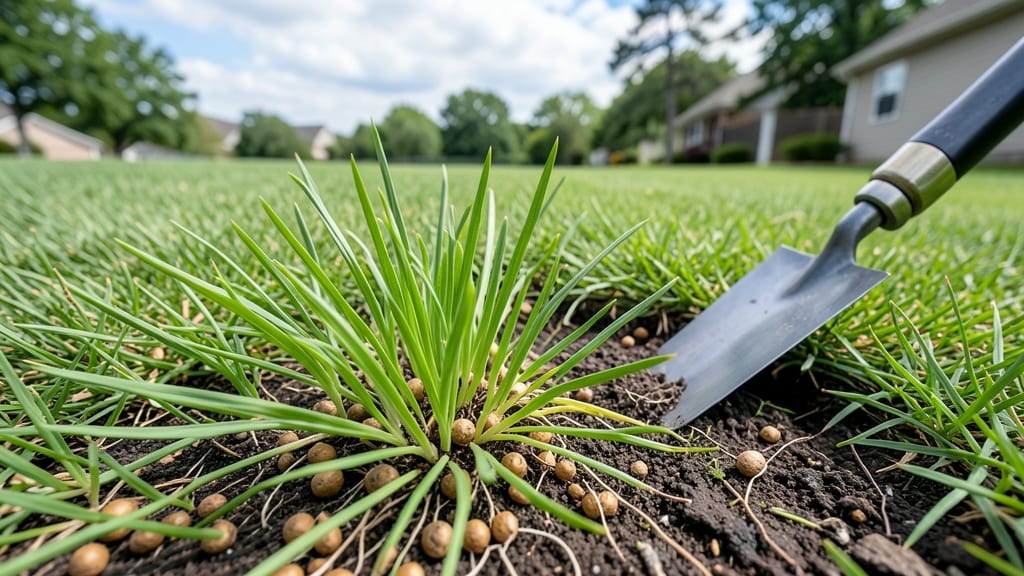
Scutch grass is the lawn nuisance you can't ignore—those stubborn, rice-like seedheads popping up even after treatment. 🌱 I've battled this persistent weed for years, and I'll show you how to break its cycle once and for all with a pre-emergent barrier that actually works.
The problem isn't just the visible plants—it's the underground tubers that regrow relentlessly. Most solutions fail because they only treat the tops while leaving the roots intact. We'll tackle this differently by combining manual removal, targeted herbicides, and a smart pre-emergent schedule that keeps new growth from starting.
By the end, you'll have a lawn where scutch grass is just a memory—not the stubborn invader that always comes back. The secret is persistence: we're not just fighting weeds, we're rewriting your lawn's future.
This works for both new lawns and established ones, whether you're dealing with small patches or full-blown infestations. Let's get started with the right approach from day one.
The Hidden Triggers Behind Grass Takeovers
If your lawn is slowly transforming into a scutch grass (also known as Digitaria spp.) haven, you’re not alone. This pesky annual weed thrives in specific conditions, and understanding why it invades your yard is the first step to stopping it.
Below, we break down the science-backed reasons scutch grass sneaks in—and how to address them.
Scutch grass loves disturbed, compacted, or nutrient-poor soil—the kind where desirable grasses struggle to establish strong roots. Here’s why:
- Low organic matter: Healthy lawns have rich, loamy soil packed with decomposing plant material. Scutch grass, however, thrives in sandy or clay-heavy soils with minimal organic content. Without proper nutrients, your turf grass weakens, leaving gaps for weeds to exploit. 💡 Pro tip: Conduct a soil test ($20–$50 at garden centers) to check pH and nutrient levels. Aim for a pH of 6.0–7.0 and amend with compost or peat moss if needed.
- Compaction from foot traffic or equipment: Heavy use compresses soil, reducing oxygen and water penetration. Scutch grass seeds germinate quickly in these conditions because they don’t need deep roots to survive. ✨ Actionable fix: Aerate your lawn in early fall (when soil is moist but not soggy) to relieve compaction. Rent a core aerator or hire a pro for stubborn areas.
- Thin or patchy turf: Bare spots—from drought, disease, or poor seeding—are scutch grass’s favorite real estate. Since it germinates rapidly (within 5–7 days of soil disturbance), it outcompetes slow-growing grasses like Kentucky bluegrass or fescue.
🔥 Key takeaway: Scutch grass doesn’t just invade—it replaces weak turf. Strengthen your soil first, and you’ll starve it out before it starts.
Scutch grass is a summer annual, meaning it peaks in hot, dry weather—exactly when many lawns are stressed from improper watering. Here’s how your routine might be fueling its growth:
- Overwatering or irregular schedules: Scutch grass thrives in moist but not waterlogged conditions. Frequent light watering (e.g., daily sprinklers) keeps the topsoil damp longer than deep, infrequent watering (1–1.5 inches per week). 🌡️ Fix it: Switch to deep-and-infrequent watering early in the morning (4–8 AM) to encourage deep root growth in your grass.
- Underwatering during heatwaves: Drought-stressed turf turns brown and brittle, creating gaps. Scutch grass seeds, often dormant in your soil, explode in germination when moisture returns. 🎯 Solution: Install a rain gauge or smart sprinkler controller to track soil moisture. If your lawn shows footprints after walking, it’s thirsty.
- Poor drainage: Low spots or clay soils that hold excess water create ideal scutch grass nurseries. Unlike cool-season grasses, it tolerates brief flooding but despises consistent dryness.
💡 Pro tip: If your lawn has thatch buildup (a layer of dead grass >0.5 inches thick), water penetrates poorly. Dethatch in early spring to improve absorption.
Scutch grass is a warm-season opportunist, meaning it’s wired to exploit seasonal weaknesses in your lawn. Here’s how timing works against you:
- Late spring/early summer germination: Seeds lie dormant in winter but sprout as soon as soil temps hit 60–65°F. If you overseeded with cool-season grass in fall, scutch grass may outpace it by spring. 🔥 Strategy: Apply pre-emergent herbicide (like prodiamine or pendimethalin) in late winter/early spring (before seeds germinate).
- Shady or partially shaded lawns: While scutch grass prefers full sun, it will invade shady areas if your turf is already struggling. Many shade-tolerant grasses (like fine fescue) grow slowly, leaving openings. 👨🍳 Action step: Mow shady areas higher (3–4 inches) to shade out weeds and improve grass density.
- Post-construction or renovation sites: Disturbed soil from new builds, sod installation, or aeration is a scutch grass magnet. The seeds hitchhike on tools, shoes, or even your pet’s paws.
⏰ Critical window: Scutch grass germinates in 3–5 days under ideal conditions. If you spot it in May, the seeds likely arrived months earlier.
Scutch grass doesn’t just grow—it spreads aggressively. Here’s how it infiltrates your lawn:
- Wind and water dispersal: Tiny, light seeds (0.04–0.08 inches long) travel easily on breezes or rain. A single plant can produce 50,000+ seeds per season, ensuring a steady supply.
- Human and animal activity: Mowing, raking, or even walking can spread seeds from one area to another. ✨ Prevent it: Clean mower decks and tools with a vinegar-water solution (1:3 ratio) after use.
- Contaminated soil or mulch: Topsoil, compost, or mulch from untreated sources may contain dormant seeds. Always check labels for “weed-free” guarantees.
- Birds and wildlife: Seeds stick to feathers or fur, then drop in your yard. A common issue near bird feeders or pet areas.
🔪 Radical solution: If scutch grass is spreading rapidly, remove it manually (roots and all) before it seeds. Use a weed puller or digger to avoid leaving fragments behind.
How to Fix Scutch Grass Overgrowth
Scutch grass (also called nutgrass or cyperus rotundus) can be a stubborn nuisance in lawns, but with the right approach, you can reclaim your turf. The key is addressing the root cause—whether it’s poor soil, moisture issues, or lack of maintenance—and applying targeted solutions.
Below, we break down practical fixes for each common cause, plus prevention tips to keep your lawn scutch-grass-free for good.
If scutch grass thrives in your lawn, it’s likely because your soil retains too much moisture or is too dense. This weed loves soggy conditions, so fixing drainage is step one.
How to Fix It:
- 🔥 Test Your Soil – Use a moisture meter or dig a small hole (6 inches deep) to check drainage. If water pools after 30 minutes, your soil is too compacted.
- 🍳 Amend the Soil – Mix in compost or sand (50/50 ratio) to improve aeration. For heavy clay soil, consider gypsum to break up compacted layers.
- 👨🍳 Core Aerate – Rent a core aerator (or hire a pro) to pull small soil plugs, allowing water and air to penetrate. Do this in spring or fall for best results.
- ⏰ Adjust Watering – Water deeply 2-3 times per week (early morning) instead of daily light sprinkles. Let the top inch of soil dry between waterings.
💡 Pro Tip: If your lawn has low spots, consider grading to redirect water flow away from problem areas.
Scutch grass sneaks in where grass struggles to grow—think thin patches, shaded areas, or high-traffic zones. A lush lawn is the best defense.
How to Fix It:
- 🔪 Overseed Bare Spots – Choose a shade-tolerant grass seed (like fine fescue) for low-light areas. Spring or early fall is ideal.
- 🌡️ Fertilize Properly – Apply a slow-release, nitrogen-rich fertilizer to encourage dense growth. Avoid over-fertilizing, which can invite weeds.
- 🎯 Mow High – Set your mower to 3-4 inches to shade out weeds and strengthen grass roots.
- ✨ Pre-Emergent Barrier – Apply a pre-emergent herbicide (like prodiamine) in early spring to block scutch grass seeds before they germinate.
💡 Pro Tip: If your lawn has bare patches, hand-pull scutch grass before seeding to prevent regrowth.
If scutch grass is already spreading, you’ll need a two-pronged attack: physical removal + targeted herbicides.
How to Fix It:
- 🔪 Dig Out the Tubers – Scutch grass spreads via underground tubers. Use a weeding tool or trowel to dig out as much of the root system as possible. Check for small white tubers—these regrow easily!
- 🍳 Spot-Treat with Herbicide –
- Glyphosate (Roundup) – Spray directly on scutch grass (avoid healthy grass).
- Sedgehammer (for lawns) – A selective herbicide designed for nutgrass in turf.
- Follow label instructions—overapplying can harm your lawn.
- 👨🍳 Solarize (For Severe Cases) – In hot climates, cover the area with clear plastic for 4-6 weeks to bake out tubers (best in summer).
💡 Pro Tip: Reapply herbicide every 2-3 weeks for 3 months to kill new sprouts. Persistence is key!
Once you’ve banished scutch grass, keep it from returning with these long-term strategies:
- 🌱 Maintain Soil Health – Regularly aerate and top-dress with compost to prevent compaction.
- 💧 Water Smartly – Avoid overwatering; scutch grass thrives in soggy conditions.
- 🎯 Stay Vigilant – Hand-pull new sprouts immediately—don’t let them develop tubers.
- 📅 Pre-Emergent Schedule – Apply pre-emergent herbicide in early spring (before scutch grass seeds germinate).
- 🔄 Reseed Thin Areas – A dense lawn leaves no room for weeds to take hold.
Final Thought: Scutch grass is tough, but with consistent effort, you can outsmart it. Start with drainage fixes, thicken your grass, and attack existing weeds—then lock in prevention. Your lawn will thank you! 🌿✨
Frequently asked questions about scutch grass
What does scutch grass look like compared to regular grass?
Scutch grass (also called nutgrass) has distinctive flat, rice-like seedheads that grow in clusters, while regular grass blades are more uniform and spread horizontally. The leaves are thin and V-shaped at the base, and it often grows in patches rather than evenly. Look for these white, tubular tubers underground—they're how it spreads relentlessly!
Why does scutch grass keep coming back even after treatment?
This weed spreads through underground tubers that can survive for years. If you only treat the tops, the tubers regrow! You must dig out the tubers (even small ones) or use selective herbicides that penetrate the soil. Reapply treatments every 2-3 weeks for 3 months to break the cycle.
Can I use vinegar to kill scutch grass in my lawn?
Vinegar works for spot treatments but can damage your grass if used carelessly. For lawns, mix 1 part white vinegar + 3 parts water in a spray bottle and apply only to scutch grass, avoiding healthy grass. For larger areas, glyphosate or Sedgehammer are safer choices that target the tubers without harming your turf.
How can I prevent scutch grass from spreading to other parts of my yard?
Clean all gardening tools and mower decks with a vinegar-water solution (1:3 ratio) after use. Avoid walking on infested areas with bare feet or pet paws, as seeds stick easily. For severe cases, solarize the area by covering it with clear plastic for 4-6 weeks in summer to kill tubers before reseeding.
Is scutch grass harmful to pets or children?
No, scutch grass is non-toxic to pets and children. However, its tubers can be sharp when dug up, so wear gloves when removing it. The real concern is its aggressive spread, which can choke out your lawn and create bare patches where pets might dig or children play.