
Lawn
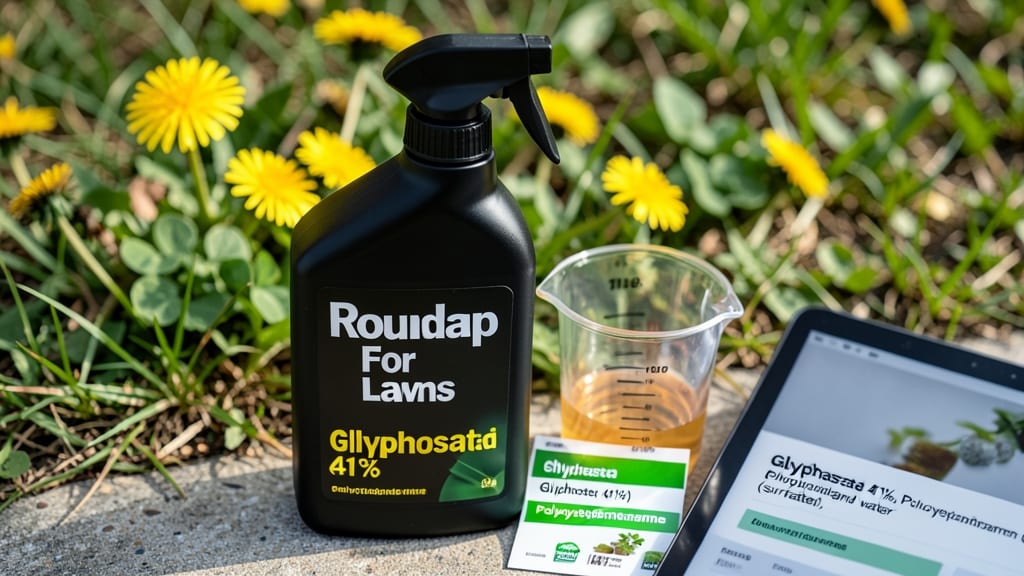
Understanding Roundup for Lawns' active ingredients is key to using it effectively while minimizing risks. The product relies primarily on glyphosate, a systemic herbicide that disrupts plant growth at the cellular level—stopping weeds before they spread.
This fast-acting formula targets broadleaf weeds and grasses, making it a go-to for lawn care when precision matters most.
Glyphosate works by inhibiting a specific enzyme in plants, which prevents them from synthesizing essential proteins. Since it’s not selective, it kills most vegetation it touches, which is why proper application (like spot-treating weeds rather than spraying entire lawns) is critical.
The active ingredient is absorbed through leaves and translocated to the roots, ensuring weeds die completely within days.
However, responsible use is non-negotiable. Glyphosate can linger in soil and pose risks to pets, children, and beneficial insects if overapplied. Always follow label instructions—apply only on wind-free days, avoid overspray, and keep kids and pets off treated areas until dry.
For organic lawns, consider alternatives like vinegar-based sprays or manual removal for targeted weeds.
If you’re concerned about chemical exposure, test a small area first and monitor for unintended damage. For tough weeds, reapply as needed, but prioritize timing—spring and fall are ideal for maximum effectiveness. Always store the product securely and dispose of containers properly to protect your lawn’s long-term health.
📚 In This Guide
- What you need
- Instructions
- Tips and common mistakes
- Wrapping up and next steps
What you need
- ● Roundup for Lawns (Active Ingredients): Glyphosate-based product (e.g., Roundup Ready-to-Use Weed & Grass Killer) – 1 gallon (covers ~500 sq. ft.)
- ● OR a concentrate formula (e.g., Roundup Concentrate) – 1 quart (dilute as per label instructions)
- ● Sprayer: Hose-end sprayer (for liquid products) OR
- ● Backpack sprayer (1-2 gallon capacity) OR
- ● Handheld trigger sprayer (for spot treatments)
- ● Protective Gear: Nitrile gloves (waterproof, 1 pair)
- ● Long sleeves & pants (to minimize skin exposure)
- ○ Safety goggles (optional but recommended)
- ● Measuring Tools: Measuring tape (for calculating lawn area)
- ● Garden hose with shutoff valve (for rinsing tools)
- ● Soil Activator: Post-treatment product (e.g., Roundup For Lawns Soil Activator) to restore grass growth after weed kill.
- ● Broadcast Spreader: For even distribution of granular weed killers (if using an alternative product).
- ● Weed Barrier Fabric: To prevent future weed growth in high-traffic or problem areas.
- ● Lawn Mower with Bagger: To collect dead weeds post-treatment.
How to apply Roundup for lawns with precision for fast weed control
Precision matters when using glyphosate-based herbicides—here’s how to apply Roundup for lawns efficiently while protecting desired plants.
Identify Target Weeds and Choose the Right Product
Roundup for Lawns contains glyphosate as its active ingredient, which works by disrupting a specific plant enzyme found only in broadleaf weeds and grasses, not in turfgrass. Before application, confirm the weeds are actively growing—young, green foliage responds best. Avoid applying to dormant weeds or during extreme heat, which can reduce efficacy.
Select the concentrated formula for larger areas or the ready-to-use spray for smaller, targeted treatments. Always check the label for the percentage of glyphosate—higher concentrations (like 41%) require dilution, while lower percentages (like 18-24%) are often pre-mixed. Wear gloves, long sleeves, and eye protection to prevent skin or eye irritation.
Prepare the Application Area and Equipment
Clear the area of desired plants, pets, and children—glyphosate can drift or be tracked. Use a shielded spray wand for precision, especially near sidewalks, driveways, or ornamental plants. For spot treatments, a pump sprayer with a fine mist nozzle ensures even coverage without overspray.
Fill your sprayer with water at 50-70°F—cooler water helps reduce evaporation and improves adhesion. Mix the concentrated Roundup according to label instructions (typically 2-4 oz per gallon of water). Shake thoroughly before use, as glyphosate can settle. Test a small, hidden area first to confirm the product’s effectiveness on your specific weeds.
Apply Under Optimal Conditions for Fast Action
Apply Roundup for Lawns on a calm, overcast day when temperatures are between 60-85°F—extreme heat or wind can cause rapid evaporation, reducing control. Focus on weed foliage only, avoiding direct contact with soil or turfgrass. For stubborn weeds, apply until the leaves are glistening but not dripping—this ensures full absorption without runoff.
Reapply if weeds regrow after 7-10 days, as glyphosate works systemically and may require time to translocate to the root. Water the treated area lightly 24 hours after application to help the herbicide move into the plant. Avoid mowing for 3-4 days post-treatment to prevent spreading residual chemical to untreated areas.
Monitor and Retreat as Needed for Complete Control
Check treated areas after 3-7 days—you’ll see weeds wilting and turning yellow as glyphosate disrupts their growth processes. If some weeds persist, they may be resistant or dormant; reapply only if new growth appears. For perennial weeds like dandelions or clover, a second application may be necessary after 7-14 days to fully exhaust root reserves.
Once weeds are dead, remove debris to prevent seed dispersal or regrowth. For lawns, overseed bare spots after 10-14 days to restore turf density. Store unused Roundup in a locked cabinet, away from children and pets, and dispose of empty containers according to local regulations.
Tips & tricks for precision weed control with Roundup for lawns
Mastering glyphosate application turns weed control from guesswork into science—here's how to maximize effectiveness while protecting your lawn.
Product Selection: For larger areas, the concentrated formula (41% glyphosate) offers better value and control, but always verify the label's mixing ratio—typically 2-4 oz per gallon of water. I've found that using the ready-to-use spray for spot treatments eliminates dilution errors and speeds up application. The key difference? Concentrated requires mixing precision, while ready-to-use delivers consistent strength immediately.
Application Technique: The 60-85°F temperature window is critical for glyphosate efficacy. I recommend applying in the early morning when dew is present—this creates a natural moisture layer that helps the herbicide adhere to leaves. For stubborn weeds like bindweed, focus on the growing points and apply until leaves glisten without dripping. This ensures maximum absorption while preventing runoff.
Safety First: Glyphosate's systemic action means it moves through the plant's vascular system, but that also means proper containment is essential. I always use a shielded spray wand when treating areas near driveways or sidewalks, and I never apply when wind speeds exceed 5 mph. The 24-hour watering recommendation after application isn't just for effectiveness—it's also a safety measure to prevent chemical drift during irrigation.
Monitoring Strategy: The 3-7 day monitoring window is where most people make mistakes by either reapplying too soon or waiting too long. I mark treated areas with small flags or use a garden journal to track progress. For perennial weeds like dandelions, I've found that the second application at 7-14 days makes all the difference—it exhausts the root reserves that first treatments might miss.
Pro Tips for Roundup For Lawns Active Ingredients
- Mastering glyphosate application turns weed control from guesswork into science—here's how to maximize effectiveness ...
- Product Selection: For larger areas, the concentrated formula (41% glyphosate) offers better value and control, but a...
- Application Technique: The 60-85°F temperature window is critical for glyphosate efficacy. I recommend applying in th...
Frequently asked questions
Got questions about using Roundup for lawns and its active ingredients? You’re not alone! Here are some of the most common concerns—plus clear, straightforward answers to help you make the best decisions for your yard.
What are the most common active ingredients in Roundup for lawns?
Roundup for lawns typically contains glyphosate (the most widely recognized active ingredient) or triclopyr + 2,4-D (in targeted weed-and-grass killers). Glyphosate works by disrupting plant growth at the cellular level, while the combo of triclopyr and 2,4-D is designed to tackle tough broadleaf weeds without harming grass.
How long does it take for Roundup to kill weeds in my lawn?
Most weeds show visible wilting within 1–3 days after application, but full death and decomposition can take 1–3 weeks, depending on weed type, weather, and lawn conditions. For best results, apply on a warm, sunny day with no rain in the forecast for 24–48 hours.
Can I use Roundup on my lawn if I have pets or kids?
Roundup is labeled for lawn use, but it’s best to keep pets and children off treated areas until the product dries (usually 24–48 hours). Always follow the label’s wait time before allowing foot traffic. For extra safety, opt for pet-safe alternatives like vinegar-based weed killers or manual removal for high-traffic zones.
What should I do if Roundup doesn’t kill all the weeds?
If weeds survive, reapply Roundup after 7–10 days (check the label for specific instructions). For stubborn weeds, try a spot treatment with a higher concentration or switch to a product with triclopyr for tough broadleaf weeds. Pro tip: Mow weeds just before applying Roundup to maximize absorption!
Are there natural alternatives to Roundup for lawn care?
Yes! For organic options, try:
- Boiling water (for small weeds in cracks or driveways)
- Vinegar + dish soap (mix 1 gallon vinegar + 1 tbsp soap; spray on weeds)
- Corn gluten meal (pre-emergent weed preventer)
- Manual removal (digging or pulling weeds when soil is moist)
Wrapping up and next steps
Choosing the right Roundup for lawns means understanding its active ingredients—like glyphosate, glufosinate, or 2,4-D—and how they target weeds without harming your grass. Whether you prefer a fast-acting formula or a selective approach, precision control ensures a lush, weed-free yard with minimal effort. 🌱
Now that you’re armed with the facts, take action! Grab your gloves, pick the best product for your lawn’s needs, and transform your outdoor space into the envy of the neighborhood. Ready to tackle those weeds? Shop now and reclaim your green paradise!