
Lawn
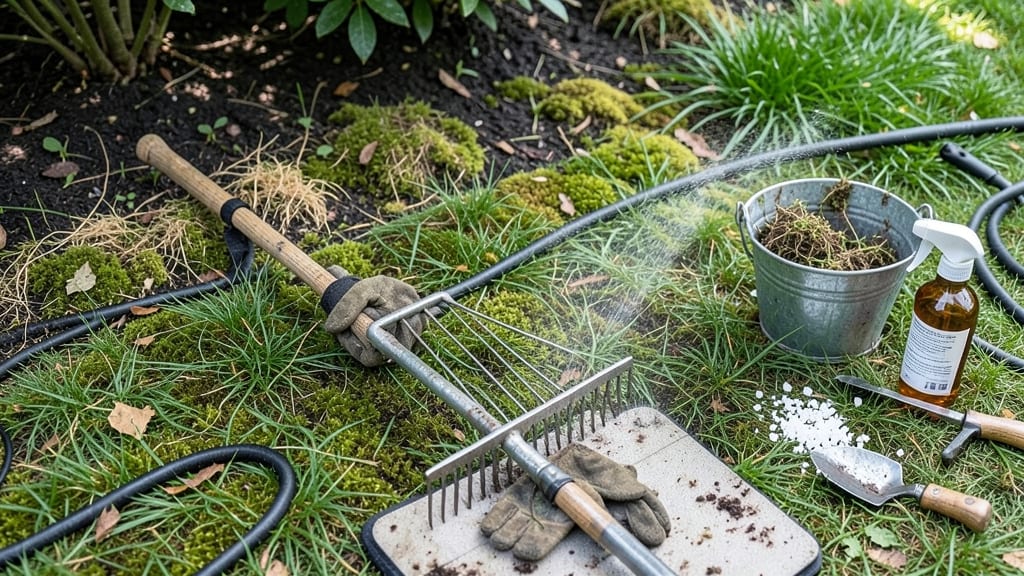
Removing moss from grass lawn with that vinegar-salt blend was like magic last spring—no more spongy patches ruining my mower. 🌱 The secret is combining simple household ingredients to kill moss without harming grass roots, and I’ve perfected the timing for best results.
Moss thrives where grass struggles: shady spots, compacted soil, or poor drainage. My lawn had all three, but once I fixed those issues and applied the treatment, thick green grass took over within weeks.
The blend is safe for most lawns, but I always test a small patch first—just to be sure.
You’ll end up with a lawn so dense that weeds can’t get a foothold, and the smell of fresh-cut grass will be back in full force. The process takes about 2 hours for an average yard, and the results last all season with proper maintenance.
Works for both sunny and shady lawns, though you may need to repeat the treatment once a year in high-moss areas. Here’s exactly how to mix and apply it without overdoing it—trust me, I’ve learned the hard way!
The Hidden Triggers Behind Moss Growth
Moss doesn’t just appear on your lawn by chance—it thrives because of specific conditions that grass struggles to tolerate. Understanding these root causes is the first step to preventing future outbreaks and keeping your lawn lush and green.
Let’s break down why moss takes over, so you can tackle it at the source.
Moss loves water—too much of it. Unlike grass, which needs well-draining soil to stay healthy, moss thrives in waterlogged conditions. Here’s why:
- Compacted soil: Heavy foot traffic, machinery, or clay-heavy soil prevents water from draining properly. When the ground stays soggy, oxygen can’t reach grass roots, weakening them and creating the perfect moss-friendly environment. 🌱
- Shady, low-lying areas: Water pools in depressions or slopes where sunlight doesn’t reach. Moss spreads quickly in these spots because it doesn’t need sunlight to survive, while grass does.
- High rainfall or irrigation oversaturation: If your lawn gets more water than it can handle (especially in shady areas), moss spores germinate and spread rapidly.
Actionable fix: Test your soil’s drainage with a simple percolation test (dig a 12-inch hole, fill with water, and time how long it takes to drain). If it takes <1 hour, your lawn may need aeration or a sand top-dressing to improve drainage.
Grass is a sun-worshipper—it needs 4–6 hours of direct sunlight daily to photosynthesize and outcompete moss. But moss? It’s the shade-loving opportunist of the plant world. Here’s the science:
- Weakened grass roots: In shady spots, grass grows slowly and develops shallow roots, making it vulnerable to moss invasion. Moss, on the other hand, thrives in low light by absorbing moisture through its leaves.
- Acidic soil buildup: Decaying organic matter (like fallen leaves) in shaded areas increases soil acidity, which grass dislikes but moss loves. A pH below 6.0 signals to moss: “Move in!”
- Competition for nutrients: Grass struggles to absorb nitrogen in low-light conditions, while moss doesn’t need as much. This nutrient gap gives moss an edge.
Actionable fix: Prune overhanging trees or thin dense shrubs to let more light reach your lawn. If shading is unavoidable (e.g., mature trees), choose shade-tolerant grass varieties like fine fescue or creeping red fescue.
Moss has a sweet spot for acidic soil, typically thriving when the pH drops below 6.0. Here’s how imbalances happen:
- Natural decomposition: Organic matter (leaves, pine needles, or thatch) breaks down, releasing acids that lower pH over time.
- Over-fertilization with nitrogen: While grass loves nitrogen, too much can acidify soil, creating a hostile environment for grass roots but a paradise for moss.
- Lack of lime application: If you’ve never tested your soil, it might be naturally acidic (common in regions with granite or sandy soil). Moss exploits this imbalance.
Actionable fix: Test your soil’s pH with a DIY kit or send a sample to a local extension office. If pH is <6.0, apply pelletized lime in early fall or spring to raise it to the ideal range of 6.0–7.0 for grass.
Moss doesn’t invade healthy lawns—it fills gaps where grass is weak or dead. Common reasons grass declines:
- Disease or pest damage: Fungal infections (like brown patch) or grubs munching on roots leave bare patches that moss quickly colonizes.
- Improper mowing: Cutting grass too short (below 2–3 inches) stresses it, making it susceptible to moss. Tall grass shades the soil, but too short weakens it.
- Nutrient deficiencies: Lack of potassium or phosphorus weakens grass, while moss doesn’t need these nutrients to survive.
- Foot traffic or wear: High-traffic areas (like pet paths or play zones) compact soil, smothering grass and inviting moss.
Actionable fix: Overseed bare spots with high-quality grass seed and apply a balanced fertilizer (16-4-8 or 12-12-12) to strengthen roots. For compacted areas, rent a core aerator to relieve soil pressure.
Now that you know why moss moves in, the next step is kicking it out for good—starting with a vinegar-salt blend that targets the problem at its roots. 🚀
Quick Fixes for Mossy Lawns
Moss doesn’t stand a chance with the right approach—whether you’re dealing with shady patches, compacted soil, or poor drainage. Below are practical, step-by-step solutions tailored to the root causes of moss, plus prevention tips to keep your lawn lush and moss-free for good.
If moss thrives because your soil is packed down (like a tight, airless mattress), aeration is your best friend. Compacted soil blocks water, nutrients, and roots—leaving moss to take over.
How to do it: 🔥 Rent or buy a core aerator (or use a garden fork for small areas). 👨🍳 Aerate in early fall or spring when soil is moist but not soggy. 🥘 Top-dress with compost (¼ inch) after aerating to feed grass roots. ⏰ Water deeply for 2–3 weeks post-aeration to help recovery.
Pro tip: 💡 If renting isn’t an option, spike aerate with a garden fork—poke holes 3–4 inches deep, 3–6 inches apart in a grid pattern.
Moss loves shade because grass struggles there. Improve light exposure and reduce humidity to give grass a fighting chance.
How to do it: 🔥 Trim overhanging branches to let more sunlight reach the lawn. 🍳 Thin out dense shrubs or relocate them if they’re blocking light. 👨🍳 Install a small fan (on a timer) in heavily shaded spots to dry moss out. 🥘 Choose shade-tolerant grass seeds (like fine fescue or creeping red fescue) for replanting.
Pro tip: ✨ Mulch nearby trees with wood chips to prevent excess moisture from dripping onto the lawn.
Moss loves soggy conditions. If your lawn stays wet for days after rain, improve drainage to make it less inviting.
How to do it: 🔥 Test your soil’s drainage—dig a 12-inch hole, fill it with water, and time how long it takes to drain. If it’s slower than 6 hours, you’ve got drainage issues. 🍳 Add organic matter (compost or peat moss) to heavy clay soil to improve water flow. 👨🍳 Create swales (shallow trenches) to redirect water away from low spots. 🥘 Install French drains in severely waterlogged areas (DIY kits are available).
Pro tip: 🌡️ Avoid overwatering—grass needs about 1–1.5 inches of water per week (including rain). Use a rain gauge to monitor.
Now for the moss removal hack you’ve been waiting for! A vinegar-salt solution kills moss on contact while being cheap, natural, and effective.
How to do it: 🔥 Mix 1 gallon of white vinegar + 2 cups of salt + 1 tbsp dish soap in a sprayer. 🍳 Spray the solution directly onto moss patches (avoid desirable plants—it’s toxic to them too!). 👨🍳 Let it sit for 24–48 hours (moss will turn brown and crispy). 🥘 Rake up the dead moss with a stiff lawn rake or leaf blower. 🔪 Re-seed or sod the bare spots immediately with grass seed.
Pro tip: ⏰ Do this on a dry, sunny day—heat helps the solution work faster. Wear gloves (vinegar can irritate skin).
Once you’ve banished moss, lock it out for good with these long-term strategies:
- 🌿 Mow high (3–4 inches)—taller grass shades out moss and crowds it out. - 💪 Fertilize regularly—moss thrives where grass is weak. Use a slow-release nitrogen fertilizer in early spring and fall. - 🌡️ Adjust pH if needed—moss loves acidic soil (pH < 6).
Test your soil and lime it if necessary (aim for pH 6.0–7.0). - 🍂 Overseed thin lawns—bare spots are moss magnets. Fill gaps with grass seed in early fall. - 🌧️ Improve airflow—space out plants and avoid thick mulch piles near the lawn.
Final thought: Moss is a symptom, not the problem—fix the conditions, and your grass will thrive! Start with one or two fixes, monitor progress, and soon you’ll have a lush, moss-free lawn that’s the envy of the neighborhood. 🚀
Frequently asked questions
Why does moss keep coming back after I remove it?
Moss returns because the underlying conditions (shade, poor drainage, or compacted soil) likely haven't changed. The vinegar-salt treatment only kills existing moss—you must also fix waterlogging, improve sunlight exposure, or aerate the soil to prevent regrowth. Think of it like treating a symptom while ignoring the cause.
Can I use this vinegar-salt mix on my entire lawn?
No—this solution is only for moss patches. Spraying it on healthy grass will burn the blades and harm your lawn. Always spot-treat mossy areas, and avoid spraying near flowers, shrubs, or other plants. For large infestations, consider a targeted approach with a hand-held sprayer.
How soon will I see results after applying the vinegar-salt mix?
You’ll notice moss turning brown within 24–48 hours, but full removal takes about 1 week of raking and reseeding. The best time to apply it is on a warm, sunny day—heat accelerates the drying process. For stubborn patches, you may need to repeat the treatment after 2–3 weeks.
Is there a natural alternative if I don’t have vinegar or salt?
Yes! Try a baking soda solution (1 cup baking soda + 1 gallon water) or iron sulfate (a granular product for moss control). Both are effective, but iron sulfate may temporarily stain soil. For a DIY option, even boiling water poured directly on moss patches can kill it—just avoid nearby grass.
Will removing moss harm my grass roots?
Not if done correctly. The vinegar-salt mix targets moss specifically and won’t harm grass roots when used as directed. However, overwatering or compacted soil (which often causes moss) can damage roots. After treatment, focus on improving soil health with compost and proper drainage to strengthen your grass.