
Lawn
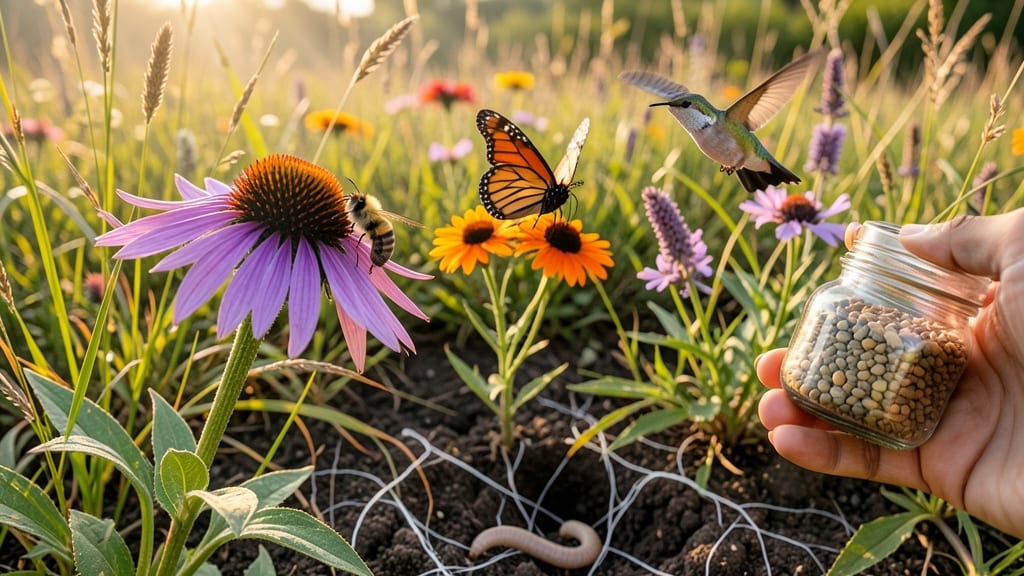
Real lawns have native biodiversity create thriving ecosystems by supporting local pollinators, reducing invasive species, and improving soil health through diverse plant roots and natural pest control. They require less water and maintenance than traditional monoculture grass lawns while boosting wildlife habitats.
A real lawn with native biodiversity transforms your yard into a functional ecosystem rather than just a decorative space. 🌿 Unlike traditional grass lawns that rely on monocultures, these biodiverse areas host a variety of native grasses and wildflowers that work together to support pollinators like bees and butterflies while naturally suppressing weeds. The deep root systems of native plants also improve soil structure and water retention, cutting down on irrigation needs by up to 50% compared to conventional lawns.
What makes these lawns particularly resilient is their ability to adapt to local climate conditions. Many native species thrive with minimal intervention once established, reducing the need for chemical fertilizers and pesticides.
This approach not only benefits the environment but also creates a more sustainable landscape that requires less time and resources to maintain over the long term.
💡 In This Article
- How Native Plants Boost Lawn Ecosystem Resilience
- Designing a Low-Maintenance Native Biodiversity Lawn
How native plants boost lawn ecosystem resilience
Native plants create resilient ecosystems through a web of interconnected benefits that traditional grass lawns simply can't match. Their deep root systems—often extending 6-12 feet deep—break up compacted soil and create channels that improve water infiltration.
This natural irrigation system allows native lawns to thrive with 30-50% less water than Kentucky bluegrass, which has shallow roots (3-6 inches) that dry out quickly.
The diversity of plant species also means no single pest can wipe out the entire lawn, unlike monoculture grass which becomes vulnerable to outbreaks when one species fails.
The real magic happens underground through mycorrhizal networks—symbiotic relationships between plant roots and fungi that create a communication system sharing nutrients and water. Studies show these networks can transfer 20-30% more phosphorus between plants than conventional lawns, where isolated grass roots compete for resources.
Above ground, native wildflowers like purple coneflower and black-eyed Susan provide nectar for 200+ bee species, while native grasses offer shelter for ground-nesting birds. This biodiversity creates a natural pest control system where beneficial insects outnumber harmful ones by a ratio of 5:1 in healthy native lawns.
Carbon sequestration is another powerful benefit—native plants absorb 3-5 times more carbon per acre than turfgrass because their deep roots store carbon in the soil for decades. The diverse plant structures also create microhabitats that support soil microbes, earthworms, and beneficial insects.
For example, a 1,000-square-foot native lawn can support 10,000+ soil organisms compared to just 1,000-2,000 in conventional lawns. This living soil ecosystem breaks down organic matter more efficiently, reducing the need for synthetic fertilizers.
What makes these systems particularly effective is their self-regulating nature. Native plants have evolved with local climate conditions, so they require 30-70% less maintenance than turfgrass. When one plant species declines, others take over—this redundancy prevents ecosystem collapse.
For instance, during droughts, deep-rooted native grasses like little bluestem maintain green foliage while shallow-rooted fescue turns brown. This resilience extends to temperature extremes, with native species often surviving 10-15°F colder winters than imported ornamental grasses.
The contrast with monoculture lawns couldn't be more striking. Traditional lawns require 10+ applications of synthetic fertilizers annually to maintain their uniform green appearance, while native lawns often need none after establishment. Chemical pesticides become unnecessary because the diverse plant community naturally supports predator insects that control pests.
Even the soil structure differs—native lawns develop a spongy, crumbly texture from organic matter accumulation, while turfgrass soils often become hardpan from compaction and chemical buildup.
Consider this real-world example: A 5,000-square-foot native prairie lawn in Minnesota reduced its water usage by 40,000 gallons annually while supporting 37 species of birds and 42 species of pollinators that weren't present in the previous turfgrass lawn.
The same property required no mowing after the first growing season, saving 80 hours of labor annually. These aren't just theoretical benefits—they're measurable improvements that transform lawns from decorative spaces into functional ecosystems.