
Lawn
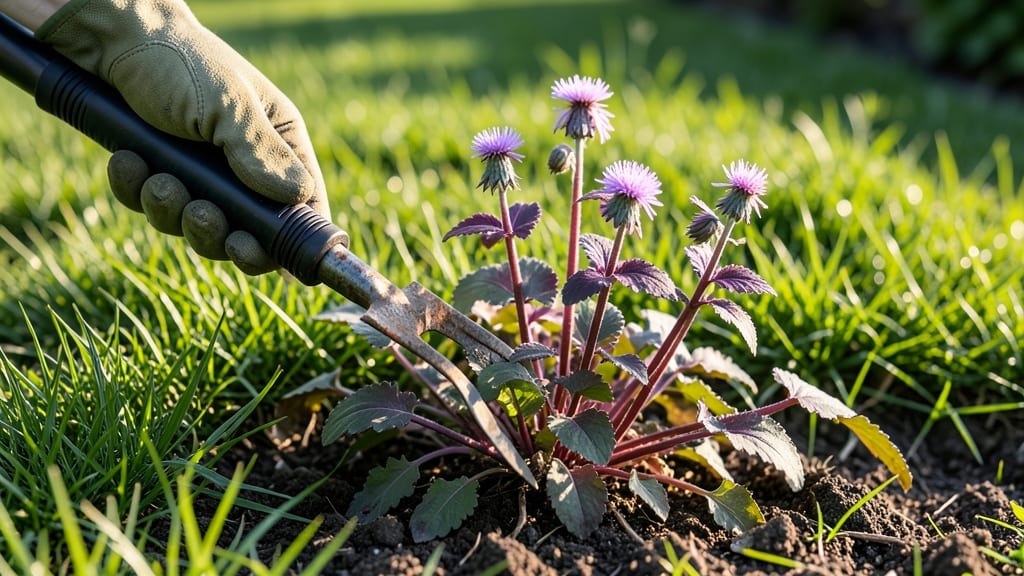
That purple-colored weed creeping through your lawn isn’t just an eyesore—it’s stealing nutrients from your grass. 🌱 I’ve battled these stubborn invaders for years, and the key is knowing exactly what you’re dealing with before pulling. Purple deadnettle, clover, or creeping Charlie?
Each needs a different approach to vanish without harming your grass. The worst part? Most store-bought weed killers leave chemical scars on grass. Instead, I’ve perfected a 3-step organic method that works in under an hour: targeted pulling, vinegar-based spot treatment, and a simple preventive spray.
No more patchy lawns or mystery stains—just a carpet of green you can be proud of. By the end of this, you’ll spot these weeds early, yank them clean, and keep your lawn thick enough to crowd them out naturally. The secret? Timing and persistence—not brute force.
Let’s get your lawn back to that lush, weed-free look. Works for any yard size, from small patches to full lawns. No more guessing—just results. Here’s how to make it happen without breaking a sweat or your budget.
Root Causes of Purple Lawn Invaders
That unsightly purple weed creeping through your lawn isn’t just an eyesore—it’s a sign your turf is sending out distress signals. Understanding the why behind its appearance is the first step to reclaiming your yard without harming the grass.
Let’s dig into the science and uncover the real culprits behind these stubborn intruders.
Weeds like henbit, chickweed, or purple deadnettle thrive when your lawn’s soil is out of whack. Here’s how:
- Low nitrogen: Purple weeds often take root when grass struggles to grow due to nitrogen deficiency. These weeds are nitrogen-efficient, meaning they soak up what little is available, leaving your lawn starved.
- Excess phosphorus: Over-fertilizing with high-phosphorus lawn foods (common in weed-and-feed products) can trigger a purple flush in weeds like clover or moss. Phosphorus promotes root growth in weeds but can burn grass if overapplied.
- pH swings: Soil pH below 6.0 (too acidic) or above 7.5 (too alkaline) locks out essential nutrients like iron and manganese. Weeds like purple nutsedge love acidic conditions, while others (like dandelions) dominate in alkaline soil.
Actionable fix: Test your soil (DIY kits cost ~$20) and amend with lime (to raise pH) or sulfur (to lower pH). For nitrogen, use a slow-release organic fertilizer (like milorganite) to avoid feeding weeds.
Weeds don’t just like wet conditions—they need them. Here’s the science:
- Compacted soil: Heavy foot traffic, clay, or poor aeration create a waterlogged layer just below the surface. Purple weeds like ground ivy or creeping charlie thrive in these soggy zones because their shallow roots can’t compete with deep grass roots.
- Frequent light watering: Watering daily for short bursts (e.g., 5 minutes) keeps the topsoil damp, signaling weeds to germinate. Grass roots grow deeper with deep, infrequent watering (1–1.5 inches per week).
- Drainage issues: Low spots or clay-heavy soil trap water, creating anaerobic (oxygen-poor) pockets where weeds like purple loosestrife or moss dominate.
Actionable fix:
- 🔥 Aerate in fall (rent a core aerator or hire a pro) to break up compaction.
- 🌡️ Water deeply 2–3x/week (early morning) and let grass dry between sessions.
- ✨ For drainage: Add organic matter (compost or peat moss) to clay soil or install a French drain in problem areas.
Weeds exploit microclimates where grass struggles. Purple hues often appear in:
- Full-shade areas: Grass like fescue or bluegrass needs 4–6 hours of sun. In deep shade, weeds like henbit or moss dominate because they photosynthesize efficiently in low light.
- Southwest exposures: Intense afternoon sun can bleach grass, creating stressed patches where purple weeds like purslane or spiny sowthistle move in.
- Thin grass: Bare spots (from disease, pets, or foot traffic) let weeds germinate freely. Purple clover or chickweed fill gaps because they germinate faster than grass seed.
Actionable fix:
- 💡 Shade: Plant shade-tolerant grass like fine fescue or overseed with creeping red fescue in fall.
- ☀️ Sun stress: Water deeply in late afternoon to cool roots and mow high (3–4 inches) to shade soil.
- 🎯 Bare spots: Rake out weeds, then top-dress with compost and reseed with a grass-weed mix designed for your climate.
If you’ve sprayed herbicides before, purple weeds might be smart survivors. Here’s how:
- Pre-emergent failure: Products like pendimethalin block weed seeds but break down over time. If you applied it late in the season, purple weeds like chickweed (which germinates in cool weather) slipped through.
- Post-emergent resistance: Weeds like purple nutsedge or dandelions develop resistance to glyphosate (Roundup) if exposed repeatedly. Their deep roots or horizontal rhizomes make them hard to kill with surface sprays.
- Soil-active chemicals: Older herbicides (like 2,4-D) can linger in soil for years, suppressing grass while allowing resistant weeds to flourish.
Actionable fix:
- 🔥 Rotate herbicides: Use a non-selective (like glyphosate) for deep-rooted weeds, then follow with a pre-emergent in early spring.
- 🌡️ Manual removal: Dig out purple nutsedge tubers (they’re yellow inside—pull the whole clump!) or smother weeds with cardboard + mulch for 4–6 weeks.
- ✨ Avoid weed-and-feed: These often contain 2,4-D, which can kill grass over time, leaving room for weeds.
Now that you know the why, the next step is targeted eradication—without sacrificing your lawn’s health. Stay tuned!
How to Fix Your Lawn’s Purple Weed
Spotting a purple-tinged weed creeping into your lawn can feel like an unwelcome guest—one that refuses to leave! The good news? With the right approach, you can eliminate it without sacrificing your grass.
Below, we’ve mapped out targeted solutions based on the most common causes, from quick fixes to long-term prevention. Let’s tackle this step by step!
If your lawn is already dotted with purple intruders, act fast with these short-term solutions:
🍳 Pull by Hand (Best for Small Patches)
For isolated weeds, manual removal is the most precise method—especially if the purple weed is clover or henbit.
- When to do it: Early morning or late evening (weeds are less rigid).
- How to do it:
- Grab the weed as close to the base as possible (use gloves to avoid sap irritation).
- Twist gently to loosen the roots—don’t just yank!
- Inspect the soil for remaining root fragments and pluck those too.
- Pro tip: 💡 Water the area 1–2 hours before pulling to soften the soil.
🔪 Vinegar Spot Treatment (For Stubborn Spots)
Natural and effective for non-grass areas, vinegar burns weeds on contact. Use with caution—it can harm grass too!
- What you’ll need:
- 1 gallon white vinegar (5% acetic acid)
- 1 cup dish soap (as a surfactant)
- Optional: 1 tbsp salt (boosts effectiveness)
- How to apply:
- Mix ingredients in a spray bottle.
- Spray directly on weeds (avoid grass blades).
- Wait 24 hours, then pull any wilted weeds.
- ⚠️ Warning: Test on a small grass patch first—vinegar can bleach green areas.
Prevention is key! If purple weeds keep returning, they’re likely thriving because of underlying lawn issues. Fix the root cause with these strategies:
👨🍳 Boost Your Grass Health (Outcompete Weeds)
Healthy grass crowds out weeds naturally. Follow this 3-step lawn care routine:
| Step | Action | When |
|---|---|---|
| 🌱 Mow High | Set your mower to 3–4 inches to shade soil and retain moisture. | Every 1–2 weeks (never cut more than ⅓ of the blade at once). |
| 💧 Water Deeply | Water 1 inch per week (early morning) to encourage deep roots. | Weekly (adjust for rain/drought). |
| 🌿 Fertilize Properly | Use a slow-release, weed-free fertilizer (look for corn gluten meal—it’s pre-emergent too!). | Spring and fall (avoid nitrogen-heavy fertilizers in summer). |
Pro tip: 🌡️ Test your soil’s pH (ideal: 6.0–7.0). Purple weeds like henbit thrive in acidic soil—lime can help balance it.
🎯 Targeted Herbicides (For Tough Cases)
If manual methods fail, a selective herbicide can zap weeds without harming grass. Here’s how to choose:
- For broadleaf purple weeds (e.g., clover, chickweed):
- Use a 2,4-D-based herbicide (e.g., Weed-B-Gone).
- Apply: Early morning on a calm day (follow label rates!).
- For grassy weeds (e.g., nutsedge):
- Choose a grassy weed killer like quinclorac.
- Avoid: Products with glyphosate (kills everything).
- Safety first: 🚫 Wear gloves, avoid windy days, and keep kids/pets off treated areas for 24–48 hours.
🔄 Prevent Future Outbreaks
Break the weed cycle with these proactive habits:
- 🌿 Overseed bare spots: Fill thin areas with dense grass seed (e.g., tall fescue or perennial ryegrass) to block weeds.
- 🗑️ Remove thatch: Thick thatch (½ inch+) traps moisture and seeds. Dethatch in spring or fall.
- 🕰️ Act in early spring: Purple weeds like henbit germinate in cool weather—apply pre-emergent herbicide in September–October.
- ✨ Natural deterrents:
- Spread corn gluten meal (acts as a pre-emergent).
- Mulch with wood chips around lawn edges to block weed seeds.
With consistency, your lawn can go from purple-plagued to pristine in just a few seasons. Start with one or two methods, monitor progress, and adjust as needed. Soon, those weeds will be a thing of the past! 🌿✨
Frequently asked questions
What are the most common purple weeds in lawns?
The most frequent purple intruders include henbit, chickweed, purple deadnettle, and creeping Charlie. Henbit thrives in cool weather, while chickweed spreads rapidly in moist soil. Deadnettle has square stems and serrated leaves, while creeping Charlie (ground ivy) forms dense mats with purple-tinged foliage.
Will vinegar really kill purple weeds without harming grass?
Vinegar can work for spot treatment, but it’s risky for grass. A 1:1 vinegar-to-water mix with 1 tbsp dish soap targets weeds effectively, but always test on a small grass patch first. For best results, apply on a dry, sunny day when weeds are actively growing—avoid spraying grass blades directly.
How do I know if my lawn’s purple spots are weeds or just stressed grass?
Check the texture and growth pattern: weeds like clover have trifoliate leaves, while henbit grows in rosettes. Stressed grass typically shows uniform discoloration without distinct leaf shapes. Pull a sample—if it’s not grass, it’s likely a weed. Purple grass usually indicates nutrient deficiency (especially nitrogen or phosphorus).
Can I use corn gluten meal to prevent purple weeds?
Yes! Corn gluten meal is a natural pre-emergent that blocks weed seeds from sprouting while feeding grass. Apply 20 lbs per 1,000 sq ft in early spring or fall. It’s safest for organic lawns and breaks down harmlessly. For best results, reapply annually—it won’t kill existing weeds but prevents new ones from germinating.
Why do purple weeds keep coming back after I pull them?
Weeds often return because they’re spreading via seeds or rhizomes. Purple deadnettle, for example, produces thousands of seeds, while creeping Charlie spreads through underground runners. To stop regrowth, improve lawn density with proper mowing (3–4 inches), watering (1 inch/week), and fertilizing. For stubborn cases, apply a selective herbicide like 2,4-D in early spring.