
Lawn
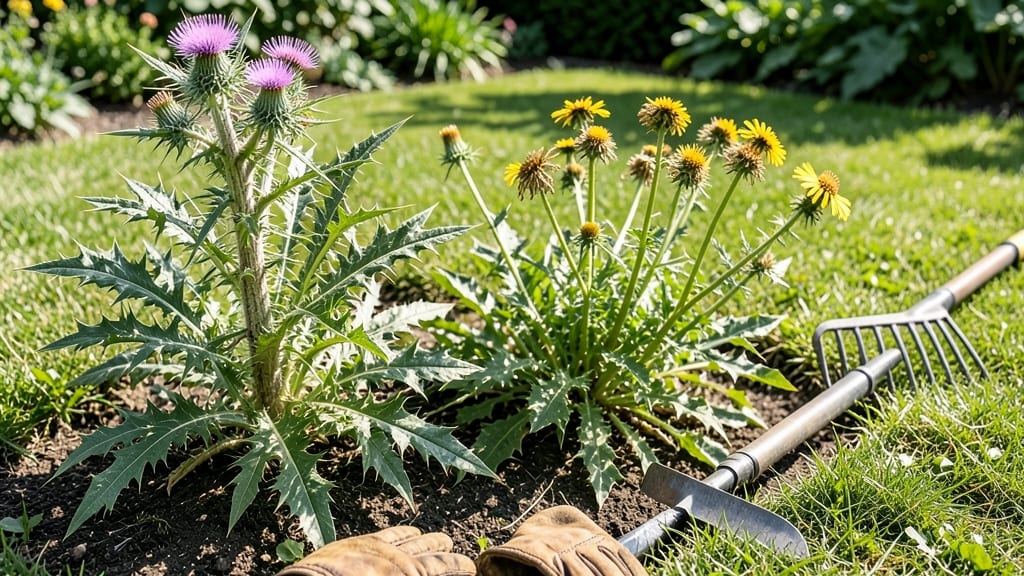
Your lawn's prickly weeds are like tiny landmines—every step feels like a battle. 🌱 I’ve wrestled with crabgrass, nutsedge, and thistles, and the good news? You can remove them without sacrificing your grass. The key is knowing which weeds you’re dealing with and attacking them at the right time.
Most prickly weeds thrive because they outcompete grass for water and sunlight. A thick, healthy lawn is your best defense, but when they take over, manual removal, targeted herbicides, or natural vinegar solutions can work—just be careful not to damage your turf in the process.
By the end of this, you’ll have a weed-free lawn that stays soft underfoot. The secret? Consistency. A little effort now means fewer surprises later, and your grass will thank you with lush, even growth all season long.
Whether you’re dealing with stubborn thistles or sneaky crabgrass, this method works for any yard. Let’s get those prickles out for good without harming what you’ve worked so hard to grow.
How Your Lawn Invites Weeds
Prickly weeds—like Cirsium (thistles) or Echinochloa (barnyardgrass)—don’t just appear out of nowhere. They’re opportunists thriving on specific conditions your lawn might unknowingly provide. Understanding these triggers is the first step to reclaiming your turf without resorting to harsh chemicals that could damage your grass.
Let’s break down the key reasons these weeds take root and spread.
Weeds like prickly varieties often dominate because they’re better adapted to weak or imbalanced soil than your grass. Here’s how soil health plays a role:
- Low organic matter: Healthy soil is rich in decomposed plant material, which feeds turfgrass roots and outcompetes weeds. If your soil is mostly clay or sand with little organic content, weeds like Echinochloa (barnyardgrass) or Digitaria (crabgrass) will exploit the lack of nutrients and space.
- Compacted soil: Foot traffic, heavy equipment, or poor drainage can compact the topsoil, reducing oxygen and water availability. Compacted layers create a perfect environment for prickly weeds like Cirsium (thistles), which can push through dense, suffocating conditions while grass struggles.
- Improper pH levels: Most turfgrasses thrive in slightly acidic soil (pH 6.0–7.0). If your lawn’s pH drifts too high (alkaline) or too low (acidic), it weakens grass roots, leaving gaps for weeds. For example, Plantago lanceolata (ribwort plantain) often invades lawns with pH >7.0.
Actionable fix: Conduct a soil test (available at local extension offices or via DIY kits) to check pH, organic matter, and nutrient levels. Amend with compost, gypsum (for clay), or sulfur (for alkaline soil) to restore balance.
Weeds don’t just fill bare spots—they thrive in any area where grass is weak or absent. Here’s how neglect creates ideal conditions:
- Thin or patchy grass: If your lawn has bald patches from disease, drought, or poor seeding, weeds like Taraxacum officinale (dandelions) or Conyza (horseweed) rush to fill the void. Prickly weeds, such as Amaranthus (pigweed), can also dominate if grass density drops below 80% coverage.
- Overwatering or underwatering: Both extremes stress grass. Overwatering creates soggy conditions that drown grass roots, while underwatering leaves turf drought-stressed. In both cases, weeds like Echinochloa (barnyardgrass) or Digitaria (crabgrass) outcompete weakened grass.
- Mowing too short: Cutting grass below 2–3 inches exposes soil to sunlight, encouraging weed seeds to germinate. Prickly weeds like Cirsium (thistles) thrive in these conditions because their deep taproots can access moisture while shallow grass roots suffer.
Actionable fix: Maintain a mowing height of 3–4 inches for cool-season grasses or 1–2 inches for warm-season varieties. Water deeply but infrequently (1–1.5 inches per week) and overseed bare spots with high-quality turfgrass seed.
Prickly weeds don’t just sprout from nowhere—they’re often introduced via wind, water, animals, or even your own tools. Here’s how they hitch a ride into your lawn:
- Windborne seeds: Weeds like Ambrosia (ragweed) or Artemisia (mugwort) produce lightweight seeds that travel miles. Once they land in your lawn, they germinate quickly, especially in disturbed soil.
- Animal or bird dispersal: Seeds from prickly weeds like Cirsium (thistles) often attach to fur or feathers, spreading to new locations. Birds may also drop seeds while foraging.
- Contaminated soil or mulch: If you’ve recently added topsoil, compost, or mulch from unknown sources, weed seeds could already be lurking. Even "weed-free" bags may contain dormant seeds.
- Lawn equipment: Mowers, rakes, and aerators can unintentionally transport weed seeds from infested areas to clean patches of your lawn.
Actionable fix: Inspect new soil amendments for weed seeds, and clean tools with a 10% bleach solution between uses. Consider pre-emergent herbicides in early spring to block seed germination.
Over- or under-fertilizing can create the perfect storm for prickly weeds. Here’s how:
- Excess nitrogen: While nitrogen promotes lush grass, too much can lead to rapid, weak growth that’s vulnerable to weeds. Prickly weeds like Digitaria (crabgrass) exploit this by germinating in the soft, fast-growing turf.
- Phosphorus or potassium deficiencies: Weeds often outcompete grass when soil lacks these macronutrients. For example, Plantago (plantain) thrives in phosphorus-deficient soil because it can fix nitrogen efficiently.
- Herbicide residue: Some broadleaf herbicides (like 2,4-D) can weaken grass over time, creating openings for prickly weeds. Always follow label rates and rotate herbicide classes to avoid resistance.
Actionable fix: Use a soil test to guide fertilization. Apply a balanced fertilizer (e.g., 16-4-8 or 10-10-10) and avoid excessive nitrogen. For weed-prone areas, consider slow-release fertilizers to maintain steady growth.
Quick Fixes for Stubborn Weeds
Prickly weeds in your lawn can feel like an unwelcome invasion, but the good news is you don’t need harsh chemicals to tackle them. With the right approach, you can remove these spiky intruders while keeping your grass healthy and thriving.
Below are practical, step-by-step solutions tailored to the most common causes of prickly weed growth—along with tips to prevent them from returning.
If prickly weeds are thriving because your lawn is sparse, the fix starts with giving your grass a fighting chance.
#### 🌱 Step 1: Improve Soil HealthWeeds love weak turf. Test your soil’s pH and nutrient levels—aim for a pH of 6.0–7.0 and add compost or a slow-release fertilizer to strengthen grass roots.
#### 👨🌾 Step 2: Overseed Bare SpotsFill thin areas with cool-season grass seed (like Kentucky bluegrass or fescue) in early fall or warm-season seed (like Bermuda or Zoysia) in late spring. Keep the soil moist until germination.
#### 💡 Pro Tip:Use a slit seeder to ensure seeds make direct contact with soil—this maximizes root growth and crowds out weeds faster.
When soil is hard and compacted, grass struggles to spread, leaving room for prickly weeds to take over.
#### 🔪 Step 1: Core AerationRent or hire a core aerator to pull small soil plugs (about 3–4 inches deep) from your lawn. Do this in early fall or spring when grass is actively growing.
#### ⏰ Step 2: Top-Dress with Sand or CompostAfter aerating, spread a ¼-inch layer of sand or compost over the lawn to improve drainage and soil structure. Lightly rake it in.
#### 🌡️ Pro Tip:Aerate when the soil is slightly damp (not soggy) for the best results. Follow up with watering to help roots establish.
Irregular watering stresses grass and invites weeds. Prickly weeds often pop up where moisture is inconsistent.
#### 💧 Step 1: Deep and Infrequent WateringWater your lawn 1–1.5 inches per week, either all at once (deep watering) or split into two sessions (early morning and evening). Avoid light, frequent sprinkling, which encourages shallow roots and weed growth.
#### 🎯 Step 2: Adjust Sprinkler HeadsCheck for uneven water distribution—low spots may stay soggy, while higher areas dry out. Adjust sprinkler heads to ensure even coverage across the entire lawn.
#### ✨ Pro Tip:Install a rain gauge or use a tuna can to measure water output. You’ll know exactly how long to run your sprinklers for proper hydration.
For small infestations, manual methods are effective and eco-friendly.
#### 👩🌾 Step 1: Hand-Pulling (Best for Small Patches)Wear gloves and grasp the weed at the base, pulling upward with a firm tug. For stubborn roots, use a weed puller or a butter knife to loosen soil around the weed first.
#### 🔥 Step 2: Solarization (For Large Areas)Lay clear plastic sheeting over the infested area for 4–6 weeks during hot summer months. The sun will cook weeds and seeds, killing them without chemicals.
#### 💡 Pro Tip:Pull weeds after rain or watering—soil will be softer, making removal easier. Dispose of weeds in the trash (not compost) to prevent regrowth.
Once your lawn is weed-free, take these steps to prevent prickly weeds from returning:
- Mow high: Keep grass at 3–4 inches tall to shade out weeds.
- Mow regularly: Never remove more than ⅓ of the grass blade at once.
- Dethatch annually: If your lawn has a thick layer of thatch (>½ inch), dethatch in early fall to improve air and water flow.
- Use pre-emergent herbicides (sparingly): Apply a corn gluten meal in early spring to prevent weed seeds from germinating.
- Encourage beneficial insects: Ladybugs and ground beetles eat weed seeds—plant native flowers to attract them.
With consistent care, your lawn will become a thick, resilient barrier against prickly weeds. Start with one or two methods, monitor progress, and adjust as needed. Happy gardening! 🌱
Frequently asked questions
What are the most common prickly weeds in lawns?
The most troublesome prickly weeds include crabgrass (with its rough, hairy texture), thistles (like bull thistle with sharp spines), and pigweed (with jagged edges). These weeds thrive in compacted soil and compete aggressively with grass for nutrients.
Can I use vinegar to kill prickly weeds without harming grass?
Yes, but with caution! A 20% vinegar solution (1 part white vinegar to 1 part water) works best for spot treatments. Apply on a dry, sunny day to avoid burning grass. For safety, use a plastic shield around grass edges to protect nearby turf.
How do I prevent prickly weeds from coming back?
Start with core aeration to improve soil health, then overseed bare spots with dense grass varieties like Kentucky bluegrass. Mow at 3–4 inches to shade out weeds, and apply corn gluten meal in early spring as a natural pre-emergent.
Are there any natural predators for prickly weeds?
Yes! Ladybugs and ground beetles eat weed seeds, while cattle and goats (if you have livestock) can graze them down naturally. Planting clover or native wildflowers attracts these beneficial insects to your lawn ecosystem.
What’s the best time of year to treat prickly weeds?
For most weeds, early spring (before germination) or late summer (when weeds are actively growing) are ideal. Apply pre-emergent herbicides in March–April, and hand-pull or spot-treat visible weeds in August–September for best results.