
Planting
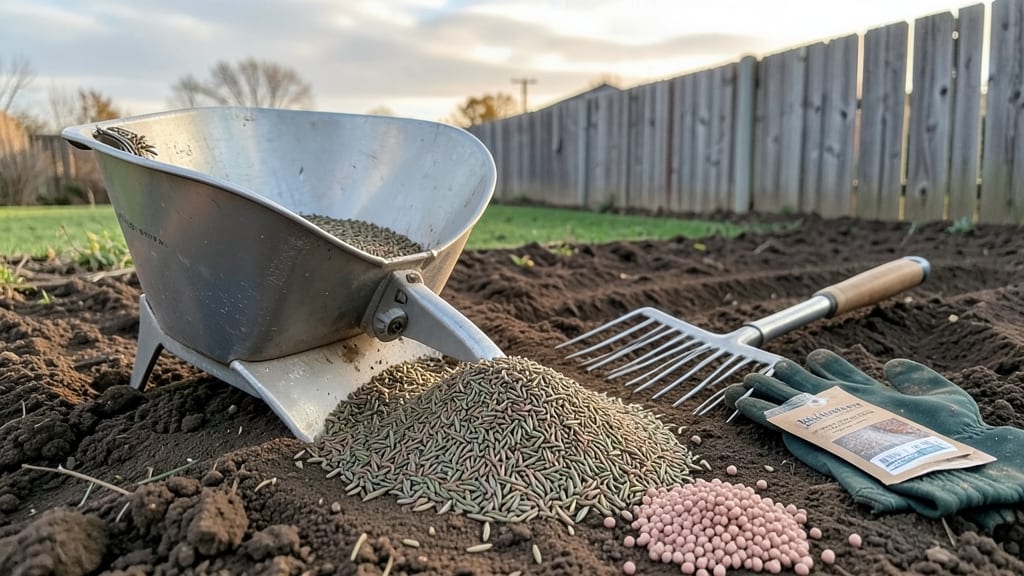
Planting lawn seed in autumn gives cool-season grasses the ideal conditions to establish deep roots before winter 🌱—and that’s the secret to a lush, weed-resistant lawn by spring.
Picture this: temperatures hover in the 60s, rain is gentle but frequent, and weeds are barely a threat. These aren’t just lucky circumstances—they’re the perfect recipe for success.
But timing and prep matter just as much as the season, and getting it wrong can leave you with patchy, weak grass.
In this guide, I’ll walk you through why autumn outperforms spring or summer, how to pick the right seed for your climate, and the step-by-step process to turn bare soil into a thick, green carpet by next year.
You’ll learn how to test your soil, choose the best seed blend for your USDA Zone 6a, and avoid the 5 biggest mistakes that derail even the most well-intentioned lawn projects.

Why autumn is the best time to plant cool-season lawn seed
Autumn offers the perfect balance of cool temperatures and moderate rainfall, creating ideal conditions for cool-season grasses like fescue, ryegrass, and bluegrass. Unlike spring or summer, autumn’s milder weather reduces seed stress while allowing seeds to germinate and establish deep root systems before winter dormancy.
Science backs this timing—research shows autumn-planted lawns achieve 30-50% faster establishment than spring plantings. The 60-70°F soil temperatures in early fall promote optimal germination rates, while shorter daylight hours slow weed competition, giving your grass a head start.
Moisture retention is another key advantage of autumn planting. Cooler air reduces evaporation, so water penetrates deeper into the soil, encouraging stronger root development. This means less frequent watering compared to summer, where intense heat causes rapid moisture loss.
Your USDA hardiness zone plays a critical role in timing. In zones 2-5, aim to plant 4-6 weeks before the first frost—typically mid-September to early October. For zones 6-9, extend planting until late October or early November, as milder winters allow longer growth periods.
Regional microclimates also matter. Coastal areas with moderate autumns (e.g., Pacific Northwest) can plant later, while inland zones (e.g., Midwest) should prioritize earlier planting to avoid early frosts. Always check your local frost dates and adjust accordingly.
Autumn’s reduced pest pressure is another bonus. Grubs and chinch bugs, common in summer, are less active in cooler weather, giving your new grass a cleaner start. Plus, evening dew provides natural moisture without the risk of fungal diseases that plague summer plantings.
Don’t overlook the soil preparation advantage of autumn. Warmer soil from summer retains heat longer, making it easier to loosen compacted areas and incorporate organic matter. This head start means your seeds encounter ideal planting conditions from day one.
For maximum success, pair autumn planting with a light fall fertilizer application (high in phosphorus) to boost root growth. This strategy ensures your lawn enters winter stronger and more resilient, ready to burst into growth next spring.
If you’ve ever struggled with spring-planted lawns that wilt in summer heat or summer plantings that fail to establish, autumn offers the golden opportunity to grow a lawn that thrives year-round. The science is clear—autumn is nature’s perfect timing for cool-season grasses.
Step-by-step autumn lawn seed planting checklist: from soil to seed
Autumn’s cooler temperatures and increased rainfall create ideal conditions for cool-season grass seeds to germinate and establish deep roots. Unlike spring planting, autumn offers fewer weeds and consistent moisture—key factors for success.
Whether you’re seeding a new lawn or repairing thin patches, follow this step-by-step checklist to ensure a vibrant lawn by spring.
Before you begin, gather your tools: a soil tester, garden rake, broadcast spreader, and organic fertilizer (or synthetic, if preferred). Start by testing your soil’s pH and nutrient levels—most cool-season grasses thrive in pH 6.0–7.0.
Adjust with lime or sulfur if needed, and amend with compost or composted manure for organic matter.
- 1 Test and Prep Soil: Use a soil test kit to check pH and nutrients. Aim for 6.0–7.0 pH and loosen soil with a tiller or garden fork to a depth of 4 inches. Remove debris and level the surface.
- 2 Choose the Right Seed: Select cool-season grasses like tall fescue (shade-tolerant), perennial ryegrass (fast germinating), or Kentucky bluegrass (drought-resistant). Mix types for a dense, resilient lawn. Organic options include clover blends for nitrogen-fixing benefits.
- 3 Apply Fertilizer: Use a starter fertilizer (organic: fish emulsion or compost tea; synthetic: 10-10-10 NPK) at ½ lb per 100 sqft. Work it into the top ½ inch of soil. For organic lawns, opt for slow-release options like alfalfa meal.
- 4 Broadcast Seed Evenly: Use a broadcast spreader to distribute seed at the recommended rate (typically 5–8 lbs per 1,000 sqft). For small areas, hand-scatter and lightly rake to ensure seed-to-soil contact. Avoid overlapping rows to prevent clumping.
- 5 Lightly Rake and Mulch: Gently rake the seeded area to bury seeds ¼ inch deep. Apply a thin layer of straw mulch (organic) or peat moss (synthetic) to retain moisture and protect seeds from birds and erosion. Use ¼ lb per 100 sqft of mulch.
- 6 Water Consistently: Keep soil evenly moist (not soggy) for the first 2–3 weeks. Water lightly 2x daily (morning and evening) for 10–15 minutes per session. Once sprouts reach 2–3 inches, reduce to 1 inch per week. Use a rain gauge to monitor.
- 7 Monitor and Maintain: Watch for weeds or pests and address promptly. Avoid foot traffic until grass reaches 3–4 inches. Apply a second fertilizer in late fall (organic: worm castings; synthetic: slow-release 16-4-8) to boost root development before winter.
After planting, resist the urge to mow until your new grass reaches 3–4 inches tall. This height ensures the roots are strong enough to withstand winter dormancy. In regions with early frosts, like USDA zones 3–5, aim to finish seeding by mid-October.
For warmer climates (zones 7–9), extend planting into November to avoid winter stress.
Organic gardeners can enhance results by adding mycorrhizal fungi to the soil, which improves nutrient uptake and disease resistance. For synthetic approaches, use pre-emergent herbicides in early spring to prevent weeds before your grass germinates. Regularly aerate your lawn in early fall to keep soil porous and roots healthy.
With these steps, your autumn-planted lawn will emerge in spring as a thick, vibrant