
Lawn
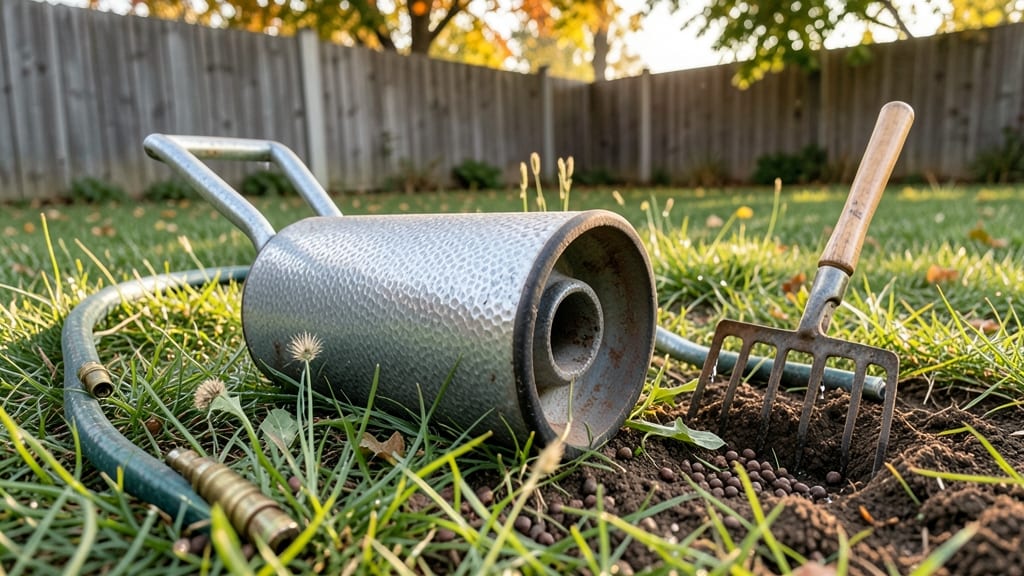
Your new lawn growing in patches isn't a lost cause—it just needs the right touch. 🌱 I've turned stubborn bare spots into lush green with these simple overseeding tricks that actually work, even when the soil feels like it's fighting you.
The problem usually boils down to three things: soil that's either too dry or too compacted, seeds that didn't get proper contact, or watering that was either too much or too little. Most people overcomplicate it, but the solution is actually straightforward—just focus on these three steps first.
You'll end up with a lawn that fills in evenly, stays green through dry spells, and grows thick enough to crowd out weeds naturally. The key is working with your soil's natural tendencies, not against them.
Works for any grass type, whether you're fixing a small patch or reviving an entire yard. Let's get those bare spots covered for good—this time, they'll stay green.
Root Causes Of Patchy Growth
A new lawn growing in uneven patches can be frustrating, but understanding the why behind it is the first step to fixing it. Below, we break down the most common culprits—each with a clear scientific explanation and actionable insights to help you diagnose the issue.
When seeds aren’t spread evenly, some areas get too much coverage while others get too little. This leads to thick clumps in spots and bare patches elsewhere.
Why it happens:
- Human error: Hand-spreading seeds can create inconsistent coverage, especially if you’re not methodical.
- Machine miscalibration: Broadcast spreaders or drop seeders may dispense seeds unevenly if not adjusted properly.
- Wind or terrain issues: Sloping yards or windy conditions can blow seeds into clusters, leaving gaps behind.
Actionable fix: ✅ Use a grid pattern when planting to ensure even coverage. ✅ Calibrate your spreader—walk at a consistent speed and overlap passes by 10-15% for uniformity. ✅ For slopes, plant perpendicular to the grade to prevent seeds from washing away.
Water is the lifeblood of new grass, and uneven moisture levels can kill seedlings before they establish roots.
Why it happens:
- Overwatering in spots: Hoses or sprinklers may deliver too much water in one area, causing erosion or fungal growth, while other spots stay dry.
- Underwatering elsewhere: If water doesn’t reach all areas (e.g., due to poor sprinkler placement), seeds dry out and fail to germinate.
- Timing issues: Watering at the wrong time (e.g., midday) leads to evaporation before seeds absorb moisture.
Actionable fix: ✅ Water lightly but frequently—keep soil consistently moist (about ¼ inch per week for new seed). ✅ Use a sprinkler with adjustable nozzles to cover all areas evenly. ✅ Water in the early morning (before 9 AM) to reduce evaporation and fungal risks.
New grass seeds need stable conditions to germinate. Too much heat, cold, or drought stress can halt growth in patches.
Why it happens:
- Heat stress: Temperatures above 85°F (29°C) can cook seeds before they sprout.
- Frost or cold snaps: Sudden freezes can kill tender seedlings.
- Drought conditions: Even a few days of dryness can dry out seeds before roots form.
Actionable fix: ✅ Choose the right season—cool-season grasses (like fescue) thrive in spring/fall (50-75°F / 10-24°C), while warm-season grasses (like Bermuda) need summer planting (75-90°F / 24-32°C). ✅ Use shade cloth if planting in peak summer heat. ✅ Mulch seeds lightly with straw to retain moisture and protect from temperature swings.
If the soil beneath your lawn is too hard or waterlogged, seeds can’t access the nutrients and oxygen they need to grow.
Why it happens:
- Foot traffic or machinery: Compacted soil reduces air pockets, smothering seeds.
- Clay-heavy soil: Holds too much water, leading to root rot in patches.
- Poor aeration: Dense soil prevents roots from penetrating deeply.
Actionable fix: ✅ Aerate before planting—use a core aerator to create ¼-inch holes for seeds to settle. ✅ Amend heavy clay soil with compost or sand to improve drainage. ✅ Test soil pH (ideal range: 6.0-7.0)—adjust with lime (for acidic soil) or sulfur (for alkaline soil).
Fungal infections (like dollar spot or snow mold) or pests (grubs, chinch bugs) can kill grass in patches before it fully establishes.
Why it happens:
- Excess moisture: Fungi thrive in damp, shaded conditions, causing brown, thinning patches.
- Thin seed coverage: Gaps allow pests to feed on roots, weakening new growth.
- Old grass debris: Leftover thatch or dead grass provides a breeding ground for pathogens.
Actionable fix: ✅ Remove old grass/clippings before planting to reduce fungal spores. ✅ Apply a pre-emergent fungicide if your area is prone to disease. ✅ Use organic pest control (like neem oil) if you spot grubs or insects.
If your soil lacks nitrogen, phosphorus, or potassium, new grass may sprout weakly or die off in patches.
Why it happens:
- No pre-plant fertilization: Seeds need quick-release nutrients to germinate.
- Poor organic matter: Soil without compost or peat moss struggles to retain moisture and nutrients.
- Imbalanced pH: Locks out essential minerals, even if fertilizer is applied.
Actionable fix: ✅ Apply a starter fertilizer (high in phosphorus) before planting. ✅ Mix in compost (2-3 inches) to improve soil structure and nutrient retention. ✅ Do a soil test—correct deficiencies with slow-release granular fertilizer after germination.
Not sure which issue you’re dealing with?
Ask yourself: - Did I spread seed evenly? → Likely uneven planting. - Are some areas always dry? → Watering or drainage problem. - Did I plant in extreme heat/cold? → Temperature stress. - Is the soil hard or waterlogged? → Compaction/drainage issue. - Do I see brown spots or pests? → Fungal/pest damage. - Did I fertilize before planting? → Nutrient deficiency.
By identifying the exact cause, you can target the fix and get your lawn growing uniformly and strong! 🚀
Quick Fixes for Patchy Lawn Growth
A patchy lawn doesn’t have to be a permanent problem—with the right approach, you can restore a lush, even carpet of grass in no time. Below, we’ve mapped out practical solutions tailored to the most common causes of thin spots, along with prevention tips to keep your lawn thriving long-term.
Let’s get started!
Problem: Heavy foot traffic, clay soil, or poor water flow can suffocate grass roots, leading to bare patches.
How to Fix It:
- 🔥 Aerate First – Rent a core aerator (or use a manual aerator for small areas) to pull out small soil plugs, allowing oxygen, water, and nutrients to reach the roots. Do this in spring or fall for best results.
- 🍳 Top-Dress with Sand or Compost – After aerating, spread a ¼-inch layer of coarse sand (for sandy soil) or compost (for clay) over the area. This improves drainage and adds organic matter.
- 👨🍳 Overseed Immediately – Sprinkle high-quality grass seed (matching your existing lawn type) into the aerated holes, then lightly rake. Water gently to keep soil moist for 10–14 days.
- ⏰ Water Deeply but Infrequently – Water 1–1.5 inches per week, focusing on deep soakings (early morning is best) to encourage strong root growth.
💡 Prevention Tip:
- Aerate annually if your lawn gets heavy use.
- Avoid walking on wet grass to prevent further compaction.
Problem: Some patches may be too shady for sun-loving grass (like Kentucky bluegrass) or too sunny for shade-tolerant varieties (like fine fescue).
How to Fix It:
- 🔪 Test Your Grass Type – If your lawn has sunny spots with bare patches, try overseeding with a drought-tolerant variety (e.g., tall fescue). For shady areas, choose fine fescue or ryegrass.
- 🌡️ Adjust Watering –
- Sunny patches: Water deeply 2–3 times per week (early morning).
- Shady patches: Water lightly but frequently (avoid soggy soil).
- ✨ Mulch Strategically – If shade is the issue, apply a 2–3 inch layer of mulch (like wood chips) around trees to block excess shade and improve soil health.
💡 Prevention Tip:
- Plant shade-tolerant ground covers (like creeping thyme) in extreme shade spots to fill gaps naturally.
Problem: Grubs, chinch bugs, or fungal infections (like brown patch) can kill grass in clusters, leaving behind thin, patchy areas.
How to Fix It:
- 🔍 Identify the Culprit –
- Grubs? Dig up a small patch—if you see white, C-shaped larvae, treat with beneficial nematodes or grub control granules.
- Chinch bugs? Look for small black bugs on the underside of blades. Use neem oil or insecticidal soap for organic control.
- Fungal disease? Yellow/brown patches with mushy grass? Improve airflow with proper mowing height (3–4 inches) and reduce watering frequency.
- 🍎 Treat & Rebuild –
- For pests: Apply organic or chemical treatments as directed, then overseed the affected area.
- For disease: Remove debris, water in the morning, and avoid overhead irrigation.
- 🌱 Encourage Recovery – After treatment, fertilize lightly with a slow-release, balanced formula (10-10-10) to help grass bounce back.
💡 Prevention Tip:
- Keep lawns mowed high (3–4 inches) to deter pests and diseases.
- Test soil pH (ideal: 6.0–7.0)—imbalanced pH invites fungal issues.
Problem: Dry spells or underwatering can turn grass yellow and brittle, leaving it vulnerable to wear and tear.
How to Fix It:
- 🥗 Deep Water Immediately – If your lawn is crunchy underfoot, water deeply (1–1.5 inches) over 2–3 sessions to encourage deep root growth.
- 🌱 Overseed & Protect – Sprinkle drought-resistant seed (like tall fescue or buffalo grass) and cover lightly with straw to retain moisture.
- 🎯 Adjust Future Watering –
- Morning watering (5–9 AM) reduces evaporation.
- Check soil moisture with a screwdriver—if it goes in easily, you’re overwatering.
💡 Prevention Tip:
- Install a rain gauge to track rainfall and adjust watering accordingly.
- Mulch with compost to retain moisture between waterings.
Regardless of the root issue, overseeding is the fastest way to fill in thin spots. Follow these steps for best results:
- 📊 Choose the Right Seed – Match your existing grass type (or pick a mix for durability).
- 🌱 Prepare the Soil – - Loosen soil with a rake or aerator. - Remove debris and level uneven spots.
- 🍳 Spread Seed Evenly – - Use a broadcast spreader for large areas. - For small patches, hand-seed and lightly rake in.
- 💧 Keep Soil Moist – - Water lightly 2x daily (morning & evening) for 2 weeks. - Gradually reduce to deep watering as new grass establishes.
- ✨ First Mow in 6–8 Weeks – Once new grass is 3–4 inches tall, mow high to avoid scalping.
Final Thought: A patchy lawn is fixable—patience and the right techniques will have you enjoying a thick, green carpet in no time. Start with the solution that matches your lawn’s biggest issue, then stay consistent with care to keep it lush! 🌿✨
Frequently asked questions
Why does my new lawn have uneven growth even after watering regularly?
Uneven growth often stems from inconsistent seed distribution or soil compaction. Check if seeds were spread too thickly in some areas or if foot traffic flattened the soil, preventing roots from reaching nutrients. Try aerating compacted spots and reseeding with a calibrated spreader for even coverage.
Can I overseed my lawn in summer without killing the new grass?
Summer overseeding is risky because high temperatures (above 85°F/29°C) can cook seeds before germination. For best results, wait for spring or fall when temps are 50-75°F (10-24°C). If you must plant in summer, use shade cloth and water twice daily to keep soil moist.
How do I tell if my patchy lawn is from pests or poor soil?
Dig up a small patch—if you see white grubs or black chinch bugs, pests are likely the issue. For poor soil, check for hard, compacted earth or yellowing grass that doesn't improve with water. Test soil pH (6.0-7.0 ideal) and amend with compost if needed.
Will mulching help my patchy lawn recover faster?
Yes! A ¼-inch layer of straw mulch retains moisture, regulates soil temperature, and blocks weeds. Apply it lightly after seeding to protect new grass from drying out. Avoid thick layers (½-inch+) which can suffocate seedlings.
How long should I wait before mowing new grass patches?
Wait until new grass reaches 3-4 inches tall (typically 6-8 weeks after planting). Mowing too soon scalps roots and stresses young plants. Use a sharp mower blade set to high (3-4 inches) for the first cut.