
Lawn
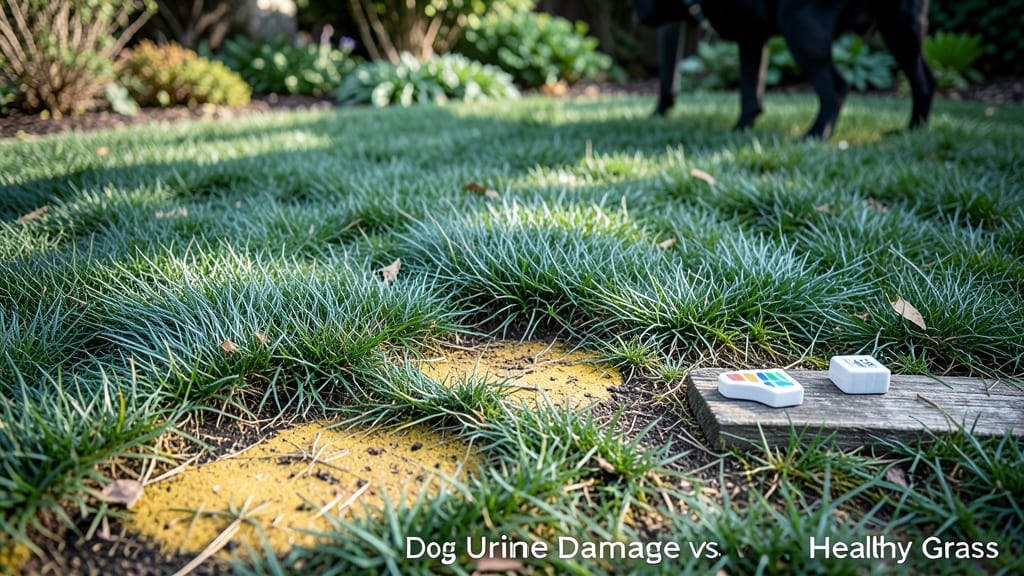
Dog urine can turn your lush 🌱 grass (lawn) into yellowed patches faster than you can say "potty break"—but there’s a science to reversing the damage.
Picture this: you step outside to find your once-vibrant lawn now dotted with brown, crispy spots where your pup did their business. The good news? This isn’t a death sentence for your grass.
With the right steps—like diluting the urine immediately and adjusting your lawn care routine—you can restore your yard to its former glory in just a few weeks.
Most homeowners don’t realize how quickly dog urine can harm grass (lawn), thanks to its high nitrogen content. But the key isn’t just watering more—it’s understanding when and how to act.
Below, I’ll walk you through the three-step fix that’s saved countless lawns (and sanity) for pet owners just like you.
From immediate fixes like flushing the urine to long-term solutions like choosing urine-resistant grass types, you’ll learn exactly what works—and what doesn’t. Let’s get your lawn back to looking its best, without sacrificing playtime with your furry friend.
Why dog urine burns grass and how to identify the damage
Dog urine contains high levels of urea and ammonia, which act like concentrated fertilizer when absorbed by grass. While this might seem helpful, the nitrogen overload disrupts the grass’s natural balance, causing burned patches that turn yellow or brown.
The issue isn’t just the urine itself but how it alters the soil pH and nutrient absorption.
When your dog pees, the ammonia concentration can reach up to 10,000 ppm—far higher than what grass can tolerate. This creates oxidative stress in the blades, leading to cell death. Over time, repeated exposure weakens the root system, making grass more susceptible to drought and disease.
Identifying urine damage starts with spotting distinct yellow patches that appear within hours of your dog’s bathroom breaks. Unlike other lawn issues, these spots often have a crusty or brittle texture and may recover slowly if the grass isn’t severely damaged. Thinning grass in high-traffic areas is another red flag.
To confirm it’s urine damage, check for these key visual clues:
- Irregular shapes (not circular like fungus)
- No fungal growth (no mold or slime)
- No wilting (unlike drought stress)
| Symptom | Dog Urine Damage | Fungal Issues | Drought Stress |
|---|---|---|---|
| Patch Shape | Irregular, often clustered | Circular or ring-like | Uniform, entire lawn |
| Color Change | Yellow/brown, crispy edges | White, gray, or black mold | Dull green or grayish |
| Texture | Brittle, dry, or crusty | Slimy or spongy | Firm but wilted |
| Recovery Time | Weeks with treatment | Slow, may recur | Improves with water |
| Smell | Ammonia-like | Musty or earthy | No distinct odor |
The pH imbalance caused by dog urine is another critical factor. Healthy lawn soil typically has a pH between 6.0 and 7.0, but urine can spike the pH to 8.0 or higher, making nutrients like iron and manganese unavailable.
This nutrient lockout weakens grass even further, turning vibrant green blades into stunted, yellowed patches.
If you notice thinning grass in areas where your dog frequently urinates, it’s a sign the roots are struggling. Unlike drought stress, which affects the entire lawn evenly, urine damage creates hotspots of weakness.
These areas may also recover slower after mowing or foot traffic, as the root system isn’t as resilient.
One common mistake is confusing urine damage with dollar spot fungus or brown patch disease. While both can cause yellowing, they often appear as smooth, circular patches with a dull, velvety texture.
Urine damage, however, tends to be patchy and irregular, with a crispy, brittle feel when touched.
To test for urine damage, perform a simple water test: Soak the affected area with 1 inch of water and observe for 24 hours. If the grass doesn’t revive and remains yellow or brown, it’s likely urine-related. If it greens up, the issue may be drought or compaction instead.
Understanding these differences is key to treating the problem effectively. While fungal issues require fungicides and drought stress needs deep watering, urine damage often responds best to dilution, soil amendments, and preventive measures. Addressing the root cause—literally—can save your lawn from long-term harm.
Remember, even if your lawn shows signs of damage, it’s often reversible with the right care. The sooner you act, the better the chances of restoring your grass to its former glory—without giving up your furry friend’s potty breaks! 🌱
3-Step urine-resistant lawn restoration plan (tested by vets & gardeners)
Dog urine contains high concentrations of nitrogen and uric acid, which can quickly burn grass blades and disrupt soil pH. The good news? With a targeted approach, you can reverse the damage and create a dog-proof lawn that stays green year-round.
This plan combines immediate action with long-term soil health strategies, all backed by veterinary and horticultural experts.
First, we’ll tackle the immediate neutralization of urine damage to protect your grass. Then, we’ll focus on soil repair to restore balance and resilience. Finally, we’ll implement preventive training for your pup to minimize future damage.
Each step is designed to work together for maximum results in just a few weeks.
For the immediate flushing step, time matters most. The longer urine sits on grass, the deeper it penetrates, making repair harder. Keep a garden hose with a gentle spray nozzle handy for quick cleanup. If you notice yellow patches forming, act fast—these spots can spread if left untreated.
After neutralizing the damage, focus on soil repair to prevent future issues. Gypsum is particularly effective because it doesn’t alter soil pH while improving drainage. For an extra boost, add potassium-rich fertilizer like greensand to strengthen grass roots. This two-step combo helps grass recover faster and resist future urine damage.
Long-term success depends on preventive training. Dogs can learn to use designated potty spots in as little as 2-3 weeks with consistency. Pair this with a regular watering schedule after potty breaks to dilute any residual acids.
Even small changes, like training your dog to lift their leg on gravel, can make a big difference in lawn health.
With these three steps, you’ll see visible improvement in 2-3 weeks. The key is consistency—don’t skip the soil repair phase, even if the grass looks better after flushing. Healthy soil equals healthier grass that can handle occasional urine without damage.