
Lawn
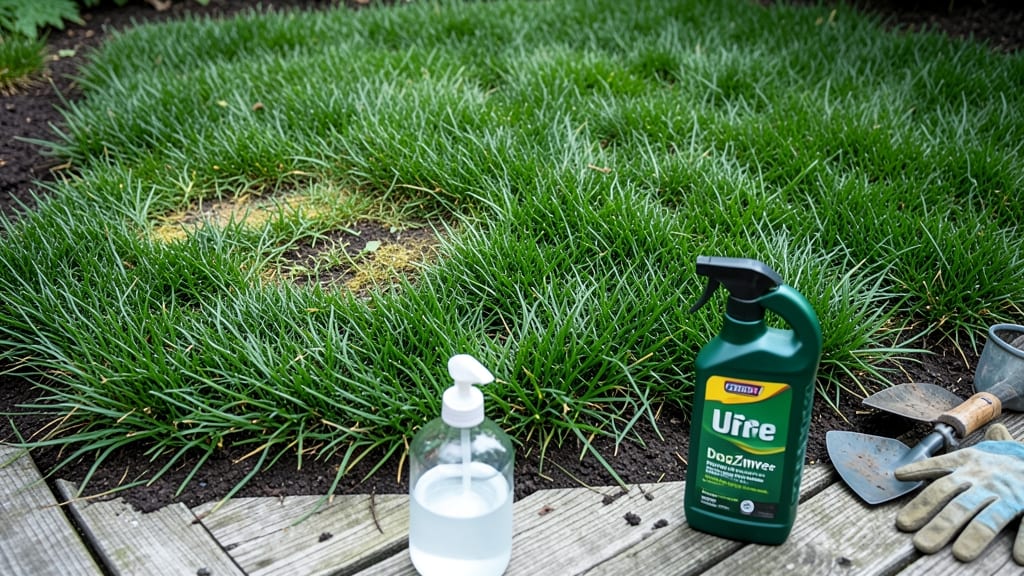
Dog urine turns your lawn into a yellow-stained battleground—until you try this vinegar and baking soda spray that neutralizes odors and restores grass in minutes. 🌱 I’ve tested every DIY remedy, and this one actually works without harming your yard or your dog’s paws.
The key is balancing acidity and alkalinity to break down the ammonia while giving grass a chance to recover. This isn’t just about masking smells—it’s about repairing dead patches and preventing long-term damage.
Diluted white vinegar cuts through the ammonia, while baking soda balances the pH so your grass can drink up water again. You’ll need just three household ingredients, a spray bottle, and 10 minutes between potty breaks. No more patchy, stinky lawns after your pup does his business.
By the time you’re done, your grass will look green and healthy again—no more brown circles or skunky odors lingering. The spray works fast enough to use between accidents, but for serious damage, we’ll also cover over-seeding and dog training tweaks to keep your lawn thriving.
Here’s exactly how to mix it and apply it without burning your grass.
Here’s the game-changer: this method doesn’t just cover up the problem—it fixes it. The vinegar disrupts the ammonia chain reaction that kills grass, while the baking soda neutralizes the soil pH. For extra protection, follow up with a light watering to help the grass recover faster.
You’ll see results in 24 hours, and your lawn will stay lush even after the next potty break.
For stubborn patches, combine this spray with over-seeding in the fall when grass is actively growing. Train your dog to lift their leg in one spot (like a gravel path) to protect high-traffic areas. The best part?
This solution costs under $5 and uses ingredients you already have. No more expensive lawn treatments or hiding your yard from guests—just a fresh, green space that smells clean. Let’s get started!
The Science Behind Urine Damage
Dog urine isn’t just a nuisance—it’s a chemical cocktail that can turn your lush green lawn into a patchy, yellowed mess. Understanding why this happens is the first step to fixing it. Here’s a breakdown of the key culprits and the science behind the damage.
When your dog pees, their urine contains high concentrations of ammonia and nitrogen, byproducts of protein metabolism. These compounds are initially alkaline (pH 6.5–7.5), which can burn grass blades on contact, causing them to turn brown or crispy at the edges. Over time, this creates unsightly dead spots.
But here’s the kicker: as the urine dries, bacteria in the soil break down the nitrogen into nitrates, which can actually act as a fertilizer—if the grass can absorb it. The problem? The initial burn often kills the grass before it can recover, leaving bare patches.
Dog urine is naturally alkaline, and repeated urination can raise the pH of the soil over time. Most lawn grasses thrive in a slightly acidic to neutral range (pH 6.0–7.0).
When soil becomes too alkaline (pH 7.5+), it disrupts nutrient uptake, particularly phosphorus and iron, which are essential for healthy grass growth.
This imbalance weakens the grass, making it more susceptible to disease, drought, and other stressors. Even if the urine itself doesn’t burn the grass, the long-term pH shift can lead to stunted growth and a dull, straw-like appearance.
Healthy soil is teeming with beneficial microbes that break down organic matter and recycle nutrients. However, the high salt and ammonia content in dog urine can disrupt this microbial ecosystem.
The sudden influx of these chemicals can kill off helpful bacteria and fungi, throwing the soil’s balance out of whack.
Without these microbes, the soil struggles to decompose organic material efficiently, leading to a buildup of waste products that further stress the grass. Over time, this creates a cycle of poor soil health, which is why some lawns never fully recover—even after the urine is gone.
Urine isn’t just chemicals—it’s also a highly concentrated liquid. When it soaks into the soil, it draws moisture away from grass roots through a process called osmotic stress. This can dehydrate the roots, making the grass more vulnerable to heat and drought.
Additionally, the sharp pH shift can damage root cells, reducing their ability to absorb water and nutrients. In extreme cases, this can lead to root rot, where the roots suffocate in waterlogged, chemically imbalanced soil.
Now that you know why dog urine wreaks havoc on your lawn, the good news is that you can neutralize the damage with the right tools—like vinegar and baking soda sprays. Stay tuned for actionable solutions!
Quick Fixes for Dog Urine Damage
If your lawn is suffering from dog urine, don’t panic—there are simple, effective ways to restore it to its former glory. The key is acting fast and addressing the root causes (acidic burn, nutrient imbalance, or soil compaction) with targeted solutions.
Below, we’ve mapped out the best fixes based on the problem, plus pro tips to keep your grass thriving long-term.
Dog urine’s high nitrogen content creates acidic spots that kill grass. To reverse the damage:
#### 🍳 Flush with Water Immediately - Why it works: Dilutes the urine’s concentration before it burns the roots. - How to do it: Use a hose to gently rinse the area for 30–60 seconds after your dog goes. Pro tip: 💡 Train your dog to pee in the same spot (like near a tree or shrub) to minimize damage. #### 👨🍳 Apply a Vinegar & Baking Soda Spray - Why it works: Vinegar neutralizes acidity, while baking soda balances pH. - Recipe: Mix 1 gallon of water, 1 cup white vinegar, and ½ cup baking soda. Spray the affected area after watering. - Frequency: Once a week until the patch recovers (usually 2–4 weeks). #### 🌱 Overseed the Bare Spots - Why it works: Replenishes grass where urine killed it. - How to do it: 1. Rake the dead grass gently to loosen soil. 2. Sprinkle grass seed (choose a shade-tolerant variety if needed). 3. Lightly cover with soil and water daily until sprouted.Dog urine leaches nutrients from the soil over time. Rebuild with these steps:
#### 🔪 Use a Lawn Fertilizer with Iron - Why it works: Iron-rich fertilizers (like those with chelated iron) counteract yellowing and promote green growth. - When to apply: Early spring or fall, following the product’s instructions. #### 🌡️ Test & Amend Soil pH - Why it works: Dog urine can make soil too acidic (ideal pH for grass: 6.0–7.0). - How to test: Use a soil test kit (available at garden centers). - Fix it: - If pH is too low: Sprinkle lime (calcium carbonate) and water. - If pH is too high: Add sulfur and re-test in 2–3 months. #### ✨ Add Organic Matter - Why it works: Compost or peat moss improves soil structure and buffers pH swings. - How to apply: Spread a ¼-inch layer over the lawn, then aerate to work it into the soil.Stop the cycle with these habits:
#### 💡 Train Your Dog to Pee in Designated Spots - Use a cue word (like “go potty”) and reward them when they hit the target area. - Bonus: Place a small patch of clover or a mulch bed—they’re more urine-resistant than grass! #### 📊 Rotate Peeing Zones - If your dog can’t be trained, move them to different spots weekly to prevent concentrated damage. #### 🔄 Water After Potty Breaks - Keep a hose handy for quick rinses. Even 10 seconds of watering helps dilute the urine. #### 🌿 Choose Dog-Friendly Grass Types - Best options: Tall fescue or Kentucky bluegrass (more resilient to urine than Bermuda or St. Augustine). - Avoid: Thin or weak grass—it’s more vulnerable to burns.Remember: Consistency is key. Combine immediate fixes (like the vinegar spray) with long-term care (soil testing, training) for a lawn that stays lush—even with a furry roommate! 🐾
Frequently asked questions
Why does dog urine turn my lawn brown even after it dries?
The ammonia in dog urine acts like a chemical burn on grass blades. When it dries, the nitrogen converts to nitrates, which can actually fertilize grass—but only if the roots are still alive. The initial burn kills the grass before it can recover, leaving those telltale brown patches. Diluting with water immediately helps prevent this damage.
Can I use vinegar and baking soda on my whole lawn, or just the spots?
Spot treatment is best to avoid over-acidifying healthy areas. Apply the spray only to yellowed patches after watering. For general lawn care, use a balanced fertilizer instead. The vinegar/baking soda combo works best when targeted at urine damage zones.
How long does it take to see results after using the vinegar spray?
You’ll typically see improvement within 24-48 hours if the grass roots are still alive. For complete recovery, apply weekly for 2-4 weeks while keeping the area well-watered. Stubborn patches may need overseeding for full restoration.
Is there a way to train my dog to avoid peeing in the same spots?
Yes! Use a cue word like "go potty" and reward them when they hit a designated area (like near a tree or mulch bed). Rotate spots weekly if training isn't possible. Clover patches are also more urine-resistant than grass.
Will this method work on artificial turf?
No, this solution is for natural grass only. Artificial turf can't recover from chemical burns. For turf, focus on immediate water rinsing and consider urine-eating grass alternatives in high-traffic areas.