
Lawn
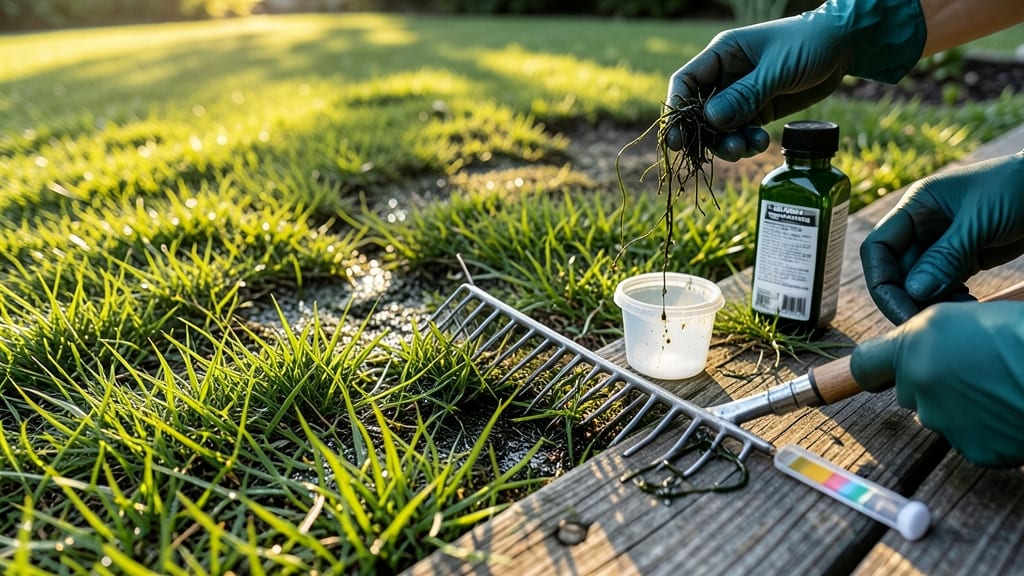
Lawn algae isn't dangerous in itself, but it creates slipping hazards, encourages mold growth, and can trigger respiratory irritation from decaying organic matter. It grows best in shaded, damp spots and often signals drainage problems or overwatering, which weakens grass roots over time.
While lawn algae itself isn't toxic, the conditions that allow it to thrive—like standing water and organic buildup—can become breeding grounds for harmful bacteria and fungi. 🌱 The slippery surface it creates poses a real tripping risk, especially for kids or pets, and the decaying algae releases spores that may aggravate allergies or asthma in sensitive individuals.
What's more concerning is how algae competes with grass for nutrients, particularly nitrogen, which can turn your lawn from lush green to patchy brown if left unchecked.
Most homeowners can safely remove algae using simple household solutions like a vinegar-water mix or baking soda, but the real fix lies in addressing the root causes.
Improving airflow with proper mowing height, fixing drainage issues, and choosing drought-resistant grass varieties will make your lawn less inviting to algae in the long run.
💡 In This Article
- Health and Environmental Risks of Lawn Algae
- Safe Methods to Remove and Prevent Lawn Algae
Health and environmental risks of lawn algae
Lawn algae poses risks primarily through its slippery texture and the decaying organic matter it produces. When algae grows in thick mats, it creates a slick surface that can cause falls—especially dangerous for children or pets running across the yard.
The National Safety Council reports that slip-and-fall accidents on wet surfaces account for over 1 million emergency room visits annually, and algae-covered lawns contribute to this hazard. 🌱 The slimy layer forms because algae cells secrete mucilage, a gelatinous substance that makes footing unstable even when the grass appears dry.
Beyond slipping hazards, decaying algae releases spores and microbial byproducts that can irritate respiratory systems. Studies from the American Lung Association show that organic decay in lawns increases airborne mold spores by up to 30% during humid conditions.
These spores may trigger allergies, asthma, or other sensitivities, particularly in individuals with pre-existing conditions. The algae itself isn’t toxic, but the secondary effects—like bacterial growth in stagnant water—can become problematic if left unaddressed for weeks.
Algae disrupts soil health by outcompeting grass for essential nutrients, particularly nitrogen. A 2018 study in HortScience found that algae can absorb 40-60% of available nitrogen in shaded lawns, starving grass roots and leading to yellowing or dead patches.
The dense algae mats also block sunlight and oxygen from reaching the soil, suffocating grass roots and creating ideal conditions for fungal diseases like brown patch or dollar spot. Over time, this nutrient competition weakens the lawn’s resilience to drought and pests.
Another hidden risk is the buildup of organic debris from decaying algae. As it breaks down, it forms a thick, spongy layer that traps moisture and heat, creating a perfect environment for harmful bacteria like E. coli or Salmonella in areas where children or pets play.
While direct infection is rare, the combination of bacteria and slippery surfaces makes algae-covered lawns a double threat to safety. The key takeaway? Algae isn’t just an eyesore—it’s a symptom of deeper lawn health issues that demand attention.
For homeowners with allergies or respiratory concerns, algae removal should be a priority during peak growing seasons (spring and fall). The decaying matter releases the most spores when disturbed, so wearing a mask during cleanup and avoiding high-pressure water blasting (which can aerosolize spores) is wise.
A simple vinegar-water solution (1:1 ratio) can kill algae on contact while being safe for most lawns, but addressing drainage and sunlight issues is the real long-term fix. 💫