
Watering
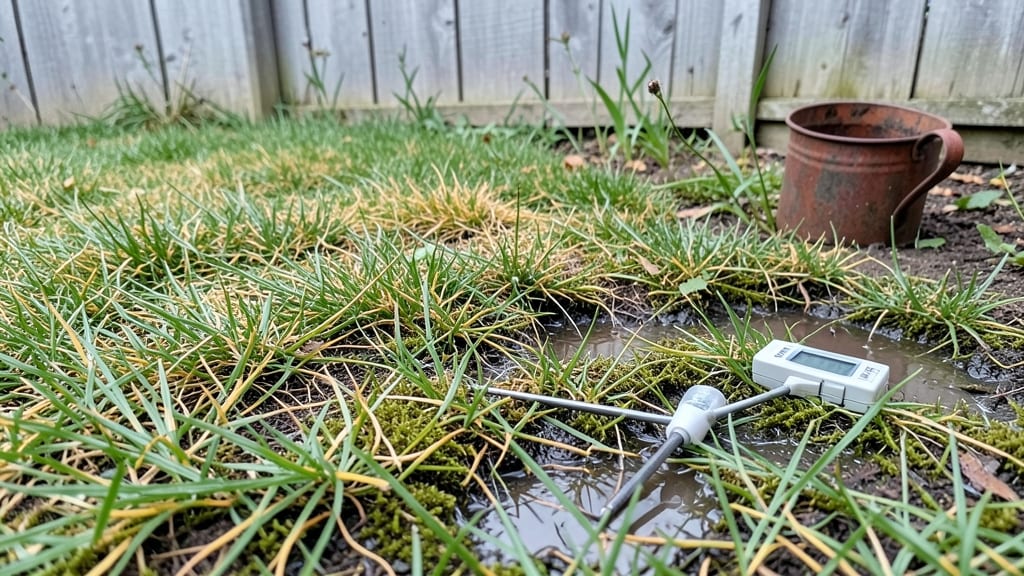
Telling if your lawn is overwatered involves checking for yellowing grass, spongy soil, fungal growth, or water pooling. Overly saturated roots and a musty smell also signal excess moisture, often worsened by compacted soil or poor drainage.
Overwatering often starts with subtle clues that many homeowners miss until damage sets in. 🌱 For example, grass blades that turn a dull yellow (rather than brown) are a red flag—this signals oxygen deprivation in the roots, while brown patches usually mean drought stress.
Compacted soil prevents water from draining properly, creating the perfect breeding ground for fungal diseases like brown patch or dollar spot, which appear as circular discolored rings. The key is to act quickly: once roots suffocate, recovery becomes much harder.
💡 In This Article
- 5 Visual and Physical Signs of Overwatered Grass
- Adjusting Watering Schedules for Healthy Lawn Recovery
5 Visual and physical signs of overwatered grass
The first clue that your lawn is drowning in water is the color of the grass blades. When roots sit in waterlogged soil for more than 48 hours, they can't absorb oxygen, leading to a process called anaerobic respiration.
This causes grass to turn a dull, yellowish-green rather than the vibrant green of healthy turf. Unlike drought-stressed grass that browns from the tips, overwatered grass often yellows uniformly across the blade.
Think of it like a plant gasping for air—roots deprived of oxygen produce less chlorophyll, which gives grass its green pigment. 🌱
Next, check the soil texture by pressing your thumb about 1-2 inches deep. Overwatered soil feels spongy and squishy, almost like a damp sponge. This happens because excess water displaces air pockets in the soil, preventing proper drainage.
In extreme cases, the top layer may even appear grayish or have a slimy coating. Compare it to well-drained soil, which crumbles easily when dry and holds its shape when moist—a texture similar to a damp, but not soggy, cookie dough.
The key difference is that overwatered soil stays clumped together even when you try to break it apart.
Fungal growth is another dead giveaway, appearing as white, cottony patches or circular rings of discolored grass. Fungi like Rhizoctonia solani (brown patch) and Dollarium filiform (dollar spot) thrive in wet, stagnant conditions. These pathogens release enzymes that break down plant cell walls, creating the characteristic rings.
The smell is often the first warning—musty, earthy, or even slightly rotten, like a damp basement. This odor comes from microbial activity in waterlogged soil, where bacteria and fungi outcompete beneficial microbes. 💫
Root suffocation occurs when water fills the soil pores, pushing out essential oxygen. Healthy grass roots need about 10-20% air space in the soil to function properly.
When this drops below 5%, roots begin to die back, and the lawn becomes susceptible to pests like chinch bugs, which target weakened turf.
You can test this by gently lifting a small section of grass—if the roots look grayish and mushy rather than white and fibrous, your lawn is drowning. This is often accompanied by a thready, weak growth that pulls easily from the soil, unlike healthy roots that resist gently.
Finally, watch for water pooling or slow drainage after rain or irrigation. Even 1/4 inch of standing water for more than 6 hours can drown grass roots. This is especially problematic in areas with clay soil, which compacts easily and repels water.
To test drainage, dig a small hole (6 inches deep) and fill it with water. If it drains in less than 4 hours, your soil is fine; if it takes longer, you’ve got poor drainage.
The longer water sits, the more it leaches away essential nutrients like nitrogen and potassium, further stressing the grass. 🔥
What most people don’t realize is that overwatering can actually increase the need for watering. When soil stays saturated, grass roots grow shallow to access moisture quickly, making them more dependent on frequent watering. This creates a vicious cycle where the lawn becomes increasingly sensitive to drought and disease.
The solution? Let the soil dry out between waterings—aim for 1-1.5 inches of water per week, including rainfall, and always water deeply but infrequently to encourage deep root growth.