
Lawn
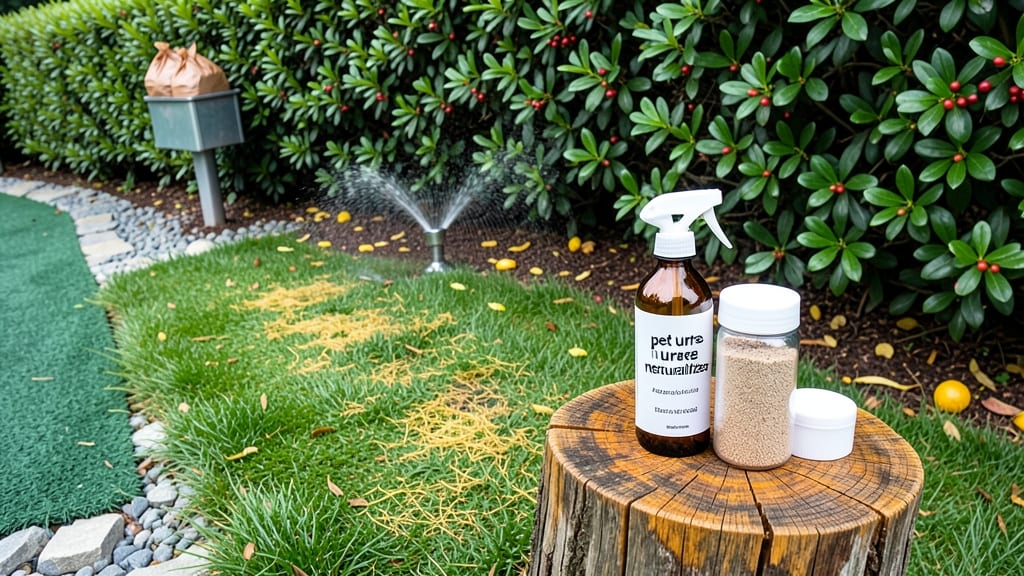
To stop dogs peeing on lawn, use deterrents like diluted vinegar sprays, artificial turf patches, or commercial pet repellents applied to problem areas, while reinforcing training with positive rewards.
Dogs mark lawns for territorial reasons and because grass provides easy access to scent communication. 🐾 The ammonia in urine actually burns grass, creating dead patches that dogs may return to—so breaking this cycle requires both physical barriers and behavioral training.
I’ve found that combining a strong-smelling deterrent (like citrus peels) with a designated potty spot outside the yard works best for most breeds.
For stubborn cases, commercial sprays with enzymes break down the scent, while artificial turf patches train dogs to avoid grass entirely. The key is consistency—dogs learn boundaries through repetition, not punishment.
💡 In This Article
- Why Dogs Target Lawns for Peeing
- Natural and Chemical Lawn Deterrents for Dogs
Why dogs target lawns for peeing
Dogs pee on lawns primarily because grass provides the perfect combination of soft texture and scent diffusion for marking territory. The fine blades allow urine to seep into the soil, creating a concentrated scent signal that other dogs can detect from a distance.
This is especially true for male dogs, whose urine contains higher levels of phenols—compounds that carry strong territorial messages. 🐕 The texture of grass also makes it easier for dogs to lift their legs, which is why you’ll often see this behavior in open, unobstructed areas.
The ammonia in dog urine acts like a natural fertilizer, initially stimulating grass growth. However, the high nitrogen content quickly burns the blades, creating dead patches that dogs may return to—this is why you’ll notice recurring spots.
The pH of urine (typically 6.5-7.5) further weakens grass roots, making the area less appealing for regrowth. This cycle of marking and damage reinforces the behavior, making it harder to break without intervention.
Breed instincts play a role too. Herding and working breeds, like Border Collies or German Shepherds, are more likely to mark territory aggressively due to their natural protective instincts. Even well-trained dogs may revert to this behavior when they sense unfamiliar scents or perceive their yard as vulnerable.
The key is understanding that this isn’t just about convenience—it’s a deeply ingrained communication method for dogs.
For puppies, the urge to mark is often tied to excitement or stress, especially during potty training. Their smaller bladders mean more frequent trips outside, and grass feels like the easiest option.
The scent of other animals’ urine on the lawn can also trigger a dog’s instinct to "claim" the space. This is why consistent training—combined with deterrents—is crucial to redirecting this behavior.
Interestingly, dogs also prefer grass over other surfaces because it’s softer and easier to pee on. Hard surfaces like concrete or gravel require more effort, which is why you’ll rarely see dogs marking those areas unless they’re forced to.
The combination of scent diffusion, texture, and territorial instincts makes lawns the prime target for canine marking.
If you’ve ever noticed your dog circling or sniffing a specific spot before peeing, it’s because they’re assessing the scent history of that area. This behavior is hardwired—dogs use urine as a way to "talk" to other animals, and grass amplifies that message.
Breaking this cycle requires addressing both the physical and behavioral aspects of the problem.