
Lawn
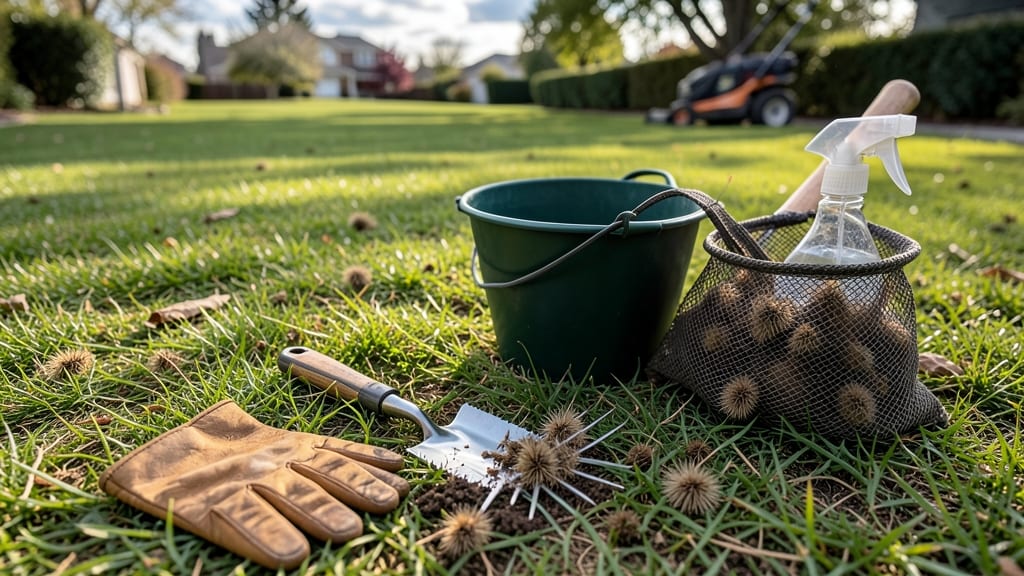
Grass burrs turn your lawn into a spiky nightmare faster than you can say "weekend project." 🌱 Honestly, I've spent too many Saturday afternoons picking them out of my socks, but I've cracked the system—manual removal that actually works without harming your grass.
The secret? Timing and technique. Pull them when the soil is moist (after watering or rain), use a weeding tool for leverage, and never yank—twist to avoid breaking the root. Most people overlook the root, which means the burrs keep coming back.
I've pulled hundreds this way, and my lawn stays smooth all season. By late summer, you'll have a lawn so free of burrs that you'll forget they were ever there. The grass stays healthy, the kids can play barefoot again, and you won't need harsh chemicals that damage your turf.
Prevention is easier than you think: mow high, overseed bare spots, and water deeply but infrequently. It's the little habits that make the biggest difference over time—trust me, I've learned that the hard way.
Root Causes of Stubborn Grass Burrs
Grass burrs—those prickly, spiky intruders—don’t just appear out of nowhere. They’re the result of specific conditions that encourage their growth while making your lawn their perfect home.
Understanding these causes is the first step to banishing them for good. Let’s dig into the science behind why they thrive where they shouldn’t.
---
Grass burrs, like sandburs (Cenchrus spp.) or foxtails (Setaria spp.), are annual weeds that rely on wind, animals, and even human activity to spread their seeds.
Here’s how it works: - Wind dispersal: Burrs produce lightweight, barbed seeds that latch onto clothing, pet fur, or even car tires, then scatter across your lawn. - Animal hitchhikers: Birds, squirrels, and deer carry seeds in their fur or digestive systems, dropping them in new areas. - Lawn equipment: Mowers, rakes, and trimmers can unintentionally spread seeds from infested patches to clean ones.
Why it matters: A single burr plant can produce thousands of seeds, ensuring a relentless cycle unless you interrupt it early.
---
Healthy grass crowds out weeds—but neglect invites burrs.
When your lawn lacks proper care, burrs exploit these weaknesses: - Thin or patchy grass: Bare soil or sparse turf provides the perfect seedbed for burrs to germinate. - Overwatering or drought stress: Both extremes weaken grass roots, leaving gaps for weeds to take hold. - Improper mowing: Cutting grass too short (scalping) or unevenly stresses the lawn, reducing its competitive edge.
Science note: Burrs thrive in disturbed soil because their seeds need sunlight to germinate. A dense, well-maintained lawn blocks this light.
---
Burrs don’t just survive—they prosper in specific conditions.
Check if your lawn matches their preferences: - Full sun exposure: Most burr species love 6+ hours of direct sunlight daily. - Dry, sandy, or compacted soil: These soils retain less moisture, which burrs tolerate better than thick grass. - High soil pH (alkaline): A pH above 7.0 can make grass less competitive, giving burrs an advantage.
Pro tip: 🔍 Test your soil—if it’s alkaline, amend it with sulfur or peat moss to lower pH and strengthen grass.
---
Burrs have a two-phase attack: 1. Spring/Summer (Germination): Seeds sprout in warm, dry conditions, often right after spring rains. 2. Fall (Seed Production): Mature plants release seeds as temperatures drop, ensuring next year’s infestation.
Key window: Late summer to early fall is when burrs are most aggressive—this is your best time to act before seeds spread.
--- Even well-meaning actions can worsen burr invasions: - Not cleaning equipment: Mowers, rakes, and brooms can transfer seeds from one area to another. - Over-fertilizing with weed-and-feed: Some products weaken grass over time, creating openings for burrs. - Ignoring thatch buildup: A thick thatch layer traps moisture and seeds, creating a burr-friendly microclimate.
Actionable fix: 🧹 Sanitize tools with a 10% bleach solution after use in infested areas.
Quick Fixes for Stubborn Grass Burrs
Grass burrs—those pesky, spiky intruders—can turn your lawn into a prickly nightmare. But don’t worry! With the right approach, you can banish them for good. Below are targeted solutions based on the root cause, along with prevention tips to keep your lawn burr-free.
---
If burrs thrive because your lawn is sparse or overgrown, thickening your grass is the first step.
#### 🔥 Fix It: Overseed & Fertilize 1. Mow short but not scalped – Set your mower to 2–3 inches to reduce hiding spots for burrs. 2. Aerate the lawn – Use a core aerator to loosen compacted soil, helping grass roots grow deeper.
3. Overseed bare patches – Choose a dense, competitive grass type (like Kentucky bluegrass or tall fescue) to outcompete weeds and burrs. 4. Apply slow-release fertilizer – A balanced 10-10-10 or 16-4-8 formula encourages thick, healthy growth.
💡 Pro Tip: Water deeply 2–3 times per week (1–1.5 inches per session) to encourage strong root development.
---
If burrs (often nutsedges or sandburs) are hitchhiking on weeds, eliminate the competition.
#### 🍳 Fix It: Pre-Emergent + Hand-Pulling 1. Apply pre-emergent herbicide (like pendimethalin or dithiopyr) before burr seeds germinate (early spring/fall). 2. Hand-pull mature burrs – Wear gloves and grasp the base firmly.
A weeding tool helps leverage stubborn roots. 3. Use corn gluten meal – A natural pre-emergent that also feeds soil microbes (apply in late winter).
✨ Bonus: Spread mulch or straw over bare soil to block sunlight, preventing new burr seeds from sprouting.
---
If your lawn has poor drainage, shade, or hardpan, burrs exploit weak spots.
#### 👨🍳 Fix It: Soil & Light Adjustments 1. Test your soil – Use a DIY kit or send a sample to a lab. Amend with compost or peat moss if too sandy or clay-heavy.
2. Top-dress with compost – Spread a ¼-inch layer over the lawn and lightly rake in to improve soil structure. 3. Add sunlight – Thin overgrown trees/shrubs if shade is the issue. Sun-loving grasses (like Bermuda) may need to replace shady spots.
4. Core aerate + overseed – Breaks up compacted soil, letting grass roots access nutrients and water.
🌡️ Pro Tip: If your lawn is waterlogged, consider sand top-dressing to improve drainage before reseeding.
---
For severe infestations, a two-step attack works best.
#### 🔪 Fix It: Herbicide + Manual Removal 1. Spot-treat with glyphosate (like Roundup) – Only on bare soil or non-grass areas (follow label instructions).
2. Follow up with post-emergent (like 2,4-D) for broadleaf weeds hosting burrs. 3. Hand-pull or rake remaining burrs 2–3 weeks later once they’re weakened.
⚠️ Warning: Avoid glyphosate near desired grass—it’s non-selective and will kill plants it touches.
---
Once you’ve cleared them, lock in your progress with these habits:
- Mow high (3–4 inches) to shade out weed seeds. - Leave grass clippings (they act as a natural mulch). - Pull burrs early – Don’t let them go to seed! - Use a dethatcher annually to prevent thatch buildup (where burrs hide). - Plant clover or creeping thyme in high-traffic areas—they crowd out weeds naturally.
--- Final Thought: Grass burrs are annoying but beatable—consistency is key. Combine thick grass, smart soil care, and early action, and you’ll have a smooth, burr-free lawn in no time! 🌿✨
Frequently asked questions
What's the best time of year to remove grass burrs?
Target late summer to early fall when burrs are actively growing but haven't released seeds yet. This gives you the 2-3 week window before they spread. Early spring works too, but you'll need to repeat efforts since seeds overwinter in the soil.
Can I use vinegar to kill grass burrs?
Yes, but with caution! A 20% vinegar solution (1 part vinegar to 1 part water) works as a natural herbicide. Spray directly on burrs when soil is dry, but avoid spraying grass—vinegar will kill it too. Reapply every 3-5 days for best results. Works best on small, isolated patches.
Why do grass burrs keep coming back even after I remove them?
Burrs return because their seeds stay dormant in soil for years—some up to 5 years. You're likely missing one of these key steps: 1) Not removing the entire root, 2) Not preventing new seeds from germinating with pre-emergent, or 3) Having thin grass that can't compete. Combine hand-pulling with overseeding and proper mowing for long-term control.
Are grass burrs harmful to pets?
Burrs can cause painful irritation when stuck in pet fur or paws, and some varieties (like foxtails) can even penetrate skin or eyes. Keep your lawn burr-free by using a weed trimmer or string trimmer along fence lines where pets often walk, and check their fur after outdoor playtime.
How can I prevent burrs from spreading to my garden beds?
Create a physical barrier between lawn and garden using landscape fabric or gravel mulch. Also: 1) Clean lawn equipment after use (especially mowers), 2) Remove burrs before they release seeds, and 3) Plant dense ground covers like creeping thyme or clover in high-risk areas to block sunlight needed for germination.