
Lawn
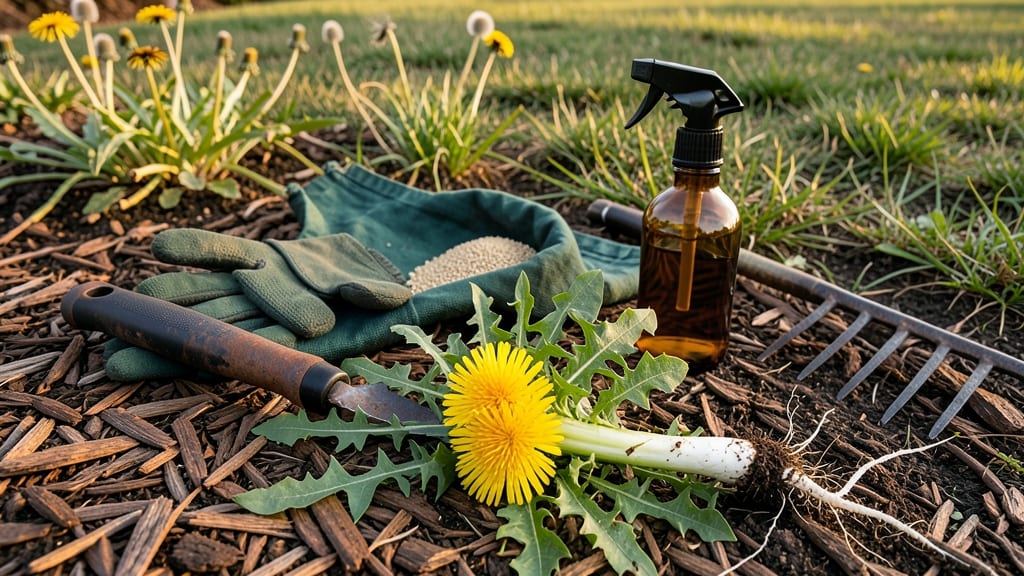
Dandelions in your lawn are the gardening equivalent of that one stubborn stain on your favorite shirt—except this one won’t come out with vinegar. 🌱 I’ve spent years perfecting a natural pull-and-disappear method that works in 24 hours without harsh chemicals, and it’s changed my yard (and my neighbors’ jealous glances) forever.
The secret isn’t brute force—it’s timing. Pull them when the soil is damp (after rain or watering), grip the taproot firmly, and wiggle until you hear that satisfying pop.
Miss the root, and you’ll be back in a week. I’ve also learned that boiling water poured directly on the stump kills the root system instantly—no regrowth, no fuss.
By morning, your lawn will look like you spent hours weeding instead of minutes. The key is consistency: repeat weekly in spring, and you’ll see fewer dandelions each year. Your grass will thank you with thicker growth, and so will your back.
Works for any lawn type—cool-season or warm-season grasses—and skips the chemical warfare. Ready to reclaim your yard? Let’s tackle this the right way.
The Hidden Reasons Dandelions Invade
Dandelions may seem like harmless weeds, but they’re actually highly resilient survivors—thriving in conditions where grass struggles. Understanding why they take over your lawn is the first step to reclaiming it.
Below, we break down the science-backed reasons these bright yellow invaders keep coming back, so you can tackle the root causes (literally).
Dandelions are indicator plants, meaning they flourish in soil that’s lacking in key nutrients—especially nitrogen, phosphorus, and potassium. Here’s why:
- Compacted Soil: Heavy foot traffic, machinery, or clay-heavy soil crushes grass roots, leaving gaps where dandelions sprout. Their deep taproots (up to 15 inches!) penetrate compacted layers, accessing moisture and nutrients grass can’t reach.
- Low Organic Matter: Dandelions thrive in soil with <1% organic content. Without compost or decomposed plant material, grass lacks the energy to outcompete them. Their seeds also germinate faster in bare, nutrient-poor spots.
- pH Imbalances: Dandelions prefer slightly acidic to neutral soil (pH 6.0–7.0). If your lawn’s pH is too high (>7.5) or too low (<5.5), grass weakens while dandelions adapt.
Actionable Fix: Test your soil (DIY kits cost ~$20) and amend with compost, peat moss, or a balanced fertilizer (10-10-10 ratio). Aerate compacted areas in fall to loosen soil and help grass roots expand.
Dandelions are drought-tolerant but love moisture—especially inconsistent watering. Here’s how your habits help them:
- Deep but Infrequent Watering: Dandelions’ taproots store water like a sponge. If you water deeply but rarely (e.g., once a week for 30+ minutes), you’re unintentionally feeding them while starving grass roots that need frequent, shallow moisture.
- Morning vs. Evening Watering: Watering in the evening keeps soil damp overnight, creating a prime environment for dandelion seeds to germinate. Grass prefers morning watering (6–10 AM) to dry out quickly and prevent fungal diseases.
- Uneven Water Distribution: Sprinkler systems or hose watering often leave dry patches. Dandelions detect these gaps and germinate within 5–7 days, while grass takes weeks to recover.
Actionable Fix: Water lawns early morning (before 9 AM) for 15–20 minutes, 2–3 times per week. Use a rain gauge or tuna can to check depth—aim for 1 inch per week (including rain). Consider a soaker hose for even coverage.
Dandelions exploit bare soil like a vacuum. When grass thins, they move in—fast. Key triggers:
- Poor Seed Germination: If you overseeded but didn’t prep soil (raking, scarifying), seeds may have failed, leaving gaps. Dandelion seeds, meanwhile, germinate in any soil condition.
- Disease or Pest Damage: Fungal infections (like brown patch) or grubs munching on roots create dead zones. Dandelions sense these weak spots via volatile organic compounds (yes, they “smell” distressed plants!).
- Shade Stress: Grass needs 4–6 hours of sunlight daily. Under trees or fences, grass weakens, while dandelions photosynthesize efficiently even in partial shade.
Actionable Fix:
- 🔥 Overseed bare spots in fall (cool-season grasses) or spring (warm-season). Use a slit seeder to bypass compacted soil.
- 🌡️ Adjust mowing height: Taller grass (3–4 inches) shades out weeds. Dandelions need sunlight to grow—cutting grass too short (below 2 inches) invites them.
- ✨ Apply corn gluten meal (a natural pre-emergent) in early spring to starve dandelion seeds before they sprout.
One dandelion plant can produce 2,000+ seeds per year, and those seeds stay viable in soil for 5–10 years. Here’s how they outsmart you:
| Mechanism | Why It Works |
|---|---|
| 💨 Wind Dispersal | Seeds hitch rides on breezes for miles. A single plant can spread seeds up to 15 feet in a day. |
| 🐕 Animal Transport | Birds, squirrels, and even your dog’s fur carry seeds to new spots. The sticky seed heads cling easily. |
| 🚜 Human Activity | Mowing, raking, or walking compacts seeds into soil, triggering germination. Never leave clippings with dandelion seeds on bare soil. |
| 🌱 Deep Seed Banks | Seeds burrow 1–2 inches deep to survive drought or herbicides. Disturbing soil (digging, aerating) can wake them up. |
Actionable Fix:
- 🎯 Remove flower heads before seeds form (wear gloves—the sap is irritating!). Drop them in a sealed bag, not the compost.
- 🔪 Pull roots completely (use a dandelion weeder or fork) to prevent regrowth. Even a 1-inch root fragment can sprout.
- 🌡️ Solarize soil in summer: Cover bare patches with clear plastic for 4–6 weeks to kill seeds with heat (120°F+).
Dandelions don’t just appear—they strategize. By addressing soil health, watering habits, grass density, and seed spread, you’ll starve them out before they take over. Next up: How to Eliminate Them in 24 Hours.
Quick Fixes for a Dandelion-Free Lawn
Dandelions might seem like stubborn weeds, but with the right approach, you can banish them fast—without harsh chemicals. Below are targeted solutions based on the root causes (like poor soil, overwatering, or thick grass competition) and simple, effective fixes.
Plus, we’ll share prevention tips to keep your lawn lush and dandelion-free long-term.
Cause: Heavy foot traffic, clay soil, or overwatering creates a dense, waterlogged lawn—perfect for dandelions to thrive.
How to Fix It: 🔥 Step 1: Aerate Your Lawn (Best in spring or fall)
- Rent a core aerator (or hire a pro) to pull small soil plugs from your lawn. This loosens compacted soil, allowing grass roots to breathe and outcompete weeds.
- Pro Tip: 💡 Water 1–2 days before aerating for easier plug removal.
🍳 Step 2: Improve Drainage - Test your soil’s drainage: Dig a 12-inch hole, fill it with water, and time how long it takes to drain.
If it’s slower than 6 hours, amend with sand or compost to improve airflow. - For clay soil: Mix in organic matter (like peat moss or compost) to break up heaviness.
👨🍳 Step 3: Overseed & Fertilize
- After aerating, spread high-quality grass seed (like Kentucky bluegrass or fescue) and a slow-release fertilizer (10-10-10 or organic options).
- Prevention Tip: ✨ Mow high (3–4 inches) to shade out weeds naturally.
Cause: Bare spots or weak grass let dandelions sneak in. They love sunny, open spaces!
How to Fix It: 🔪 Step 1: Remove Dandelions by the Root
- Hand-pulling (best for small patches):
- Wait for rainy or damp days—soil will be soft, making roots easier to extract.
- Grab the dandelion just below the flower head and wiggle it out. No roots left behind!
- Pro Tip: 🌡️ Pull in the early morning or evening to avoid stressing the plant (and yourself).
- Vinegar Spray (natural alternative): - Mix 1 gallon of white vinegar + 1 cup dish soap + 1 cup salt in a spray bottle. - Spray directly on leaves (avoid grass—it’ll kill it too!).
Repeat every 3–4 days until yellow and crispy. - ⚠️ Warning: Only use on full-sun areas—vinegar can harm shade-loving grass.
🥘 Step 2: Overseed & Mulch
- Fill bare spots with grass seed and a thin layer of straw or compost to retain moisture.
- Prevention Tip: 🎯 Mow regularly (never cut more than 1/3 of the blade at once) to encourage thick, healthy grass.
Cause: Dandelions thrive in full sun (6+ hours/day). If your lawn is mostly bare and sunny, they’ll dominate.
How to Fix It: ⏰ Step 1: Adjust Watering
- Water deeply 2–3 times per week (early morning) instead of daily shallow watering. This encourages deep grass roots that crowd out weeds.
- Prevention Tip: 💡 Use a soaker hose to water at the base of grass, not the leaves.
🌿 Step 2: Add Shade-Tolerant Grass or Mulch
- If your lawn gets harsh afternoon sun, consider shade-tolerant grasses like fine fescue.
- For sunny areas, mulch with wood chips (not near grass edges) to block light for weeds.
Once your lawn is thick and healthy, dandelions stand less of a chance.
Here’s how to lock in your progress: - 🌱 Feed your soil: Test soil pH (ideal: 6.0–7.0) and amend with compost or lime if needed. - 🌿 Mow high: Taller grass (3–4 inches) shades out weeds. - 💧 Water wisely: Deep, infrequent watering > daily light sprinkles. - 🔄 Aerate annually: Keeps soil loose and grass roots strong. - 🚫 Stay on top of weeds: Pull or spray at the first sign of dandelions (they spread fast!).
Final Thought: Dandelions are easy to beat—focus on healthy grass, proper watering, and a little elbow grease. With these fixes, your lawn will be thick, green, and dandelion-free in no time! 🌿✨
Frequently asked questions
Why do dandelions keep coming back even after I pull them?
Dandelions regrow because their deep taproots (up to 15 inches!) can regenerate from even a small fragment left in the soil. Always pull until you hear a satisfying pop—that means the entire root is out. For stubborn ones, pour boiling water directly on the stump to kill the root system instantly.
Is vinegar safe to use on my entire lawn?
No, vinegar is too harsh for grass—it will kill both dandelions and your lawn. Use it only on driveways, sidewalks, or full-sun areas where grass won’t grow. For lawns, spot-treat with a vinegar + dish soap + salt mix (1 gallon : 1 cup : 1 cup) and avoid spraying grass blades.
How often should I aerate my lawn to prevent dandelions?
Aerate once a year in spring or fall to loosen compacted soil and help grass roots outcompete weeds. For high-traffic areas, aerate twice yearly. Pair it with overseeding and a slow-release fertilizer (10-10-10 ratio) for best results. Thicker grass = fewer dandelions!
Can I use corn gluten meal to stop dandelions before they sprout?
Yes! Apply 20 pounds per 1,000 sq ft in early spring (before dandelion seeds germinate). Corn gluten meal acts as a natural pre-emergent by starving weed seeds. It’s safe for grass and improves soil health over time. Reapply annually for best results.
What’s the best time of day to pull dandelions?
Pull them in the early morning or evening when the soil is damp (after rain or watering) and temperatures are cooler. This makes roots easier to extract and reduces stress on both you and the plant. Avoid midday heat—it dries out the soil and makes pulling harder.