
Lawn
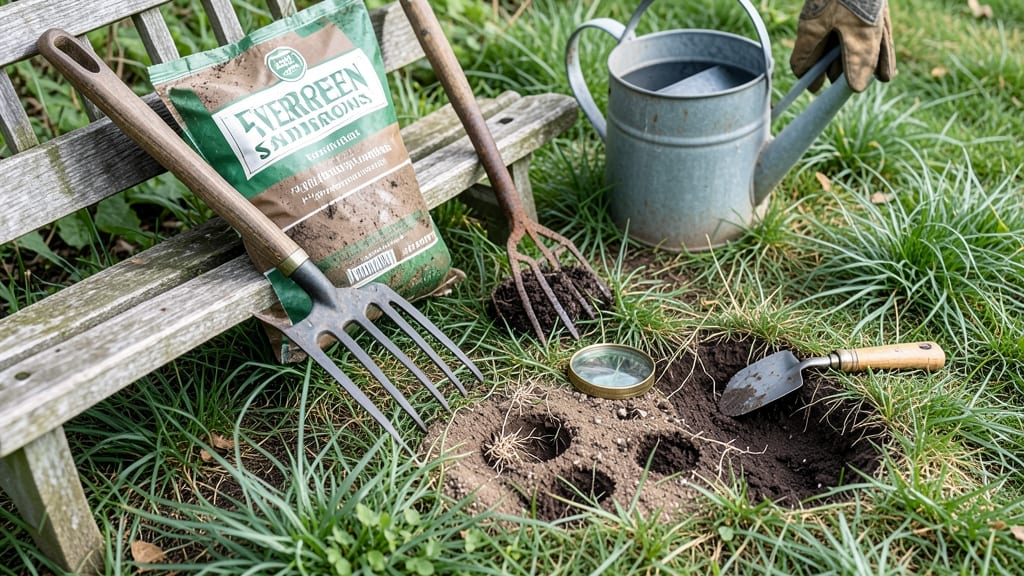
Your lawn’s looking more like Swiss cheese than a lush green carpet. 🌱 Holes in the lawn UK gardeners face—whether from pets, moles, or foot traffic—don’t need to be a permanent eyesore.
The secret lies in quick, targeted fixes that blend into your grass without a trace, even in our damp climate.
Most holes stem from three culprits: digging animals, heavy foot traffic, or poor soil. I’ve patched my fair share—from mole tunnels to kids’ football marks—and the right mix of lawn sand, topsoil, and UK-hardy grass seed does the trick in hours.
No need for expensive turf; a simple blend keeps weeds out while your patch grows back stronger.
By the time you’ve finished, your lawn will look seamless, with no signs of the damage. The key? Matching the repair to the hole’s size and cause—small gaps get a light top-dressing, while deeper ones need a sturdier fill.
I’ll show you exactly how to do it, so your grass stays weed-free and bounces back faster than ever.
Works for any UK garden, from suburban backyards to country plots. Let’s get those patches looking picture-perfect in no time.
The Hidden Culprits Behind Lawn Holes
If your lawn in the UK looks like it’s been through a war—with mysterious craters dotting the green—you’re not alone. 🌱🕳️ These unsightly holes don’t just appear out of thin air; they’re usually the result of a mix of environmental, biological, and even human factors.
Understanding the root causes is the first step to fixing them for good. Let’s dig into the science behind why your lawn might be developing these pesky patches.
One of the most common reasons for sudden holes in your lawn is the work of hungry critters. From moles to rabbits, voles to foxes, these animals are constantly tunneling, digging, or grazing beneath and above the surface. Here’s how they do it:
- Moles: These subterranean engineers create extensive tunnel networks (up to 18 meters long!) as they hunt for earthworms and larvae. Their tunnels can collapse, leaving behind sinkholes or raised ridges. Pro tip: Look for molehills or areas where the grass grows in waves—classic mole activity. 🌍
- Voles and Mice: These smaller rodents burrow just below the soil surface, creating shallow tunnels. They also gnaw on grass roots, weakening the turf so it collapses into holes. Watch for: Irregular holes (often 2-5cm wide) and chewed grass stems. 🐭
- Rabbits and Deer: While they don’t dig holes, their grazing can uproot grass, leaving bare patches that erode into depressions—especially after heavy rain. Signs: Ragged edges where grass has been nibbled down to the roots. 🐇
- Foxes and Badgers: These larger animals dig deeper holes while searching for food or creating dens. Their holes can be 10-30cm wide and often appear overnight. Danger: These holes can be deep—watch for pets or kids! ⚠️
Actionable fix: Set traps (humane ones for moles/voles), use repellents, or install barriers like wire mesh to deter diggers. For larger animals, secure your lawn with fencing or motion-activated sprinklers.
Heavy rainfall, poor drainage, and compacted soil can turn your lawn into a Swiss cheese board. Here’s how erosion creates holes:
- Poor Drainage: Clay-heavy UK soils often struggle to absorb water quickly. When rain falls too fast, the water pools, saturating the soil and weakening its structure. Over time, the top layer washes away, leaving behind depressions. Test for drainage: Dig a small hole—if water doesn’t drain within 4 hours, you’ve got a problem. 💧
- Foot Traffic and Compaction: Walking, pets, or machinery compress the soil, reducing its ability to hold water and nutrients. Compacted areas become spongy when wet and erode faster, forming sink-like holes. Signs: Grass feels springy underfoot or grows in patches. 👟
- Thatch Buildup: A thick layer of dead grass (thatch) blocks water and air from reaching the roots. When rain hits, it slides off the thatch instead of soaking in, carrying soil particles away. Check: Pull up a small patch—if the thatch is >1cm thick, it’s time to dethatch. ✂️
Actionable fix: Improve drainage with sand top-dressing, aerate compacted soil in autumn, and reduce foot traffic on wet lawns. For severe erosion, mix in organic matter (compost) to stabilize the soil.
Certain fungi thrive in damp UK conditions, attacking grass roots and causing the turf to literally rot from the inside out. The most notorious culprits:
- Fairy Ring Fungus: This fungus grows in circular patterns, creating a dark, spongy ring where the grass dies back. The center often collapses into holes as the mycelium decomposes organic matter beneath. Spot it: Look for mushrooms at the edge of the ring or grass that grows in uneven clumps. 🍄
- Rhizoctonia and Pythium: These water-loving fungi cause brown patch disease, where large areas of grass turn brown and die. The dead turf pulls away, leaving behind shallow craters. Red flags: Holes appear after prolonged wet weather or poor airflow. 🌧️
- Slime Molds: Though harmless to plants, these gelatinous fungi can smother grass in thick layers, blocking sunlight and causing the turf to weaken and erode. Signs: Slimy, orange or white patches that disappear when dry. 🧪
Actionable fix: Improve airflow with proper mowing height (never cut >1/3 of the blade), reduce watering in the evening, and apply fungicides (like propiconazole) if fungal rings are severe. For prevention, overseed bare patches in autumn.
Sometimes, holes aren’t caused by digging or erosion but by gradual destruction of the grass itself. Here’s how:
- Grass Roots Grubs: The larvae of chafer beetles (like the dock beetle) munch on grass roots, leaving the turf vulnerable to pulling away in patches. Clue: Holes appear in late summer/autumn, often with a thin, peeling layer of grass that lifts easily. 🐛
- Lawn Chinch Bugs: These tiny pests suck sap from grass roots, causing yellowing and wilting. Dead patches crust over and erode into holes, especially in dry spells. Test: Place a clear jar of soapy water on the lawn—if you find black bugs, it’s them. 🔍
- Viral or Bacterial Infections: Diseases like take-all root rot or stripe smut weaken grass until it falls away in clumps, leaving holes. Signs: Dark, water-soaked patches that smell foul when disturbed. 🚨
Actionable fix: Treat grub infestations with nematodes or milky spore powder. For chinch bugs, apply insecticidal soap or neem oil. For infections, remove affected turf and disinfect the soil with a bleach solution (1 part bleach to 10 parts water).
Next up: How to diagnose which culprit is behind your lawn’s holes—and the fastest fixes to restore a lush, weed-free surface. Stay tuned! 🚀
Quick Fixes for Lawn Holes
Fixing holes in your lawn doesn’t have to be a daunting task—whether they’re from pets, foot traffic, or pests, there’s a simple solution for every problem. Below, we’ve mapped common causes to step-by-step fixes, plus prevention tips to keep your grass lush and hole-free. Let’s get started!
If your lawn has holes from playful pets or burrowing animals, these steps will restore it fast.
How to Fix It:
- 🔥 Remove Debris – Clear out rocks, roots, or old soil from the hole.
- 🍳 Loosen the Soil – Use a garden fork to aerate the surrounding area for better root growth.
- 👨🍳 Fill & Level – Mix topsoil with compost (or sand for drainage) and pack it firmly.
- 🥘 Seed or Sod – Sprinkle grass seed (or lay sod) and water lightly to encourage growth.
- ⏰ Wait & Water – Keep the area moist for 2-3 weeks until new grass fills in.
💡 Prevention Tip:
- Train pets to avoid digging in specific spots (use gravel or mulch as a barrier).
- Install raised garden beds if burrowing animals (like rabbits) are the culprit.
Heavy use flattens soil, leaving bare patches and holes over time.
How to Fix It:
- 🔪 Aerate the Lawn – Rent a core aerator (or use a garden fork) to create holes for air and water.
- 🌡️ Top-Dress Lightly – Spread a thin layer of compost (½ inch) over the area.
- 🎯 Overseed – Choose fast-growing grass seed (like ryegrass for quick cover).
- ✨ Water Deeply – Soak the soil twice daily for the first week, then taper off.
💡 Prevention Tip:
- Walk on paths instead of grass to reduce compaction.
- Mow high (3-4 inches) to strengthen grass blades against wear.
Moles, voles, and grubs leave behind tunnels and holes—here’s how to stop them.
How to Fix It:
- 🔥 Identify the Pest –
- Moles: Holes with volcanic mounds (soil pushed up).
- Voles: Surface holes (1-2 inches wide) and chewed grass.
- Grubs: Spongy, brown patches (dig to check for white larvae).
- 🍳 Treat the Problem –
- Moles/Voles: Use castor oil repellent or ultrasonic spikes.
- Grubs: Apply beneficial nematodes or grub-control granules.
- 👨🍳 Fill & Repair – Once pests are gone, follow the animal damage fix above.
- 🥘 Monitor & Maintain – Check for new activity and reapply treatments if needed.
💡 Prevention Tip:
- Keep grass healthy—thick turf deters burrowing pests.
- Remove leaf litter (grubs love damp, decaying matter).
Heavy rain or dry spells can wash away soil, leaving uneven holes.
How to Fix It:
- 🔪 Dig Out Loose Soil – Remove any mud or eroded debris.
- 🍳 Improve Drainage – Mix sand or perlite with soil to prevent future washouts.
- 👨🍳 Reinforce the Area – Add a thin layer of hydroseed or erosion-control fabric if needed.
- 🥘 Plant Deep-Rooted Grass – Choose fescue or Bermuda grass for stability.
- ⏰ Water Gently – Avoid heavy watering that could wash soil away again.
💡 Prevention Tip:
- Install a French drain if water pooling is the issue.
- Mulch around the yard to reduce runoff.
Final Thought: Most lawn holes can be fixed in under an hour with the right approach. The key? Act fast—small repairs prevent bigger problems later. Now grab your tools, and let’s get that lawn back in shape! 🌱✨
Frequently asked questions
Why do holes appear suddenly in my lawn?
Sudden holes usually mean digging animals like moles or voles are at work. Look for molehills or chewed grass stems—these pests create tunnels that collapse, leaving behind craters. Heavy rain or foot traffic can also wash away soil, creating erosion-based holes over time.
Can I fix lawn holes without replanting grass?
For small holes, yes! Use a mix of topsoil and sand to fill gaps, then press down firmly. Add a thin layer of compost to help new growth. For larger areas, a quick-growing grass seed blend (like ryegrass) works best—just keep the soil moist for 2-3 weeks.
What’s the best time of year to repair lawn holes?
Autumn is ideal—cool temps and frequent UK rain help new grass establish quickly. Spring works too, but avoid summer heat, which dries out repairs. If you must fix holes in winter, use winter-hardy grass seed and protect the area with mulch.
How do I stop pets from digging holes in my lawn?
Redirect their digging with gravel or mulch barriers around favorite spots. Train them with toys or sandpits, and avoid overwatering—damp grass is more tempting! For stubborn diggers, try pet-safe repellents like citrus sprays or chicken wire buried shallowly.
Will lawn sand work for deep holes?
Not alone—it’s best for shallow erosion or compaction issues. For deep holes, mix topsoil with sand (50/50 ratio) to improve drainage while providing nutrients. Pack the fill firmly to prevent future sinkage, then overseed for a seamless finish.