
Lawn
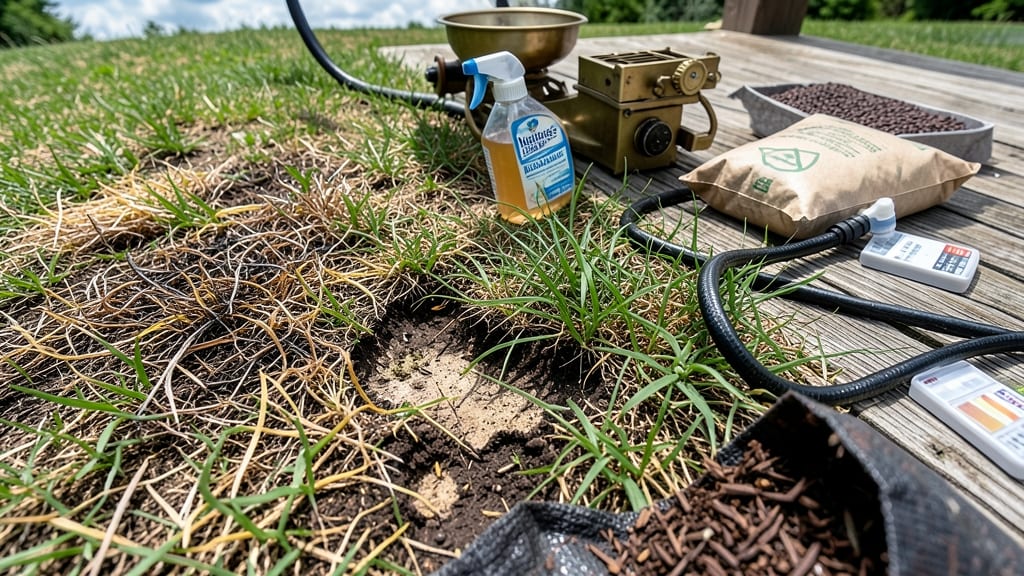
Your lawn isn't dying from neglect—it's being killed by the wee from your dog. 🌱 The yellow patches and thin spots are a classic sign of over-fertilized soil, but there's a simple, pet-safe way to revive it without harsh chemicals.
I've seen this method turn patchy lawns into lush, dog-friendly carpets within weeks.
The problem starts with the high nitrogen in urine, which creates a chemical burn. But the real fix isn't just watering or reseeding—it's rebuilding the soil's balance. A mix of organic compost, proper watering, and a few strategic overseeding steps can make your lawn resilient again.
No more guessing what's wrong or waiting for the damage to spread.
By the end, you'll have a lawn that bounces back from pee patches and stays green under regular use. The key is a three-step approach that works even for heavy-duty dog yards. You'll see new growth within 10 days of starting, and the results last through the season.
Works for any grass type, from fescue to Bermuda, and fits into your regular lawn care routine. Let's get that lawn back to looking like a pet-friendly paradise, not a crime scene.
The Hidden Culprits Behind Dead Grass
When your lawn starts looking like a patchwork of brown after your dog does its business, the culprits aren’t always what they seem. While it’s easy to blame "dog wee" (urine) alone, the damage is often a mix of chemical, biological, and environmental factors.
Understanding these causes is the first step to saving your grass—so let’s break it down.
Dog urine is highly concentrated in nitrogen (ammonia) and urates (salts), which create a double whammy for your lawn. Here’s why:
- Alkaline Burn: Fresh urine has a pH of 8.0–9.0 (basic), while soil prefers 6.0–7.0 (neutral). This sudden pH spike disrupts root cells, causing them to plasmolyze (lose water and shrink). Over time, this leads to cell death and brown patches.
- Salt Accumulation: Urates act like tiny salt crystals, drawing moisture out of grass blades through osmosis. This dehydrates the plant faster than a summer drought, leaving it crispy and brittle.
- Nutrient Imbalance: While nitrogen is essential for growth, too much at once overwhelms the grass’s ability to absorb it. The excess converts to nitrites, which are toxic to roots.
Actionable Fix: Dilute urine with water (1:1 ratio) before it hits the lawn, or train your dog to pee on gravel or mulch instead.
Not all lawns are created equal—and neither are their reactions to dog urine. Some grasses are hardier, while others wilt under pressure. Here’s the breakdown:
| Grass Type | Urine Tolerance | Why It Struggles |
|---|---|---|
| Bermuda Grass | ⭐⭐⭐⭐ (High) | Deep roots and fast recovery make it resistant to occasional urine spots. |
| Kentucky Bluegrass | ⭐⭐ (Moderate) | Shallow roots and thin blades make it prone to scalding (leaf burn) from concentrated urine. |
| Fescue Grass | ⭐ (Low) | Slow-growing and sensitive to salt stress, often turning yellow permanently. |
| St. Augustinegrass | ⭐⭐⭐ (Moderate-High) | Thick blades can handle urine better but may develop fungal spots if moisture lingers. |
Actionable Fix: If your lawn is fescue or bluegrass, consider overseeding with clover or a dog-friendly grass mix (like Dallisgrass) in high-traffic areas.
Urine damage isn’t just about chemistry—it’s also about how your lawn’s hydration and soil structure handle the shock. Two key issues:
- Drought-Like Conditions: Urine pulls moisture from the soil, creating a micro-desert around the spot. If your lawn is already underwatered, the damage spreads faster.
- Compacted Soil: Heavy foot traffic (or your dog’s paws) compresses soil, reducing aeration. This traps urine salts near the surface, where roots can’t escape their toxic effects.
Actionable Fix:
- ✅ Deep water the lawn after your dog goes (1–2 inches of water to dilute urine).
- ✅ Aerate compacted areas in spring/fall to improve root access to nutrients.
Brown patches from urine can invite fungi like Fusarium or Rhizoctonia, which thrive in the damp, nutrient-rich conditions urine creates. Here’s how:
- Weakened Grass = Fungal Feast: Urine-stressed grass has compromised cell walls, making it easy for fungal spores to invade.
- Moisture Traps: If urine sits on the lawn (instead of soaking in), it creates a perfect breeding ground for pathogens.
Actionable Fix:
- 💡 Rake out dead patches and apply fungicide (like propiconazole) if you see white or tan fungal threads.
- 💡 Improve drainage by adding sand or compost to heavy clay soil.
Now that you know why your lawn is turning into a doggy crime scene, the next step is how to fix it—and we’ve got the science-backed solutions coming up! 🚀
Revive Your Lawn Naturally
Dog urine may feel like an unstoppable force against your lawn, but with the right strategies, you can restore its health and beauty. Below are targeted solutions tailored to the most common causes of dog urine damage, from immediate fixes to long-term prevention.
Let’s turn that yellowed patch into a thriving green space again!
If your lawn is already struggling with poor soil health, dog urine can exacerbate the problem by burning roots and altering pH levels. Here’s how to correct it:
#### 💧 Flush the Soil - Step 1: Water the affected area deeply (about 1 inch of water) to dilute the urine and help it seep into the soil rather than sitting on the surface. - Step 2: Use a garden hose or sprinkler to gently rinse the spot for 10–15 minutes. This washes away excess salts and ammonia. - Pro Tip: 💡 Do this immediately after your dog urinates to minimize damage. #### 🌿 Rebalance the Soil - Step 1: Test your soil’s pH (ideal range for lawns: 6.0–7.0). Dog urine can make soil more acidic. - Step 2: Amend the soil with lime (to raise pH) or sulfur (to lower it) if needed. Follow package instructions for application rates. - Step 3: Spread a thin layer of compost (¼ inch) over the area and lightly rake it in. Compost adds nutrients and improves soil structure. #### 🌱 Choose Resilient Grass - If the damage is severe, consider overseeding with dog-friendly grasses like: - Tall fescue (drought-tolerant, recovers well) - Perennial ryegrass (fast-growing, handles foot traffic) - Buffalo grass (low-maintenance, natural resistance)If your lawn is already weak from heat, drought, or poor sunlight, dog urine can deliver the final blow. Here’s how to nurse it back to life:
#### 🌞 Provide Shade and Hydration - Step 1: If possible, create temporary shade using a lightweight fabric canopy or umbrellas to protect the recovering grass. - Step 2: Water the lawn early in the morning (before 9 AM) to reduce evaporation and stress. Aim for 1–1.5 inches of water per week, including rainfall. - Pro Tip: 🌡️ Avoid watering at night—wet grass overnight invites fungal growth. #### 🍃 Boost Grass Recovery - Step 1: Apply a slow-release, organic fertilizer (like compost or fish emulsion) to strengthen roots. Avoid synthetic fertilizers, which can further stress the lawn. - Step 2: Mow the grass slightly higher (3–4 inches) to shade the soil and retain moisture. - Step 3: Use a lawn roller lightly to ensure good seed-to-soil contact if overseeding.Dogs have a habit of marking territory, and repeated urination in one spot creates a "hot zone" that’s nearly impossible to revive without intervention. Break the cycle with these tactics:
#### 🚫 Train Your Dog - Step 1: Designate a specific area (like a gravel patch or artificial turf) for your dog to urinate. Use a cue word like "go potty" to reinforce the habit. - Step 2: Reward your dog with treats and praise when they use the designated spot. - Pro Tip: ✨ If your dog is young, use enzymatic cleaners (like Nature’s Miracle) on the old spots to remove odors that might attract them back. #### 🌿 Install a Dog-Friendly Lawn Alternative - Option 1: Artificial Turf Pads – Place a small patch of artificial grass where your dog typically urinates. It’s durable, easy to clean, and won’t suffer from urine damage. - Option 2: Gravel or Mulch Beds – These materials are porous and won’t retain urine like soil, making them ideal for high-traffic dog areas. - Option 3: Clover or Clover-Grass Mix – Clover is more resilient to urine and can outcompete weeds naturally. #### 🔄 Rotate Urination Spots - If training isn’t an option, rotate your dog’s potty areas by moving them slightly each time. This prevents long-term damage to any single spot.Once your lawn is back in shape, keep it that way with these proactive measures:
- 💧 Dilute the Damage: Always water the lawn after your dog urinates to flush out ammonia. - 🌱 Strengthen the Grass: Regularly aerate and overseed to promote thick, healthy turf that can withstand minor urine exposure. - 🛡️ Use Natural Protectants: Sprinkle wood ash (sparingly) or baking soda (1 tbsp per gallon of water) on affected areas to neutralize acidity. - 🐕 Monitor Your Dog’s Diet: Dogs on high-protein or high-mineral diets produce more acidic urine. Consider switching to a balanced, plant-based diet to reduce lawn damage. - 🌿 Plant Urine-Resistant Ground Covers: If your lawn is in a high-traffic dog area, consider replacing grass with creeping thyme, moss, or sedum, which tolerate urine better.With patience and consistency, your lawn can bounce back from even the most stubborn dog urine damage. Start with the fixes that match your specific issue, and soon you’ll have a lush, happy yard that both you and your pup can enjoy! 🐾🌿
Frequently asked questions
Why does my lawn turn brown only in spots where my dog pees?
Dog urine contains high levels of nitrogen and urates that create a chemical burn. The concentrated ammonia raises soil pH to 8.0-9.0, while grass prefers 6.0-7.0. This alkaline shock dehydrates grass cells through osmosis, causing those classic yellow/brown patches. The damage spreads faster in dry or compacted soil.
Can I just water more to fix urine-damaged lawns?
Watering helps dilute urine, but it's not enough alone. Deep watering (1 inch) after your dog goes flushes out ammonia, but you also need to rebalance soil pH and add compost. Without these steps, the underlying chemical damage persists. Think of it like treating a burn - you need more than just water.
What's the fastest way to revive dead grass patches?
For immediate results, rake out dead grass, then apply a thin layer of compost and overseed with tall fescue or perennial ryegrass. Water lightly twice daily for 10 days to establish new growth. For stubborn spots, try a 50/50 mix of sand and compost before seeding.
Are there dog breeds that cause more lawn damage?
Yes! Small dogs produce more concentrated urine per pound of body weight, causing worse burns. Large breeds like Labs or German Shepherds may do more damage through sheer volume, but their urine is less concentrated. The biggest factor is diet - dogs on high-protein diets create more acidic urine. Consider switching to a balanced diet to help.
Will artificial turf solve my dog urine problems?
Artificial turf eliminates urine damage completely, but it requires maintenance (cleaning, deodorizing) and isn't as eco-friendly. For a natural solution, try clover mixes (more urine-resistant) or designate a gravel potty area. The best approach depends on your yard size and commitment to upkeep.