
Lawn
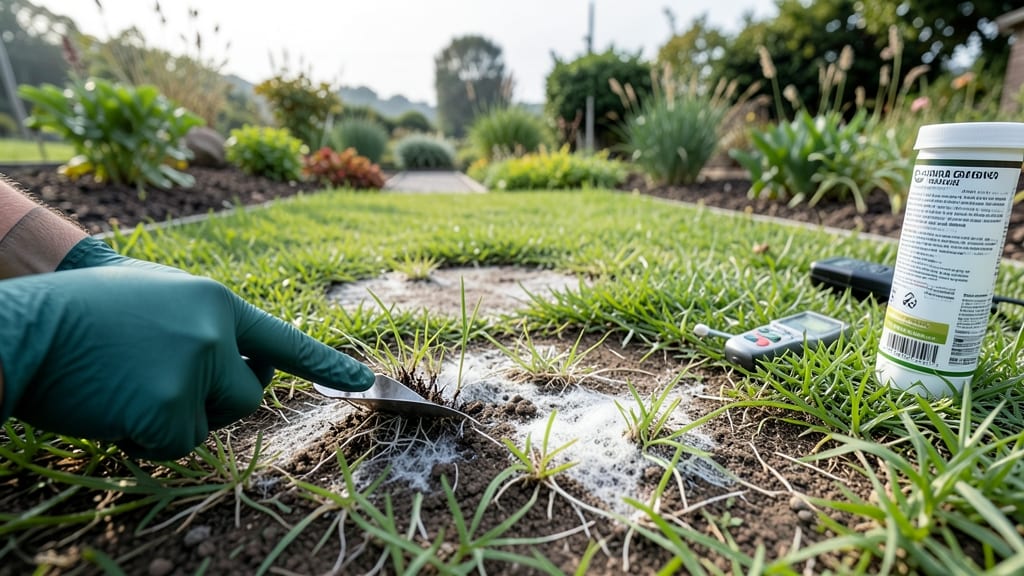
Those stubborn dark green patches in your lawn aren’t just unsightly—they’re a cry for help from your grass. 🌱 I’ve seen this happen after too much water, too much fertilizer, or even fungal sneaky spots that no one notices until they spread.
The good news? You can fix it without tearing up the whole yard.
First, check the texture—soft, spongy patches mean overwatering, while powdery white spots signal dollar spot fungus. A quick soil test tells you if nitrogen overload is the culprit.
Most people overdo it, thinking more fertilizer equals greener grass, but it often backfires into these dull, dark patches that look healthy but aren’t.
By adjusting your watering schedule, aerating compacted soil, and applying the right treatment (organic or chemical), you’ll see your lawn bounce back in 2-4 weeks. The key is acting fast—those patches won’t fix themselves, but with the right approach, your grass will look uniform and vibrant again.
Works for any lawn type, from shady patches to sunny backyards. Let’s get those dull spots back to their best in no time!
Root Causes Behind Uneven Lawn Color
If your lawn is developing mysterious dark green patches that stand out like a neon sign against the rest of your grass, don’t panic—there’s usually a logical (and fixable) explanation. These patches often signal an imbalance in nutrients, water, or even soil health.
Below, we break down the most common culprits, backed by science, so you can diagnose the issue and take action.
One of the most frequent causes of dark green patches is too much nitrogen—either from over-fertilizing or using high-nitrogen lawn foods too frequently. While nitrogen promotes lush growth, an excess can lead to:
- Rapid, weak growth: Grass blades grow faster than roots can support, making them soft and prone to disease.
- Soil acidification: Excess nitrogen lowers soil pH, locking out essential nutrients like phosphorus and potassium.
- Burnt grass edges: If the dark patch is surrounded by yellow or brown areas, you’ve likely overdone it with synthetic fertilizers.
How to fix it: Test your soil’s nitrogen levels (ideal range: 0.2–0.4% for most grasses). If high, reduce fertilizer applications and water deeply to flush out excess nutrients. Consider a slow-release organic fertilizer to avoid spikes.
Uneven watering—whether from overwatering or underwatering in patches—can create dark green zones. Here’s why:
- Overwatering: Soggy soil suffocates roots, leading to anaerobic conditions where microbes break down organic matter too quickly, releasing excess nitrogen and darkening the grass.
- Irrigation issues: Sprinkler heads misaligned or broken can create wet spots that grow faster (and darker) than drier areas.
- Shade + moisture combo: If the patch is in a shady, damp area, fungal growth (like Dollar Spot) can thrive, turning grass an unnatural dark green.
How to fix it:
- Check for uneven water distribution by placing tuna cans in different lawn zones—water should collect evenly.
- Water deeply 2–3 times per week (1–1.5 inches total) instead of daily light sprinkles.
- Improve drainage in soggy areas with sand or compost to prevent waterlogging.
Dark green patches can also signal hidden fungal activity or a thick layer of thatch (the spongy material between soil and grass). Fungi like Pyricularia (gray leaf spot) or Rhizoctonia (brown patch) thrive in warm, moist conditions and can turn grass a dull, dark green before causing brown rings.
Thatch, if over ½ inch thick, blocks water and nutrients, forcing grass to grow unevenly in patches.
How to fix it:
- Test for fungi by pulling up a small section of grass—look for black or purple threads (hyphae) in the roots.
- Apply a fungicide with azoxystrobin or propiconazole if fungal activity is confirmed.
- Reduce thatch by verticutting (mowing with a vertical mower) or overseeding with a thatch-breaking grass like tall fescue.
Heavy foot traffic, pets, or machinery can compact soil in certain areas, preventing roots from accessing oxygen and nutrients. Meanwhile, organic matter (like decomposed leaves or old mulch) can leach unevenly, creating nutrient-rich "hot spots" that grow darker.
Compacted soil also slows water drainage, leading to the same overwatering effects described above.
How to fix it:
- Perform a soil compaction test: Push a screwdriver into the ground—if it won’t go past 3 inches, compaction is likely.
- Aerate the lawn in fall or spring using a core aerator to relieve compaction.
- Spread compost or sand over compacted areas and top-dress lightly.
Some grass varieties naturally grow darker in shade (e.g., Fine Fescue or Kentucky Bluegrass), while others (like Bermuda) struggle and turn patchy. If your lawn has a mix of sun-loving and shade-tolerant grasses, the shaded areas may develop dark green, slow-growing patches.
How to fix it:
- Identify your grass type—if it’s not shade-adapted, consider overseeding with Fine Fescue or Ryegrass.
- Thin out dense shade with selective pruning of trees/bushes or install a light-colored mulch to reflect sunlight.
Pro Tip: 🔍 Take a soil sample from the dark patch and compare it to healthy grass soil. If the dark patch has higher organic matter or nitrogen, you’ve found your culprit! Adjust fertilizing or watering accordingly.
Revive Your Lawn’s Dark Spots
Dark green patches in your lawn might look lush at first glance, but they’re often a sign of underlying issues—whether it’s overwatering, nutrient overload, or even hidden pests. The good news? Most problems have simple, effective fixes.
Below, we’ll break down the most common causes of those mysterious patches and show you how to restore your lawn’s vibrancy—without turning it into a science experiment.
If your lawn feels soggy to the touch or water pools after rain, you’re likely dealing with compacted soil or root suffocation. Dark green patches here are a cry for help—your grass is drowning!
🔥 Step 1: Test Your Soil’s Drainage
- Dig a small hole (6 inches deep) and fill it with water.
- If the water drains in under 6 hours, your soil is fine.
- If it takes longer than 6 hours, you’ve got drainage issues.
🍳 Step 2: Aerate Like a Pro
- Rent a core aerator (or hire a pro) to punch holes in the lawn, 1–2 inches deep, 3–4 inches apart.
- Best time? Early morning or late afternoon on a warm, slightly damp day.
- Pro tip: 💡 Follow up with a topdressing of sand or compost (1/4 inch layer) to improve soil structure.
👨🍳 Step 3: Adjust Your Watering Habits
- Water deeply but less often—aim for 1–1.5 inches per week (including rain).
- Morning watering (6–10 AM) is ideal—avoids fungal growth from evening moisture.
- Check for sprinkler issues—uneven watering can create dark, waterlogged spots.
⏰ Prevention Tips
✅ Install a rain gauge to track water levels accurately. ✅ Test soil moisture by grabbing a handful—if it clumps, it’s too wet. ✅ Consider a French drain if your yard has chronic standing water.
Dark green patches can also mean nutrient burn—too much nitrogen (or synthetic fertilizers) shocks the grass roots, leading to unhealthy, glossy-looking spots.
🔥 Step 1: Stop Fertilizing Immediately
- Wait 4–6 weeks before applying anything new to let the soil recover.
🍳 Step 2: Flush the Soil
- Water heavily (1–2 inches) to leach excess salts and nutrients from the root zone.
- Repeat every 2–3 days for a week to dilute the buildup.
👨🍳 Step 3: Switch to Organic Amendments
- Use compost or slow-release organic fertilizer (like alfalfa meal or fish emulsion).
- Avoid synthetic quick-release N-P-K—it’s like feeding your lawn junk food.
⏰ Prevention Tips
✅ Follow label rates—more isn’t better! ✅ Test soil pH (ideal: 6.0–7.0)—imbalanced pH worsens nutrient absorption. ✅ Use a soil probe to check depth before fertilizing—shallow roots need gentler treatment.
If the dark patches feel spongy, discolored, or have a foul smell, you might be dealing with grubs, chinch bugs, or fungal diseases like dollar spot or brown patch.
🔥 Step 1: Identify the Culprit
- Grubs? Dig up a patch—if you see white, C-shaped larvae, you’ve got grubs.
- Chinch bugs? Look for yellow patches that pull up easily (tiny black bugs underneath).
- Fungus? Slimy grass, white threads (mycelium), or circular dark spots = fungal attack.
🍳 Step 2: Treat Accordingly
| Problem | Solution |
|---|---|
| Grubs | Apply beneficial nematodes or milky spore (organic). For severe cases, use imidacloprid (synthetic). |
| Chinch Bugs | Diatomaceous earth (sprinkle lightly) or neem oil spray. |
| Fungus | Fungicide with azoxystrobin (like BioAdvanced Fungus Control). Reduce watering and mow higher (3–4 inches). |
👨🍳 Step 3: Boost Lawn Resilience
- Overseed bare spots with disease-resistant grass seed (like tall fescue or Kentucky bluegrass).
- Improve airflow by thinning out thick grass or pruning nearby bushes.
⏰ Prevention Tips
✅ Encourage natural predators—birds, toads, and ground beetles eat grubs! ✅ Water early to prevent fungal spores from thriving overnight. ✅ Avoid walking on wet grass—compresses soil and spreads disease.
If your lawn has consistent dark patches in shady spots, the problem might be low light + compacted, nutrient-poor soil.
🔥 Step 1: Choose Shade-Tolerant Grass
- Fine fescue or creeping red fescue thrive in low light.
- Overseed the patch with a shade mix in early fall.
🍳 Step 2: Loosen & Enrich the Soil
- Aerate (as above) and add compost (2–3 inches, then topdress).
- Use a core rake to mix in sand or peat moss for better drainage.
👨🍳 Step 3: Mulch & Protect
- Apply 2–3 inches of mulch (wood chips or straw) to retain moisture.
- Avoid heavy foot traffic in shady areas—roots struggle to establish.
⏰ Prevention Tips
✅ Prune trees/bushes to allow dappled sunlight (even 3–4 hours helps). ✅ Use a soil test kit—shady soil often lacks iron or nitrogen. ✅ Plant clover or moss as a natural ground cover in extreme shade.
💡 Mow high (3–4 inches) to shade roots and retain moisture. 🔥 Dethatch annually if your lawn has a thick thatch layer (>0.5 inches). 🎯 Rotate fertilizers—alternate between organic and synthetic for balance. 🌡️ Monitor soil temp—dark patches often worsen in hot, humid weather.
Remember: Patience is key! Some fixes (like aeration or overseeding) take 4–6 weeks to show results. But with the right approach, your lawn will go from "what’s wrong with it?" to "wow, look how green it is!" 🌿💚
Frequently asked questions
Why do dark green patches look healthier than the rest of my lawn?
Those patches might appear lush, but they’re often a sign of stress! Excess nitrogen or water creates rapid, weak growth that looks dark and glossy. The roots struggle to support this growth, making the grass more vulnerable to disease and pests. Think of it like a plant growing too fast—it looks vibrant but isn’t truly healthy.
Can I just fertilize more to fix dark green patches?
Not necessarily! Over-fertilizing often makes the problem worse. If the patches are caused by excess nitrogen, adding more fertilizer will just burn the grass and create yellow or brown edges. Instead, test your soil and switch to a balanced, slow-release fertilizer or organic options like compost. Less is often more!
How do I tell if my dark patches are from fungus or just uneven watering?
Check for these clues: If the grass feels slimy, has white threads (mycelium), or smells musty, it’s likely fungus. Uneven watering usually creates patches that are either too wet (soggy) or too dry (crispy). A simple test: Dig up a small section—if you see black or purple strands in the roots, that’s a fungal infection waiting to spread.
Will aerating my lawn really help with dark green patches?
Aeration is like giving your lawn a deep breath of fresh air. It relieves compacted soil, allowing roots to access oxygen, water, and nutrients more easily. For best results, aerate in spring or fall when the ground is slightly damp. Follow up with a topdressing of compost or sand to improve soil structure long-term.
Are dark green patches in shady areas normal?
Not always! While some grasses naturally grow darker in shade, consistently dark patches often mean the soil is too wet or lacks proper nutrients. Shade-tolerant grasses like Fine Fescue or Creeping Red Fescue can thrive there, but if the soil stays soggy, consider improving drainage with sand or compost. A soil test will tell you if the issue is moisture or missing nutrients.