
Mower
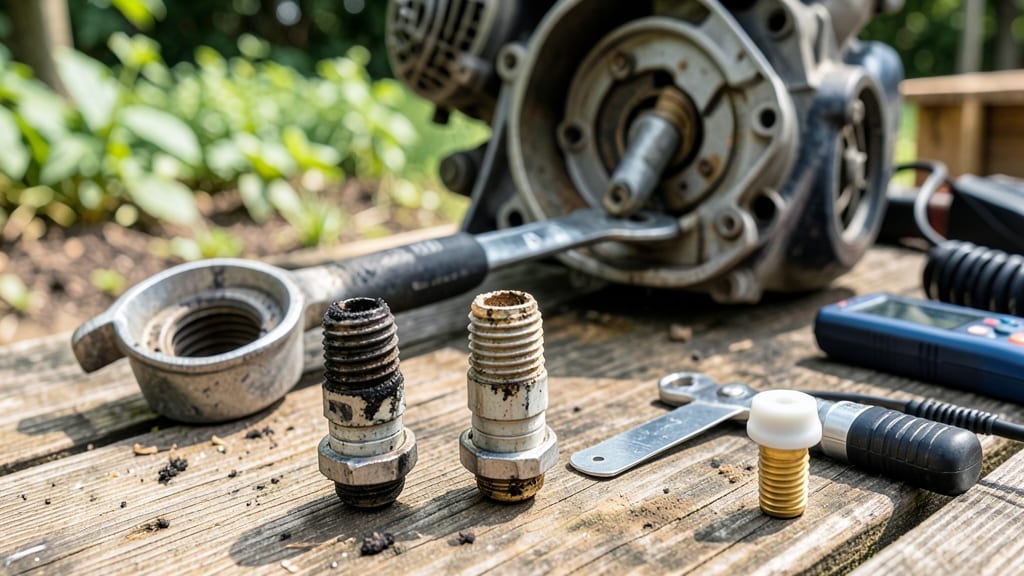
To tell if a lawn mower spark plug is bad, look for black soot buildup, oil fouling, cracked or broken electrodes, or excessive wear on the insulator. These telltale signs point to poor combustion and engine performance issues.
Your lawn mower's spark plug is the unsung hero of every clean cut—when it fails, you'll notice it immediately through visual clues. 🔥 Black soot buildup often signals a rich fuel mixture, while oil fouling suggests the engine is burning oil instead of gasoline.
Cracked electrodes or gaps wider than 0.030 inches mean the plug can't fire properly, causing misfires. Even slight wear on the insulator can disrupt the spark's path, leading to hard starts or stalling.
I always recommend checking these components during your seasonal tune-ups, as a single bad plug can waste gas and strain your engine over time.
If you spot any of these issues, it's time to replace the plug. Most DIYers can handle this in 15 minutes with basic tools, but remember to ground the mower properly first—safety comes before speed. 💫
💡 In This Article
- Visual Symptoms of a Faulty Lawn Mower Spark Plug
- Testing and Replacing a Bad Spark Plug
Visual symptoms of a faulty lawn mower spark plug
The most common visual clue—a black, sooty deposit on the electrode—happens when your mower runs on too much fuel. This creates an overly rich mixture that burns incompletely, leaving carbon residue.
Think of it like a campfire with too much wood and not enough oxygen: the flames sputter and leave black smoke. 🔥 In technical terms, this occurs when the air-fuel ratio exceeds 16:1, meaning there's more gasoline than air for combustion.
You'll often see this paired with a sluggish engine that struggles to accelerate or starts poorly.
Oil fouling, where the electrode appears coated in a thick, oily film, signals a different problem: oil is entering the combustion chamber. This typically happens when the piston rings or valve seals wear out, allowing oil to mix with gasoline. The result?
A plug that can't generate a strong spark because the oil insulates the electrode. 💫 What's interesting is that this condition often appears after the mower sits unused for a while—oil seeps past worn seals when the engine isn't running.
The texture of oil fouling is distinctly greasy to the touch, unlike the dry soot from fuel issues.
Cracked or broken electrodes reveal physical damage from repeated sparking or overheating. The electrode's job is to jump the spark gap, and if it's damaged, the spark becomes weak or inconsistent. You might notice the engine misfiring or running unevenly at 3,000 RPM or higher.
The insulator's white ceramic coating can also show signs of wear—look for brown or black streaks where the spark has eroded the material over time. These streaks indicate the spark is arcing unpredictably, which stresses the engine and reduces power output.
Electrode gap measurements are critical—most lawn mower plugs need a gap of 0.030 inches (about the thickness of a dime). If the gap is too wide, the spark can't jump easily, causing misfires. Too narrow, and the plug may overheat.
You can test this with a feeler gauge: insert the gauge into the gap—if it slides in too loosely, the gap is too wide; if it's too tight, it's too narrow. 🌟 A properly gapped plug ensures the spark ignites fuel efficiently, preventing wasted gasoline and engine strain.
Another subtle but important sign is a worn or corroded insulator. The insulator's job is to direct the spark from the center electrode to the ground electrode. Over time, moisture, heat, and spark erosion can create tiny cracks or pitting. These imperfections disrupt the spark's path, leading to weak ignition.
If you run your finger along the insulator and feel rough spots, that's a clear indicator the plug needs replacing. The science here involves electrical resistance—imperfections increase resistance, making the spark less effective.
Finally, pay attention to the spark plug's overall color. A healthy plug should have light tan deposits with minimal soot. Dark gray or black indicates fuel issues, while white or ashy deposits suggest an overly lean mixture (too much air, too little fuel).
These color variations directly correlate to combustion efficiency—your mower's performance depends on getting this balance just right. 💫